The stock market, as measured by the S&P 500 Index SPX,
Even if that does occur, there is still the resistance at 4300, left over from the island gap (circled on the accompanying SPX chart). Above there, it should be easier sailing for the bulls if SPX can get to those levels. There have been several failed upside breakouts in the last 18 months, so there is reason for some caution.
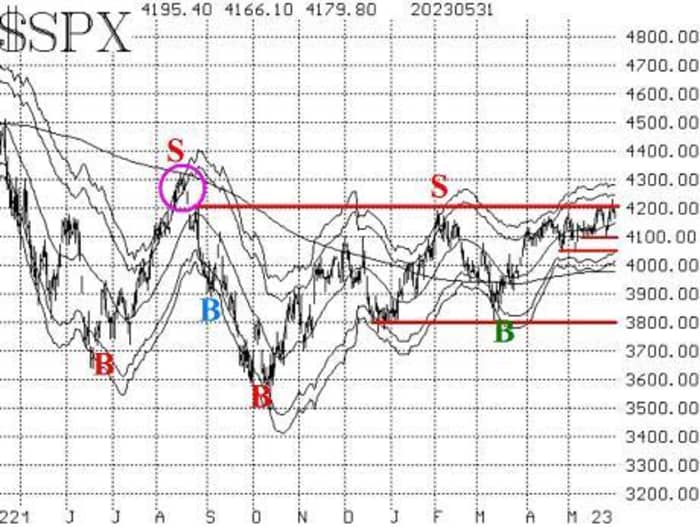
SPX is back in its old trading range, with support at 4100 and then just below that, at 4050. A more severe decline from there would bring into the play the months-long trading range that extends from roughly 3800 to 4200.
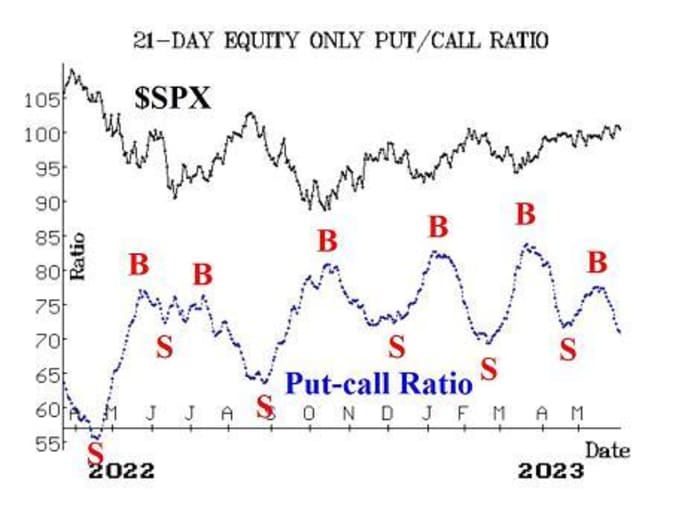
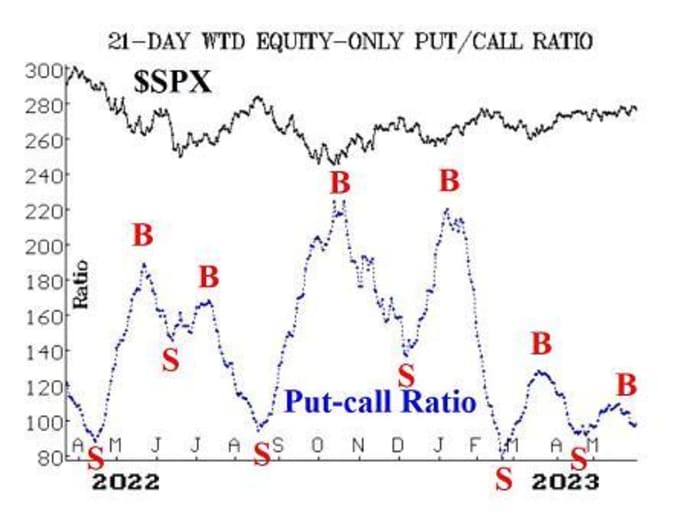
Equity-only put-call ratios have both rolled over to buy signals. The standard ratio’s buy came from a relatively high point on its chart, which is where the better signals usually originate. The weighted ratio, however, never got very elevated before this more recent buy signal took place. Hence, it is coming from a relatively low point on its chart — not often the best of buy signals.
Breadth has been all over the place once again. After buy signals were generated by the breadth oscillators late last week, they are coming into question already. In fact, the “stocks only” breadth oscillator’s buy signal has been canceled out by the heavily negative breadth of the past two days. This latest stock market rally, which was led by NVDA NVDA,
New 52-week lows on the NYSE have continued to outnumber new highs for the past six consecutive days, and for most days over the past month. This has resulted in the indicator refusing to generate a buy signal, and so it remains in neutral territory for now.
VIX VIX,
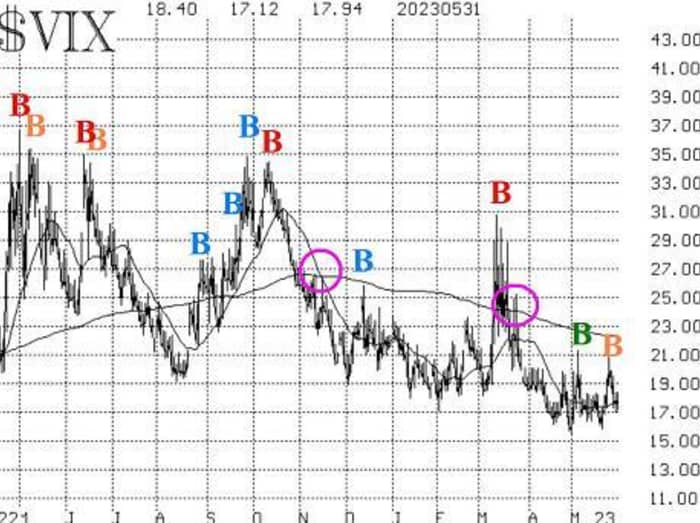
The construct of volatility derivatives is also a positive indicator for stocks, since the term structures continue to slope upwards, and there is a considerable premium on the VIX futures.
In summary, the indicators and mixed and SPX remains in a trading range. That makes for a market that is somewhat difficult to trade, and we are not holding a “core” position because of it. We will, however, trade individual indicator’s buy signals if they are confirmed.
New recommendation: Potential upside breakout
If SPX does break out to the upside, we want to take a new “core” position.
IF SPX closes above 4210 for two consecutive days, buy 2 SPY July (7th) at-the-money calls and sell 2 SPY July (7th) calls with a striking price 13 points higher.
If this position is taken, then stop out on a close below 4150.
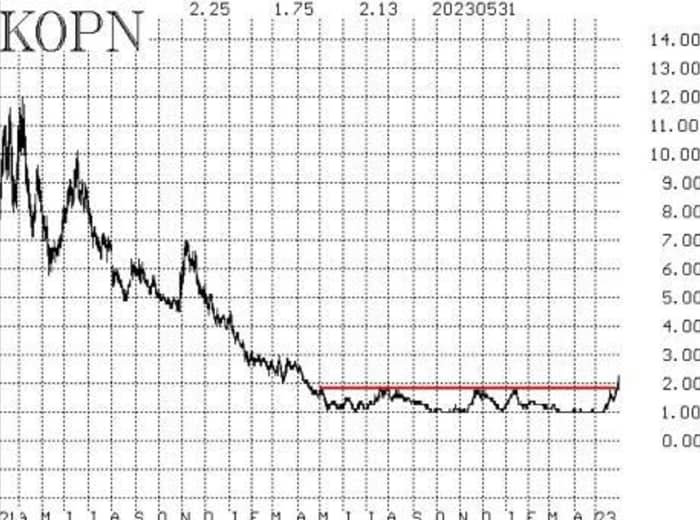
New recommendation: Kopin Corp. (KOPN)
This is strictly a low-priced speculation. Kopin KOPN,
Buy 800 KOPN common stock in line with the market.
If bought, stop out on a close below 1.70.
Follow-up action:
All stops are mental closing stops unless otherwise noted.
We are using a “standard” rolling procedure for our SPY spreads: in any vertical bull- or bear spread, if the underlying hits the short strike, then roll the entire spread. That would be roll up in the case of a call bull spread, or roll down in the case of a bear put spread. Stay in the same expiration and keep the distance between the strikes the same unless otherwise instructed.
Long 400 JFIN JFIN,
Long 1 SPY SPY,
Long 1 SPY June (16th) 409 put and Short 1 SPY June (16th) 379: This position was based on the sell signal from realized volatility, since the 20-day Historical volatility (HV20) of SPX has risen back above 10%. This position will be stopped out if HV20 falls back to 9% or lower; it currently is at 15%.
Long 4 BWA BWA,
Long 1 SPY June (16th) 411 call and Short 1 SPY June (16th) 425 call: This spread was bought in line with the VIX “spike peak” buy signal of May 5th. Stop out of this position if VIX closes above 21.33. Otherwise, we will exit after holding for 22 trading days, a “deadline” which is approaching: if not stopped out, close out this position at the close of trading on Wednesday, June 7th.
Long 3 CHD July (21st) 95 puts: We will hold this CHD CHD,
Long 3 AMAM AMAM,
Long 4 HAL HAL,
Long 2 MXL MXL,
All stops are mental closing stops unless otherwise noted.
Send questions to: lmcmillan@optionstrategist.com.
Lawrence G. McMillan is president of McMillan Analysis, a registered investment and commodity trading advisor. McMillan may hold positions in securities recommended in this report, both personally and in client accounts. He is an experienced trader and money manager and is the author of the best-selling book, Options as a Strategic Investment. www.optionstrategist.com
©McMillan Analysis Corporation is registered with the SEC as an investment advisor and with the CFTC as a commodity trading advisor. The information in this newsletter has been carefully compiled from sources believed to be reliable, but accuracy and completeness are not guaranteed. The officers or directors of McMillan Analysis Corporation, or accounts managed by such persons may have positions in the securities recommended in the advisory.
Comments