TradingKey - On March 4, the major stock indices of Japan and South Korea opened under pressure. South Korea's KOSPI index opened down 3.44%, with intraday losses widening to as much as 6% at one point before narrowing; South Korea's KOSPI 200 index futures fell 5%, triggering a five-minute program trading halt mechanism.
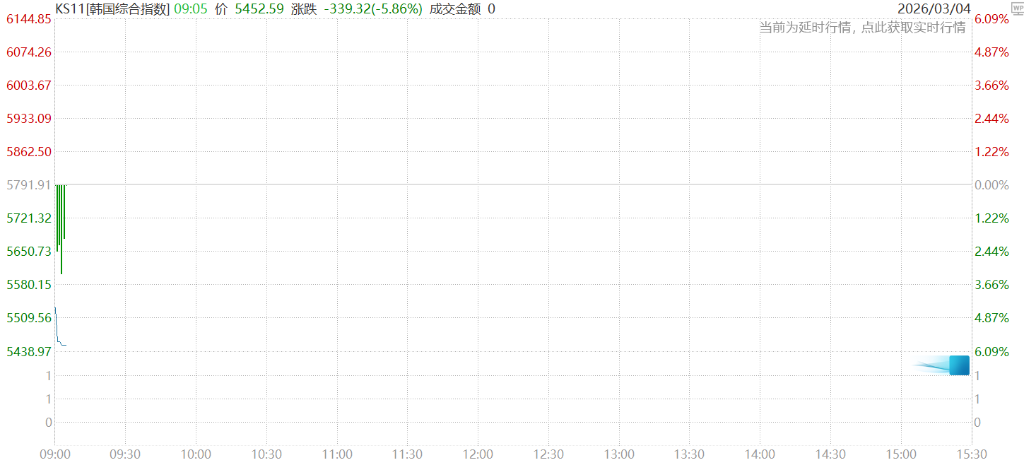
Notably, the benchmark index's cumulative year-to-date gain still stands at approximately 29%.
Regarding individual stocks, SK Hynix gapped down 5% at the open before rebounding to trade flat; Samsung Electronics also saw its decline narrow, though it still fell more than 2%.
In the Japanese market, the Nikkei 225 index opened down 1.4% and continued to trend lower, breaking below the 55,000-point psychological level during the session. Heavyweight stocks performed poorly, with SoftBank Group and Mitsubishi UFJ Financial Group (MUFG) both falling nearly 4%.
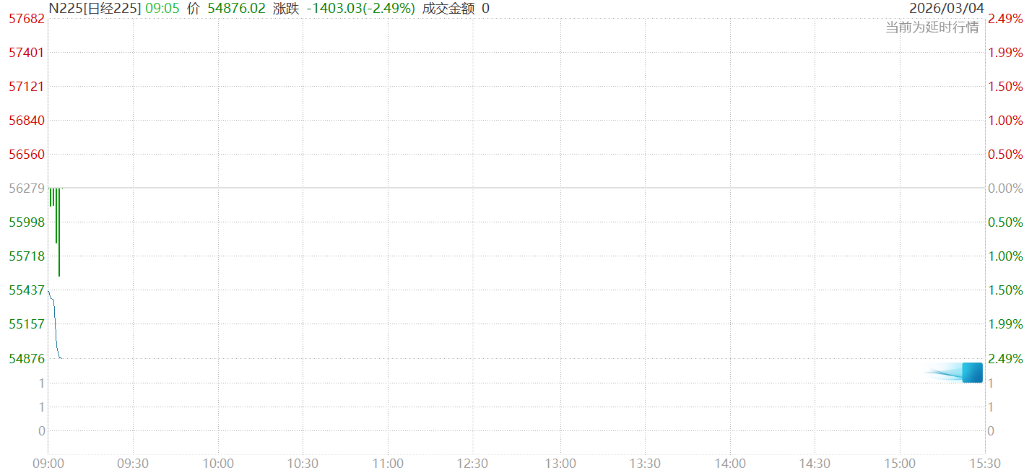
On March 3, affected by escalating tensions in the Middle East, Japanese and South Korean stocks had already plummeted: the KOSPI index closed down 7.24%, while the Nikkei 225 and TOPIX both fell more than 3%.
Although U.S. stocks recovered some ground overnight following certain statements, geopolitical panic and inflation concerns have not dissipated. Asia-Pacific markets continued to face pressure today, marking the third consecutive trading session of sharp declines for the region's equities.
Find out more
Comments