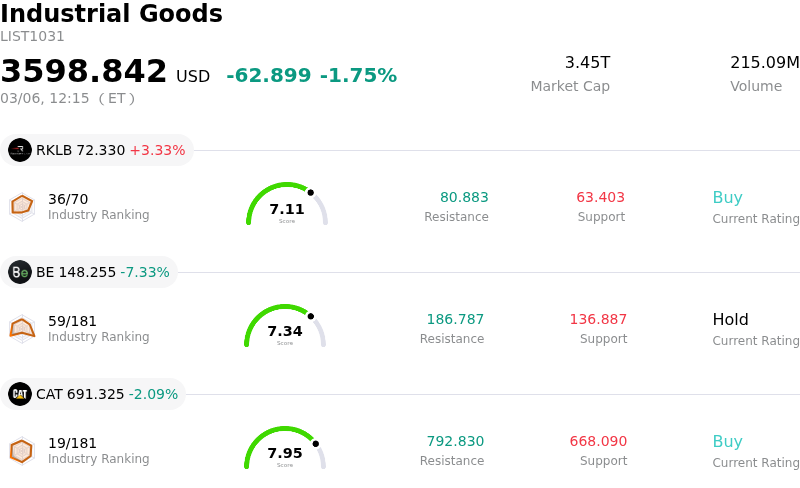
Trane Technologies PLC (TT) moved down by 3.15%. The Industrial Goods sector is down by 1.75%. The company underperformed the industry. Top 3 stocks by trading volume in the sector: Rocket Lab USA Inc (RKLB) up 3.33%; Bloom Energy Corp (BE) down 7.33%; Caterpillar Inc (CAT) down 2.09%.
What is driving Trane Technologies PLC (TT)’s stock price down today?
Trane Technologies (TT) shares experienced a downward movement and significant intraday volatility today, primarily influenced by its ex-dividend date. The company is trading ex-dividend today, March 6, 2026, for its quarterly dividend of $1.05, which typically results in a corresponding adjustment in the stock price.
Beyond the ex-dividend adjustment, existing concerns regarding the company's valuation may also be contributing to the observed pressure. As of March 5, 2026, Trane Technologies was noted to be trading at a premium compared to its industry averages, with a Forward P/E ratio of 30.18 against an industry average of 15.45, and a PEG ratio of 2.35 versus an industry average of 1.36. A discounted cash flow model as of March 4, 2026, suggested the shares were trading at approximately a 17.8% premium to their estimated fair value. These valuation metrics indicate that the stock may be considered overvalued, potentially leading to increased selling pressure as investors reassess its price.
While some analysts maintain a "Buy" consensus rating for TT, with an average price target around $485, previous analyst reports from July 2025 already indicated that much of the positive outlook might be priced into the shares, leading to a downgrade from "Buy" to "Hold" by HSBC. The stock had already seen a decline over the past week and on the preceding trading day, suggesting a continuation of underlying selling sentiment. Recent strategic acquisitions, such as LiquidStack, aimed at strengthening the company's position in data center thermal management, represent positive long-term developments but do not appear to be offsetting the immediate downward forces. The company's last earnings report in late January 2026 exceeded expectations, but the upcoming earnings release is projected for late April, placing less immediate impact on today's movement.
Technical Analysis of Trane Technologies PLC (TT)
Technically, Trane Technologies PLC (TT) shows a MACD (12,26,9) value of [12.12], indicating a neutral signal. The RSI at 45.13 suggests neutral condition and the Williams %R at -81.98 suggests oversold condition. Please monitor closely.
Media Coverage of Trane Technologies PLC (TT)
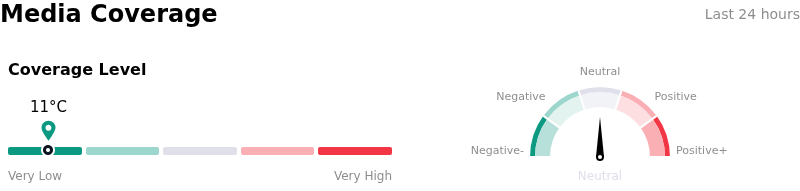
In terms of media coverage, Trane Technologies PLC (TT) shows a coverage score of 11, indicating a very low level of media attention. The overall market sentiment index is currently in neutral zone.
Fundamental Analysis of Trane Technologies PLC (TT)
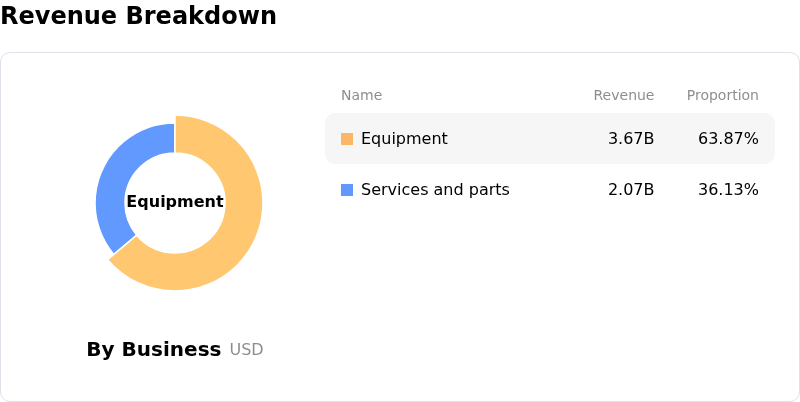
Trane Technologies PLC (TT) is in the Industrial Goods industry. Its latest annual revenue is $21.32B, ranking 8 in the industry. The net profit is $2.92B, ranking 6 in the industry. Company Profile
Over the past month, multiple analysts have rated the company as Buy, with an average price target of $480.45, a high of $550.00, and a low of $400.00.
More details about Trane Technologies PLC (TT)
Company Specific Risks:
- Trane Technologies provided conservative Q1 2026 guidance, projecting an approximate 20% decrease in business activity against a prior high-teens growth, which has raised concerns regarding the company's near-term financial performance.
- The company faces potential challenges in North American markets, which account for over 80% of its revenue, and is experiencing a decline in residential HVAC revenue amidst weaknesses in the broader construction market.
- Adjusted operating margin was flat year-over-year and below consensus estimates, primarily impacted by a 100 basis points decline in the EMEA region, indicating regional operational pressures.
- Analyst commentary and valuation models suggest Trane Technologies' stock is trading at a premium to its fair value, with a higher price-to-earnings (P/E) ratio compared to industry averages, indicating potential overvaluation risks.
Find out more
Comments