TradingKey - During the Asian trading session on March 16, international oil prices surged before retreating, with the core driver remaining the continuously escalating military conflict between the U.S. and Iran.
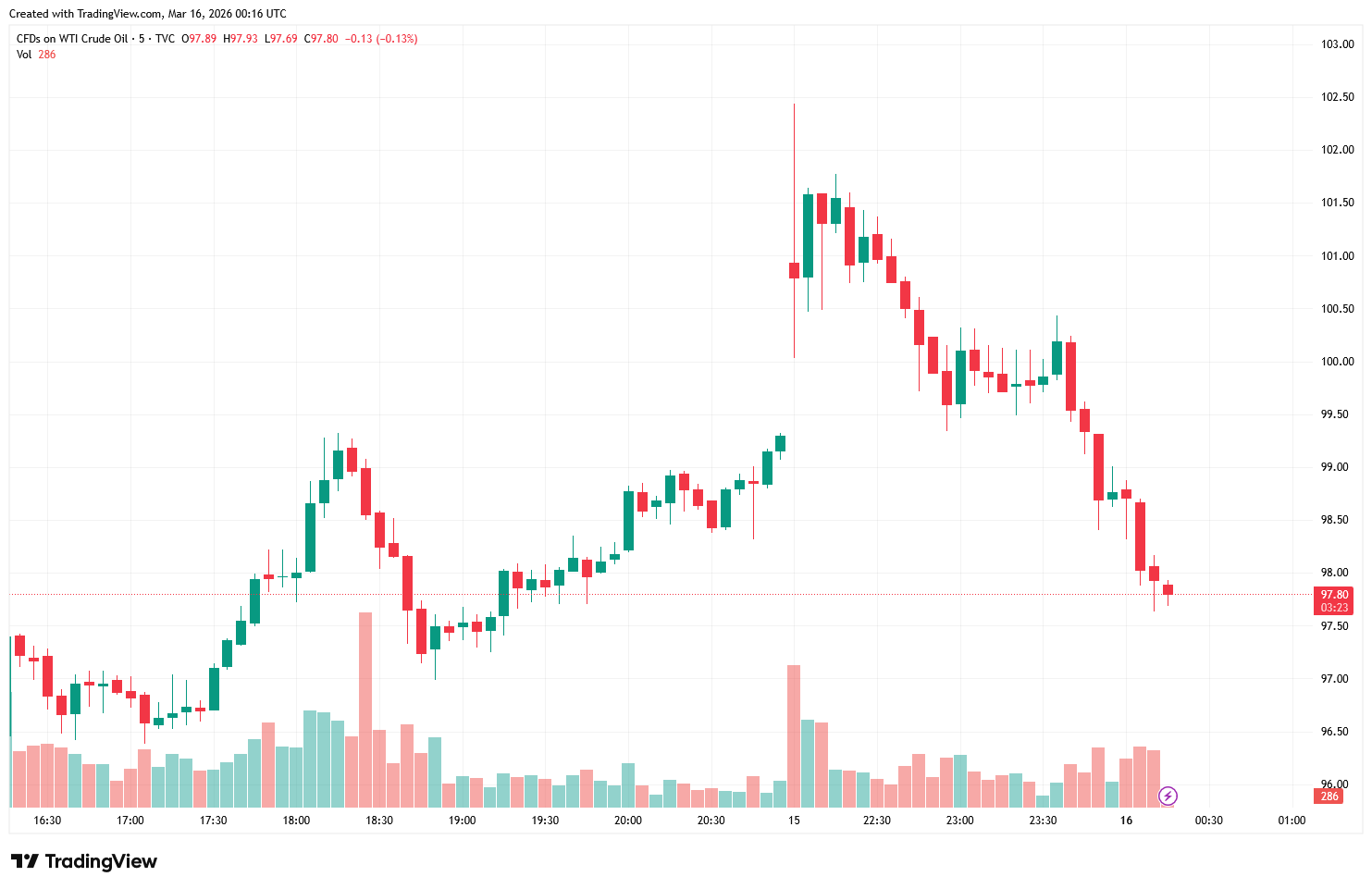
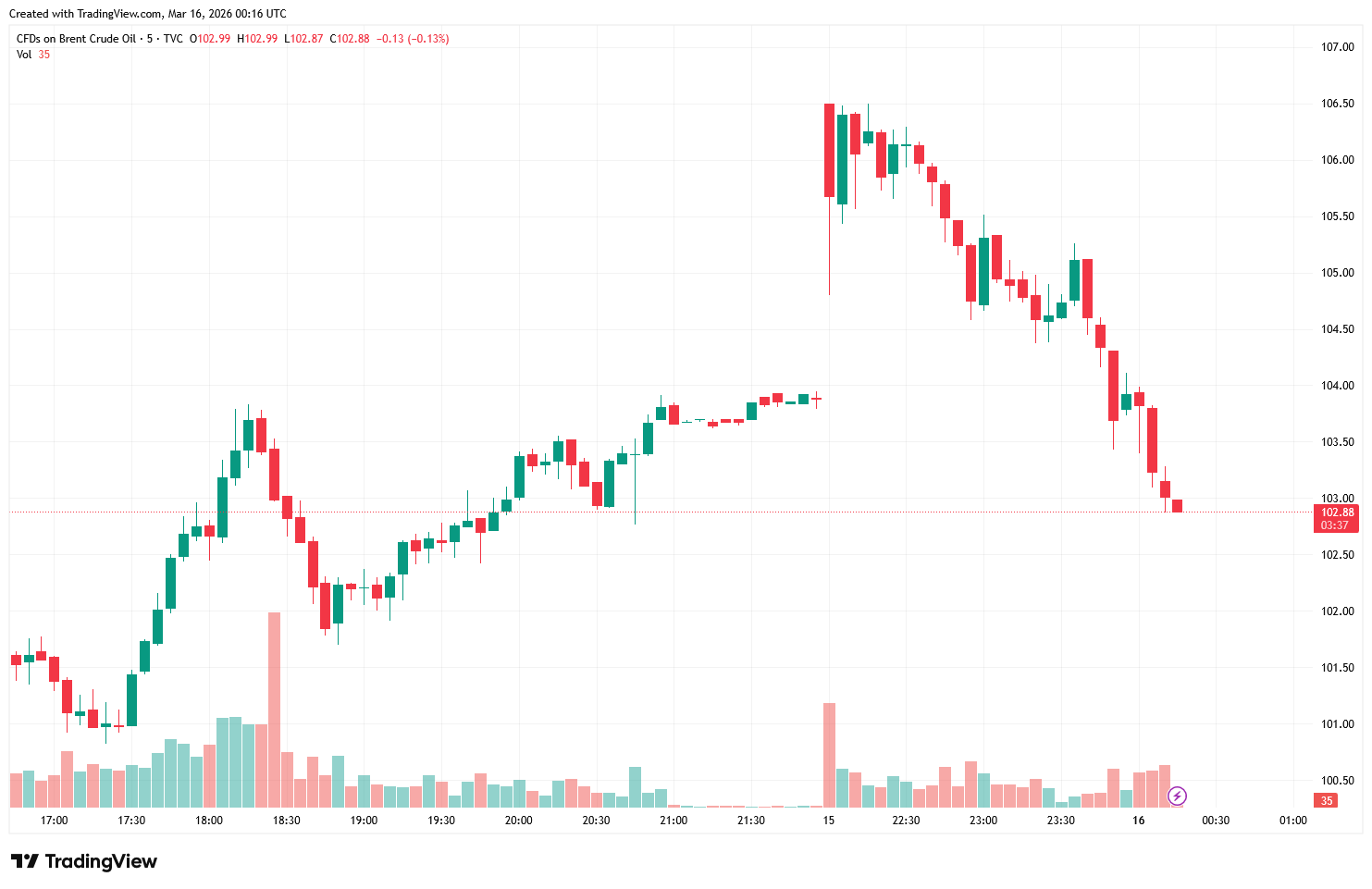
Early in the Asian session, international oil prices surged sharply, fueled by news of a weekend U.S. military strike on Iran's critical oil export hub, Kharg Island. Brent crude futures briefly surpassed $106 per barrel, with an intraday gain of up to 3.3%; WTI crude ( USOIL) futures also climbed to $102.44 per barrel.
However, gains narrowed quickly thereafter. As of 8:15 a.m. Beijing time, both major crude oil futures contracts flipped from gains to losses—WTI crude futures were trading at $98.31 per barrel, down $0.40 on the day; Brent crude futures were at $102.91 per barrel, erasing all early session gains.
The U.S. military launched a large-scale strike on Iran's Kharg Island on the night of March 13. The island handles 90% of Iran's oil exports.
U.S. President Trump stated on the 14th that the strike "completely destroyed" most military targets on the island, including naval mine storage facilities and missile bunkers, but oil infrastructure was intentionally spared. Meanwhile, he issued a stern threat, saying "we may hit it a few more times," and did not rule out direct strikes on Iranian oil facilities in the future. U.S. Central Command also confirmed that the operation successfully destroyed over 90 military targets on the island.
Iran maintained a defiant stance in the face of the U.S. military strikes. Iranian Foreign Minister Araghchi stated clearly on the 15th that Iran has never sought a ceasefire or negotiations and will continue to exercise self-defense until the U.S. realizes that this war is "both illegal and unwinnable."
Iran launched retaliatory missile and drone attacks on Sunday, targeting U.S. military facilities and major population centers in the Persian Gulf region. At the same time, Iran maintains an effective blockade of the Strait of Hormuz, a waterway that carries at least 20% of global oil shipments; Iran has attacked passing vessels inside and outside the strait multiple times this month.
Spillover effects of the U.S.-Iran conflict are becoming apparent. Trump has called on several nations, including China, to assist in reopening the Strait of Hormuz, even threatening to potentially postpone an upcoming summit with China's top leader. Additionally, he pressured NATO, warning that if the alliance does not cooperate in addressing the Iran issue, its "future will be very bleak."
According to reports, the Trump administration plans to announce a proposal this week to form an international coalition to escort ships through the Strait of Hormuz.
Find out more
Comments