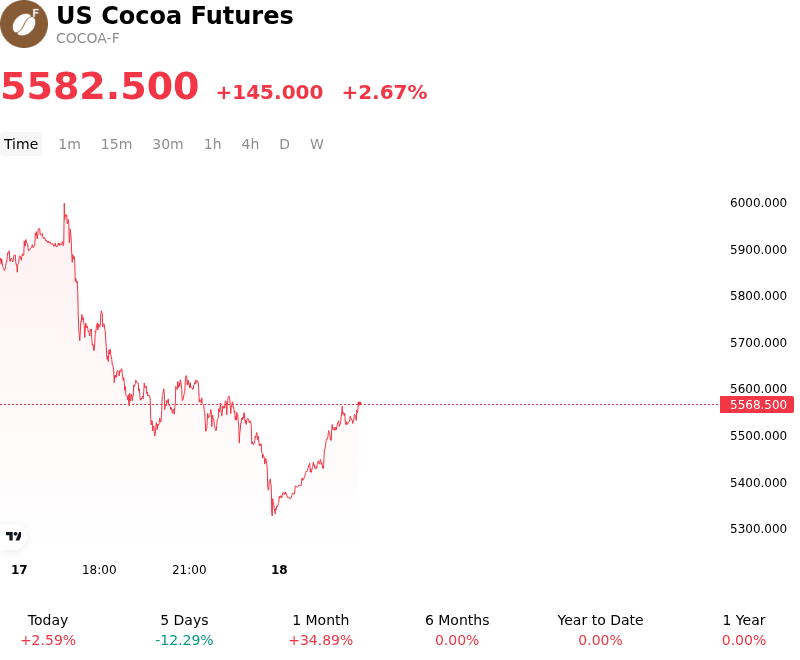
US Cocoa Futures (COCOA-F) is up 2.67% at Jul 17 06:00(ET), now at $5582.5, with a 7-day down of 6.50%.
What is driving US Cocoa Futures (COCOA-F)’s stock price up today?
Cocoa futures advanced as the market reacted to deteriorating crop prospects in West Africa and stronger-than-expected quarterly processing data. The primary catalyst is the increasing concern over the upcoming main crop development in Ivory Coast and Ghana, where localized weather patterns have failed to provide sufficient moisture for the early development of pods. This renewed focus on supply constraints comes at a time when global inventories remain near multi-year lows, leaving the market highly sensitive to any disruption in the production cycle.
Demand-side signals also provided support, as recently released second-quarter grindings data from major consuming regions indicated that global consumption remains resilient despite the historically high price environment. The figures suggest that industrial buyers and chocolate manufacturers are continuing to secure physical supplies to prevent stock-outs, even as retail prices rise. This demand inelasticity has forced market participants to re-evaluate their expectations for a potential surplus, shifting the consensus back toward a structural deficit for the remainder of the season.
Institutional positioning further amplified the intraday volatility. Low liquidity in the futures market, often driven by high margin requirements and reduced participation from smaller commercial players, has resulted in exaggerated price swings. As prices breached key technical resistance levels, systematic trend-followers and algorithmic traders likely accelerated their buying activity to cover short positions or initiate new long exposures. This technical pressure, combined with the underlying supply anxiety, created a self-reinforcing upward move.
Furthermore, logistics and regulatory factors are weighing on the outlook. Ongoing implementation of stricter environmental and sustainability standards in key consuming regions is increasing the premium for certified beans, further tightening the available supply of deliverable cocoa. While the market monitors the tail end of the mid-crop harvest, the focus remains firmly on the health of the main crop and the ability of West African producers to recover from consecutive years of underperformance due to aging tree stocks and crop disease.
More details about US Cocoa Futures (COCOA-F)
Recent Events and Risks:
- Improving West African Weather Conditions: Recent heavy rainfall across key growing regions in the Ivory Coast and Ghana has significantly improved soil moisture levels for the upcoming mid-crop, leading to a reduction in the "weather premium" and triggering speculative long liquidations.
- Evidence of Global Demand Destruction: Major global chocolate manufacturers have signaled a shift toward cocoa butter substitutes and reduced product sizing as record-high prices begin to erode consumer demand, raising concerns that industrial grinding volumes will continue to contract in the current quarter.
- Extreme Liquidity Stress and Margin Volatility: Persistently high margin requirements on the ICE exchange have thinned market liquidity, making cocoa futures susceptible to violent intraday price swings and "flash" sell-offs as traders struggle to maintain positions amid high capital costs.
- Slowing Deficit Projections: Recent port arrival data from West Africa indicates that while cumulative totals remain below last year's levels, the rate of decline is stabilizing, prompting institutional analysts to revise supply-deficit forecasts downward and pressure overextended bullish bets.
Find out more
Comments