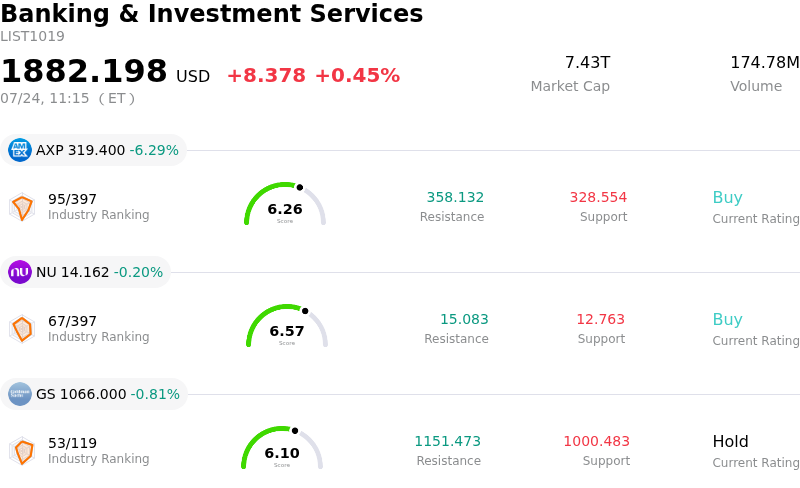
American Express Co (AXP) moved down by 6.29%. The Banking & Investment Services sector is up by 0.45%. The company underperformed the industry. Top 3 stocks by turnover in the sector: American Express Co (AXP) down 6.29%; Nu Holdings Ltd (NU) down 0.20%; Goldman Sachs Group Inc (GS) down 0.81%.
What is driving American Express Co (AXP)’s stock price down today?
American Express experienced a sharp decline during today's session, primarily driven by the company's latest quarterly earnings report which failed to meet elevated market expectations. While the top-line revenue figures showed moderate growth, the underlying composition of the earnings suggests that the premium consumer segment may finally be feeling the effects of persistent macroeconomic pressures. Investors reacted negatively to the compression in net interest margins and a noticeable uptick in operating expenses, which management attributed to increased marketing spend and technological infrastructure investments.
A significant point of concern for institutional investors is the substantial increase in provisions for credit losses. This builds a narrative that even high-tier cardholders are beginning to exhibit signs of financial strain, leading to a rise in delinquency rates that exceeded internal models. As the cost of funding remains elevated, the ability of American Express to maintain its historical profitability margins is being questioned, especially as the buffer provided by its affluent customer base appears to be narrowing.
Sector-specific data indicates a cooling in the travel and entertainment segment, which has been a primary growth engine for the company over the past several years. Management's cautious guidance for the remainder of the fiscal year suggests that the post-pandemic surge in discretionary spending is normalizing faster than anticipated. This shift has prompted several sell-side analysts to lower their price targets and revise their earnings-per-share estimates downward, citing a less favorable risk-reward profile in the near term.
The broader market sentiment was further dampened by fears of a weakening labor market, which directly impacts card utilization and repayment capacity. From a technical perspective, the stock breached key support levels, triggering automated sell orders and accelerating the intraday retreat. Until there is more clarity on the stabilization of credit metrics and a more optimistic outlook for consumer discretionary spending, the equity is likely to face continued volatility and pressure from institutional portfolio rebalancing.
Technical Analysis of American Express Co (AXP)
Technically, American Express Co (AXP) shows a MACD (12,26,9) value of -3.842, indicating a neutral signal. The RSI at 47.033 suggests neutral condition and the Williams %R at 75.387 suggests sell condition. Please monitor closely.
Media Coverage of American Express Co (AXP)
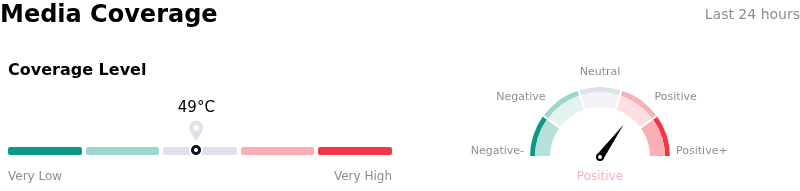
In terms of media coverage, American Express Co (AXP) shows a coverage score of 49, indicating a moderate level of media attention. The overall market sentiment index is currently in bullish zone.
Fundamental Analysis of American Express Co (AXP)
American Express Co (AXP) is in the Banking & Investment Services industry. Its latest annual revenue is $56.12B, ranking 6 in the industry. The net profit is $10.70B, ranking 10 in the industry. Company Profile
Over the past month, multiple analysts have rated the company as Buy, with an average price target of $371.39, a high of $450.00, and a low of $313.55.
More details about American Express Co (AXP)
Company Specific Risks:
- Rising Credit Delinquencies: Recent data indicates a sharp trend of increasing net write-off rates and 30-plus day delinquencies, specifically among Millennial and Gen Z cardmember cohorts, signaling potential asset quality erosion and higher-than-expected default risks.
- Elevated Loan Loss Provisions: Management’s latest financial updates show a substantial sequential hike in provisions for credit losses, which directly impacts net income and reflects a defensive posture against worsening macroeconomic conditions and anticipated borrower stress.
- Slowing Premium Category Growth: Intraday volatility is being driven by analyst concerns over a cooling in high-end consumer spending on travel and entertainment, which risks a significant contraction in discount revenue, the company’s primary income source.
- Regulatory Margin Compression: Ongoing scrutiny from the CFPB regarding credit card late fee caps and potential shifts in interchange fee structures poses a direct threat to non-interest income and long-term margin stability.
Find out more
Comments