Bitcoin (BTCUSD) is down 1.22% at Jul 23 08:45(ET), now at $65085.99, with a 7-day up of 1.56%.
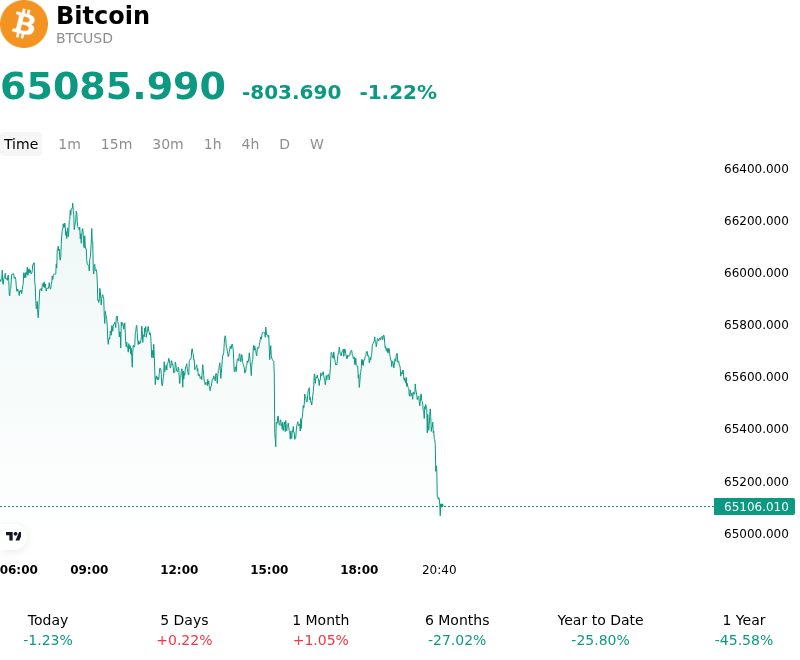
What is driving Bitcoin (BTCUSD)’s stock price down today?
Bitcoin is experiencing downward pressure primarily driven by a shift in global liquidity expectations and a temporary cooling in spot ETF demand. Investors are recalibrating their portfolios as recent US macroeconomic data suggests a more persistent inflationary environment than previously anticipated. This has led to a hawkish repricing of Federal Reserve policy, pushing US Treasury yields higher and bolstering the US Dollar Index. As the opportunity cost of holding non-yielding digital assets rises, institutional desks have marginally reduced their exposure, leading to a noticeable slowdown in net inflows across major Bitcoin exchange-traded funds.
The intraday weakness is being exacerbated by a buildup of long liquidations in the derivatives market. High leverage ratios observed earlier in the week have left the market vulnerable to price corrections, as cascading sell orders triggered by breached support levels accelerate the decline. Furthermore, on-chain data indicates a moderate increase in exchange inflows from long-term holders, suggesting that some market participants are taking profits following the asset's recent attempts to consolidate at higher valuations. This profit-taking behavior often precedes periods of consolidation as the market seeks a new equilibrium point.
Regulatory sentiment also remains a focal point for institutional investors. Recent commentary from international financial oversight bodies regarding tighter reporting requirements for cross-border digital asset transactions has introduced a layer of caution. While the long-term structural adoption narrative remains intact, these short-term regulatory uncertainties tend to dampen risk appetite among larger asset managers who prioritize compliance and clarity. The current retracement reflects a broader risk-off mood across global markets, as participants weigh the impact of restrictive monetary policy on future economic growth.
In the absence of a major bullish catalyst, price action is increasingly tied to traditional finance correlations. The tightening of global liquidity conditions continues to serve as a primary headwind, offsetting some of the positive sentiment generated by corporate treasury adoption and ongoing network developments. Investors are likely to remain sidelined until there is greater clarity on the next move by the Federal Reserve or a significant reversal in ETF flow trends. The focus remains on whether current liquidity levels can withstand further selling pressure or if a deeper correction is required to wash out remaining speculative leverage.
Technical Analysis of Bitcoin (BTCUSD)
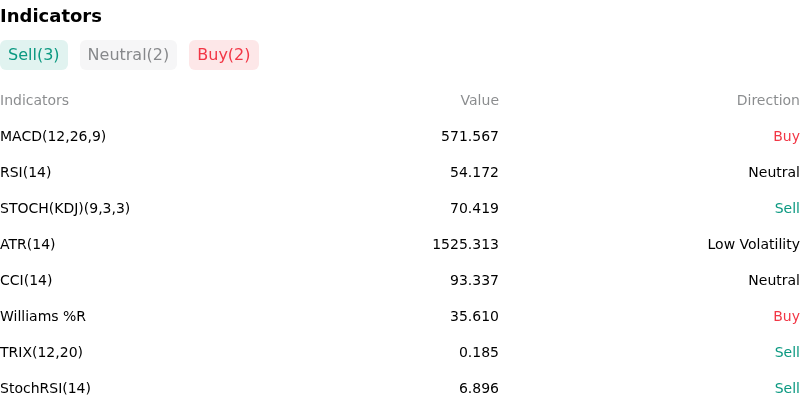
Technically, Bitcoin (BTCUSD) shows a MACD (12,26,9) value of 571.567, indicating a buy signal. The RSI at 54.172 suggests neutral condition and the Williams %R at 35.610 suggests buy condition. Please monitor closely.
More details about Bitcoin (BTCUSD)
Recent Events and Risks:
- Hawkish Federal Reserve Outlook: Recent FOMC minutes have revealed a shift toward a more restrictive monetary stance, with several officials indicating that interest rate hikes remain on the table if inflation persists, driving Treasury yields higher and pressuring non-yielding assets like Bitcoin.
- Geopolitical Macro Pressures: Escalating tensions in the Middle East and rising oil prices have triggered a broad "risk-off" sentiment in global markets, causing Bitcoin to break below the $66,000 level and retest critical liquidity zones near $65,000.
- Legislative and Regulatory Gridlock: Bipartisan friction in the Senate regarding the "Digital Asset Market Clarity Act" has significantly lowered the probability of comprehensive crypto legislation passing in 2026, maintaining a high regulatory risk premium for institutional participants.
- Exchange Operational Disruptions: The announcement of BitMEX's scheduled closure of its derivatives platform in September 2026 has initiated a mandatory wind-down of open interest, creating intraday selling pressure as traders migrate positions and exit leveraged contracts.
Find out more
Comments