Micron Technology Inc (MU) moved down by 4.91%. The Technology Equipment sector is down by 2.28%. The company underperformed the industry. Top 3 stocks by turnover in the sector: Micron Technology Inc (MU) down 4.91%; SanDisk Corporation (SNDK) down 11.22%; NVIDIA Corp (NVDA) down 3.46%.
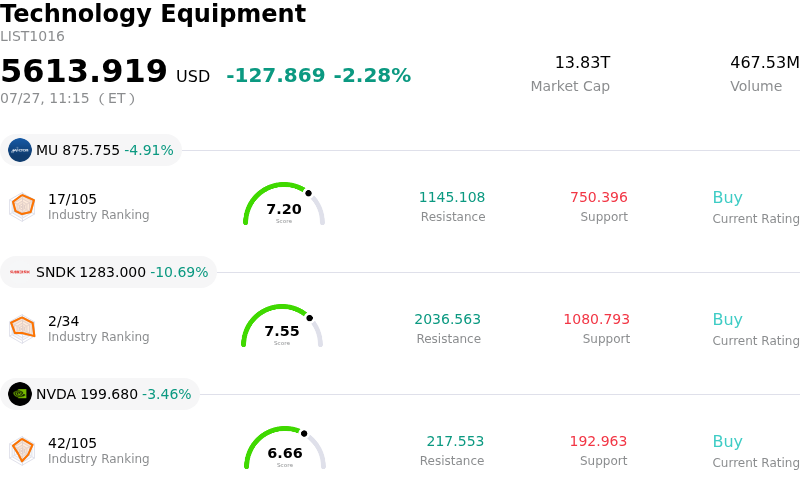
What is driving Micron Technology Inc (MU)’s stock price down today?
The semiconductor sector is facing renewed pressure as investors reassess the sustainability of high capital expenditures in the artificial intelligence infrastructure space. Micron, as a primary provider of high-bandwidth memory, is particularly sensitive to shifts in hardware procurement cycles. The current downward pressure reflects a broader rotation away from high-growth technology names toward more defensive sectors, driven by recent macroeconomic data suggesting a potential cooling in enterprise spending and persistent uncertainty regarding the long-term return on investment for AI projects.
Competitive dynamics within the memory market are intensifying. Reports indicating that major rivals have successfully ramped up production of next-generation memory chips have sparked concerns over potential margin compression. While the company has maintained a technological edge in recent months, the narrowing gap in supply capabilities suggests that the premium pricing power enjoyed over the previous quarters may be beginning to erode. This heightened competition often leads to increased volatility in memory spot prices, which institutional investors are pricing in ahead of upcoming quarterly reports.
Recent adjustments to analyst forecasts have weighed on investor sentiment as several brokerages revised their near-term outlook for the DRAM and NAND markets. Concerns regarding inventory builds at major cloud service providers are causing a re-evaluation of demand forecasts for the second half of the year. Furthermore, institutional portfolio adjustments, possibly linked to seasonal rebalancing and profit-taking in the high-performing semiconductor space, have contributed to the observed intraday volatility. The absence of immediate positive catalysts has left the stock vulnerable to technical selling as it tests previous support levels.
Operational risks related to significant capital investment requirements for new fabrication facilities are also coming under closer scrutiny. As the company continues its aggressive expansion to meet long-term demand, the associated depreciation costs and high capital intensity may pressure free cash flow in an environment where revenue growth shows signs of normalizing. Investors are currently displaying a preference for liquidity and earnings visibility, leading to a cautious stance on equities with high sensitivity to the cyclical nature of the global technology supply chain.
Technical Analysis of Micron Technology Inc (MU)
Technically, Micron Technology Inc (MU) shows a MACD (12,26,9) value of -12.765, indicating a sell signal. The RSI at 47.136 suggests neutral condition and the Williams %R at 49.482 suggests neutral condition. Please monitor closely.
Media Coverage of Micron Technology Inc (MU)
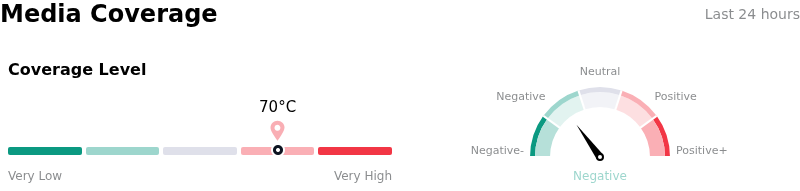
In terms of media coverage, Micron Technology Inc (MU) shows a coverage score of 70, indicating a high level of media attention. The overall market sentiment index is currently in bearish zone.
Fundamental Analysis of Micron Technology Inc (MU)
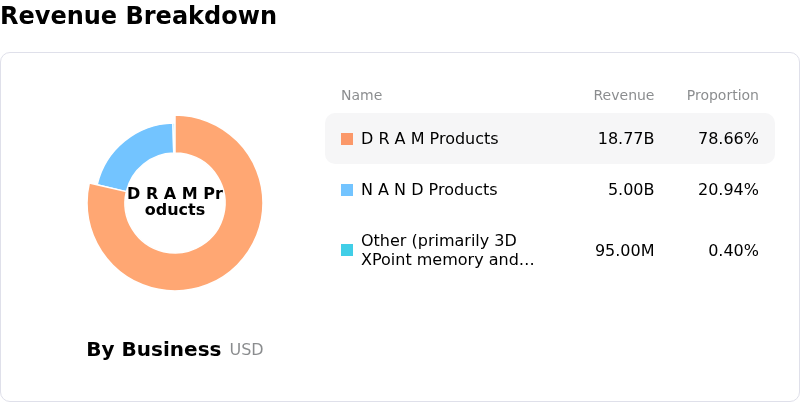
Micron Technology Inc (MU) is in the Technology Equipment industry. Its latest annual revenue is $37.38B, ranking 7 in the industry. The net profit is $8.54B, ranking 6 in the industry. Company Profile
Over the past month, multiple analysts have rated the company as Buy, with an average price target of $1455.65, a high of $2000.00, and a low of $190.00.
More details about Micron Technology Inc (MU)
p>Company Specific Risks:
- Revenue Guidance Underperformance: Despite beating quarterly estimates, Micron's Q4 revenue guidance of $7.4 billion to $7.8 billion failed to exceed high-end institutional "whisper numbers," leading to immediate downward pressure as investors price in a slower-than-anticipated acceleration of AI-related growth.
- Production Capacity Constraints: Management’s confirmation that High Bandwidth Memory (HBM) supply is fully allocated through 2025 indicates a significant ceiling on near-term revenue upside, as the company lacks the immediate manufacturing flexibility to capture additional market share during this peak demand cycle.
- Capital Expenditure Margin Pressure: The projection that capital expenditures will rise significantly into fiscal 2025 to support fab construction in Idaho and New York is raising analyst concerns regarding near-term free cash flow contraction and the potential for long-term margin compression if demand cycles shift.
- Sluggish Non-AI Segment Recovery: Persistent inventory normalization and tepid demand in the traditional PC and smartphone markets continue to act as a drag on standard DRAM and NAND pricing, creating a fundamental imbalance where AI gains are partially offset by stagnation in consumer electronics.
Find out more
Comments