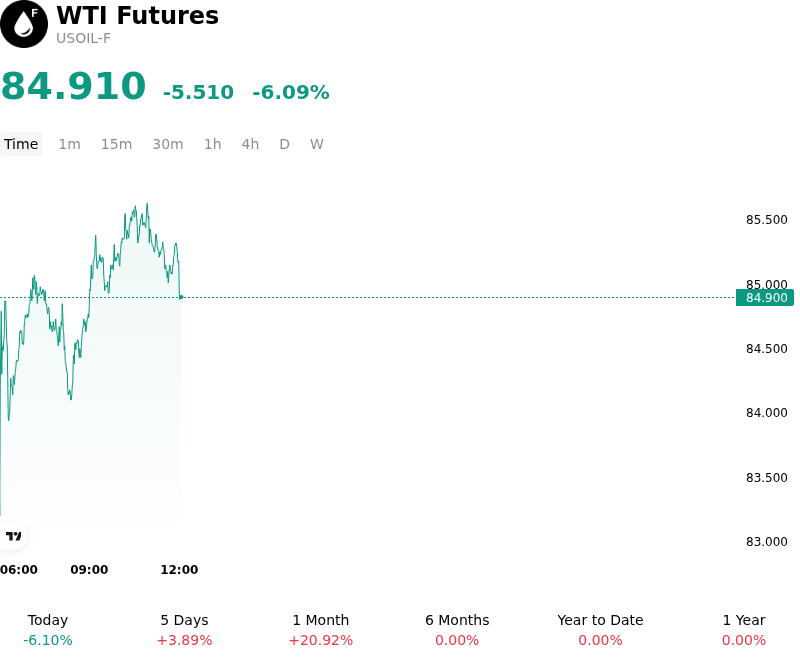
WTI Futures (USOIL-F) is down 6.09% at Jul 27 00:05(ET), now at $84.91, with a 7-day up of 3.08%.
What is driving WTI Futures (USOIL-F)’s stock price down today?
The primary catalyst for the sharp downward pressure on WTI crude oil prices is a significant de-escalation in Middle Eastern geopolitical tensions. Reports of a comprehensive diplomatic breakthrough have led to a rapid unwinding of the geopolitical risk premium that had been priced into the market for several months. Institutional investors are reassessing the likelihood of supply disruptions, leading to a massive liquidation of long positions as the perceived threat to regional energy infrastructure and maritime trade routes diminishes.
Simultaneously, the demand outlook has deteriorated following a series of disappointing economic indicators from major global consumers. In particular, manufacturing activity and industrial demand data from China have underscored a persistent cooling of the world’s second-largest economy. This macroeconomic softening has forced analysts to revise global consumption forecasts downward, suggesting that the supply-demand balance for the remainder of the year may be looser than previously anticipated. The shift in sentiment is transitioning the market focus from supply scarcity toward a potential oversupply scenario.
From a technical perspective, the breach of key support levels near major psychological benchmarks triggered a wave of systematic selling. Commodity trading advisors and algorithmic models, which track momentum and volatility, likely intensified the downward move as technical floors were compromised. This institutional exit, occurring in an environment of heightened volatility, amplified the intraday move as liquidity thinned and stop-loss orders were triggered across the futures curve.
Additionally, a notable strengthening of the US dollar has created a significant headwind for the energy complex. As the dollar appreciates against a basket of major currencies, dollar-denominated crude oil becomes more expensive for international buyers, effectively dampening global demand. This currency-driven pressure, coupled with a hawkish shift in interest-rate expectations, reflects a broader tightening of financial conditions that typically weighs on pro-cyclical commodities. Investors remain focused on the upcoming OPEC+ monitoring committee meeting for any signals regarding potential adjustments to production quotas in response to this price volatility.
Technical Analysis of WTI Futures (USOIL-F)
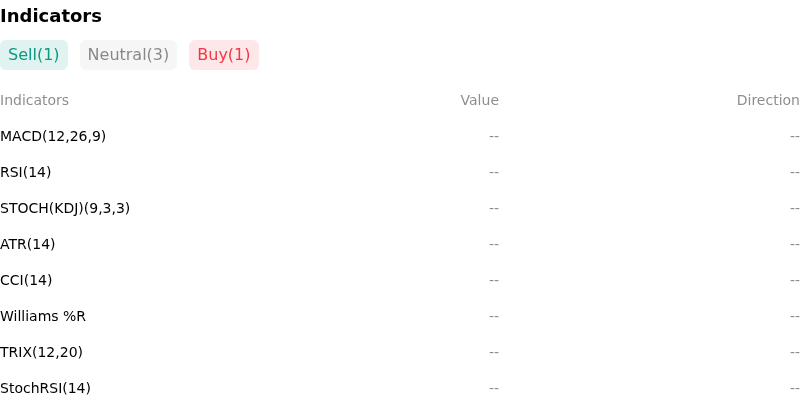
Technically, WTI Futures (USOIL-F) shows a MACD (12,26,9) value of 0.000, indicating a neutral signal. The RSI at 54.901 suggests neutral condition and the Williams %R at 37.412 suggests buy condition. Please monitor closely.
More details about WTI Futures (USOIL-F)
Recent Events and Risks:
- Macroeconomic Headwinds and USD Strength: Recent central bank signals indicating a prolonged period of restrictive monetary policy have bolstered the US Dollar, making dollar-denominated WTI more expensive for international buyers and heightening fears of an industrial demand slowdown.
- Softening Refining Margins: A notable contraction in gasoline and middle distillate crack spreads over the last 48 hours suggests that physical product demand is failing to meet seasonal expectations, creating a near-term risk that refineries will reduce crude throughput and build inventories.
- Easing Geopolitical Risk Premium: Increased diplomatic activity and the absence of direct supply disruptions in key transit corridors have prompted institutional traders to unwind long positions previously held as a hedge against conflict-related outages, removing a significant price floor.
- OPEC+ Production Uncertainty: Growing market speculation regarding a potential phased unwind of voluntary production cuts has introduced significant downside volatility, as participants weigh the risk of an oversupplied global market in the coming quarters.
Find out more
Comments