TradingKey - On August 3, Japanese and South Korean stock markets closed lower across the board, with both Samsung Electronics and SK Hynix plunging nearly 9%.
The Korea Composite Stock Price Index (KOSPI) closed down 5.13% at 6,257.41 points. Meanwhile, intraday losses on South Korea's junior market, the KOSDAQ, widened, triggering a sidecar mechanism and temporarily suspending program trading.
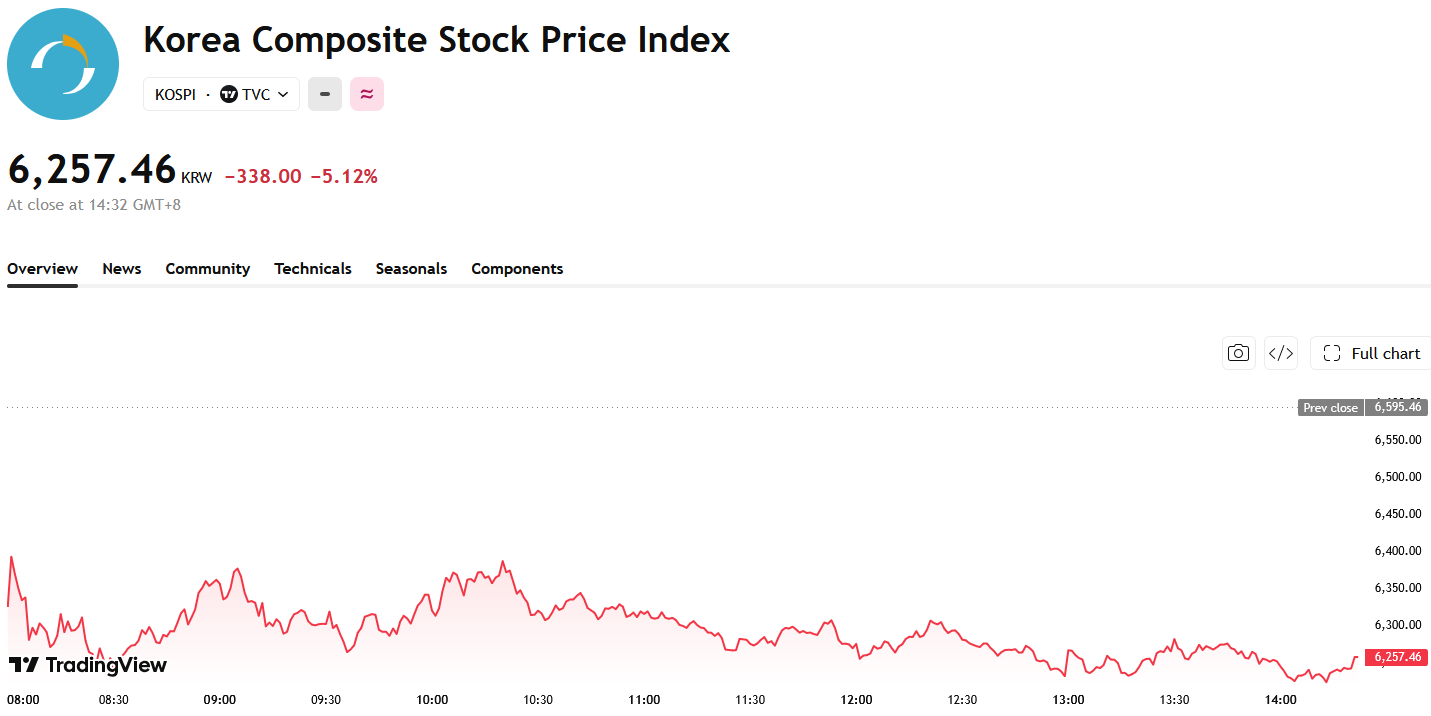
Source: TradingView
Japan's Nikkei 225 Index fell 0.94% to close at 63,754.90 points.
Heavyweight semiconductor stocks continued to drag down the index, with Samsung Electronics closing down 8.76% at 239,500 won (approximately $167) and SK Hynix falling 8.79% to close at 1,567,000 won. The simultaneous weakness of the two major chip giants further weighed on the KOSPI's performance.
In contrast, Japanese tech stocks performed relatively steadily overall. Kioxia rose 5.72% to close at 49,160 yen (approximately $314), while SoftBank Group gained 2.53% to close at 5,393 yen.
Against the backdrop of continuous and volatile market fluctuations, South Korean regulatory authorities are accelerating regulatory reforms targeting leveraged ETFs. The focus of recent discussions is on granting regulators "emergency action authority," allowing them to temporarily lower the leverage ratio of single-stock leveraged ETFs during periods of abnormal market volatility.
Currently, most single-stock leveraged products in South Korea are designed with 2x leverage. If the legislative amendment is completed in the future, regulators could reduce the leverage ratio to 1.5x or even 1x based on market conditions, in order to mitigate the magnifying effect of leveraged funds on market volatility.
Meanwhile, regulators are also studying more risk control measures, including setting investment caps on leveraged products for individual investors and further raising initial margin requirements. South Korea's Financial Services Commission (FSC) and Financial Supervisory Service (FSS) are jointly pushing forward an amendment to the Financial Investment Services and Capital Markets Act to provide a clearer legal basis for taking stabilizing measures during periods of extreme market volatility in the future.
Find out more
Comments