TradingKey - As U.S. inflation, employment, and consumer spending data continue to cool, market expectations for a Fed rate hike in September are rapidly subsiding. Currently, the probability of a September rate hike has dropped to about 30%. Jeremy Siegel, senior economist at WisdomTree and professor of finance at the Wharton School, stated that as long as oil prices remain stable around $80 per barrel, the Fed is very likely not to raise rates in September.
U.S. stocks have begun trading on "soft landing" expectations. The S&P 500 Index broke above 7,800 points for the first time, with cooling inflation, corporate earnings growth, and AI-driven efficiency gains jointly driving a rebound in risk appetite.
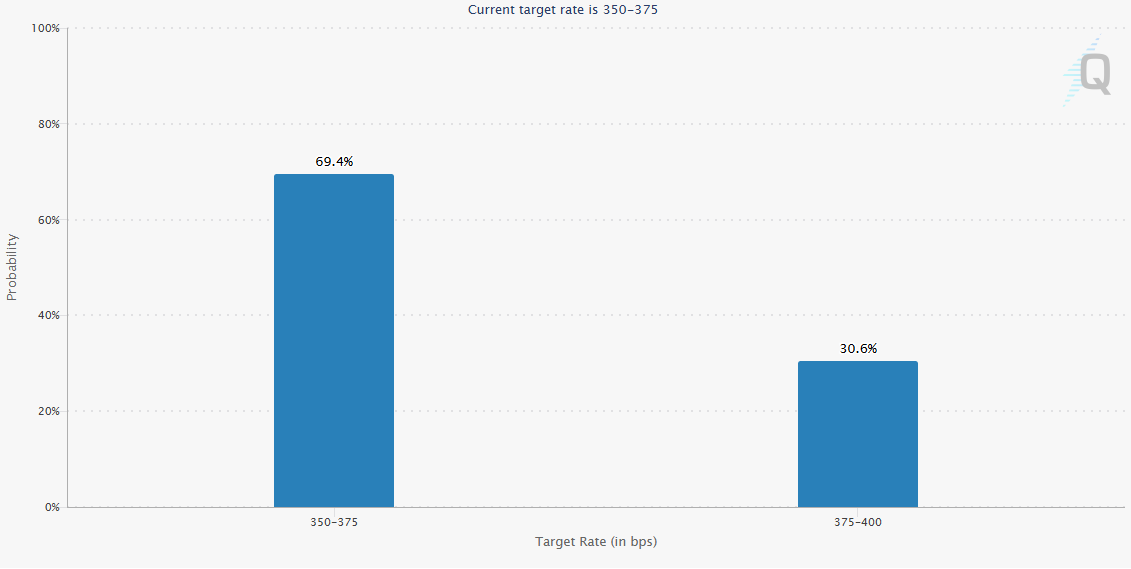
Market pricing of the probability of a September rate cut, Source: CME Group, FedWatch Tool
The market is beginning to believe that the Fed's policy choices are shifting from "whether to resume rate hikes" to "whether to remain on hold." However, a rebound in oil prices and a resurgence in inflation could still disrupt market pricing of the September policy path.
Inflation Data Is at the Core of Market Pivot
U.S. CPI rose 0.1% month-on-month in July, with the year-on-year increase slowing from 3.5% in June to 3.4%; the subsequently released PPI was also weaker than expected, indicating that price pressures previously brought by the oil price shock are easing.
Siegel noted that two consecutive months of milder inflation data have significantly reduced the necessity for the Federal Reserve to continue raising interest rates. Goldman Sachs also lowered its forecast for the PCE price index following the latest data release, and now expects the metric to rise by just 0.2% monthly.
Weakening Employment and Spending Further Reinforce Market Expectations
U.S. employment unexpectedly fell in July, prompting traders to scale back their bets on rate hikes for the year. Meanwhile, U.S. retail sales dropped 0.6% month-on-month in July, the largest decline since May 2025 and significantly below market expectations; excluding autos and gasoline, retail sales still slipped 0.2%. Given that consumer spending accounts for roughly 70% of U.S. GDP, the weakening retail sales data implies that the U.S. economy no longer faces just an inflation problem, but also slowing demand momentum.
Oil Prices Become Key Variable Affecting September Policy Decisions
After the U.S. attack on Iran triggered a supply shock, energy prices temporarily pushed up inflation and long-term Treasury yields. However, oil prices pulled back noticeably this week, with U.S. benchmark crude prices falling more than 3.5% at one point on Thursday, easing market concerns over re-accelerating inflation. Siegel believes that as long as oil prices can remain near $80, the rationale for the Federal Reserve to continue raising interest rates will further weaken.
Changes in Rate Expectations Rapidly Transmit to Bond Market
On August 13, US Treasury yields broadly moved lower, with short-end bonds performing particularly noticeably, reflecting market bets that the Federal Reserve will hold interest rates steady at least in September. However, long-end Treasuries remained suppressed by fiscal deficits, debt issuance demand, and long-term inflation risks. The winning yield on the US Treasury's 30-year bond auction reached 5.216%, marking the highest borrowing cost for a 30-year bond auction since 2001.
Find out more
Comments