TradingKey - On September 29, international oil prices experienced a clear intraday reversal. WTI crude (USOIL) and Brent crude (UKOIL) both rose over 1% in early trading before quickly giving back all gains and turning lower, with intraday declines both exceeding 2% at one point. The rapid drop in oil prices from high levels reflects renewed market expectations of Middle East supply recovery and progress in US-Iran negotiations. As of press time, WTI crude was down about 2.8%, trading near $90.8, while Brent crude was down about 2.6%, trading near $96.1.
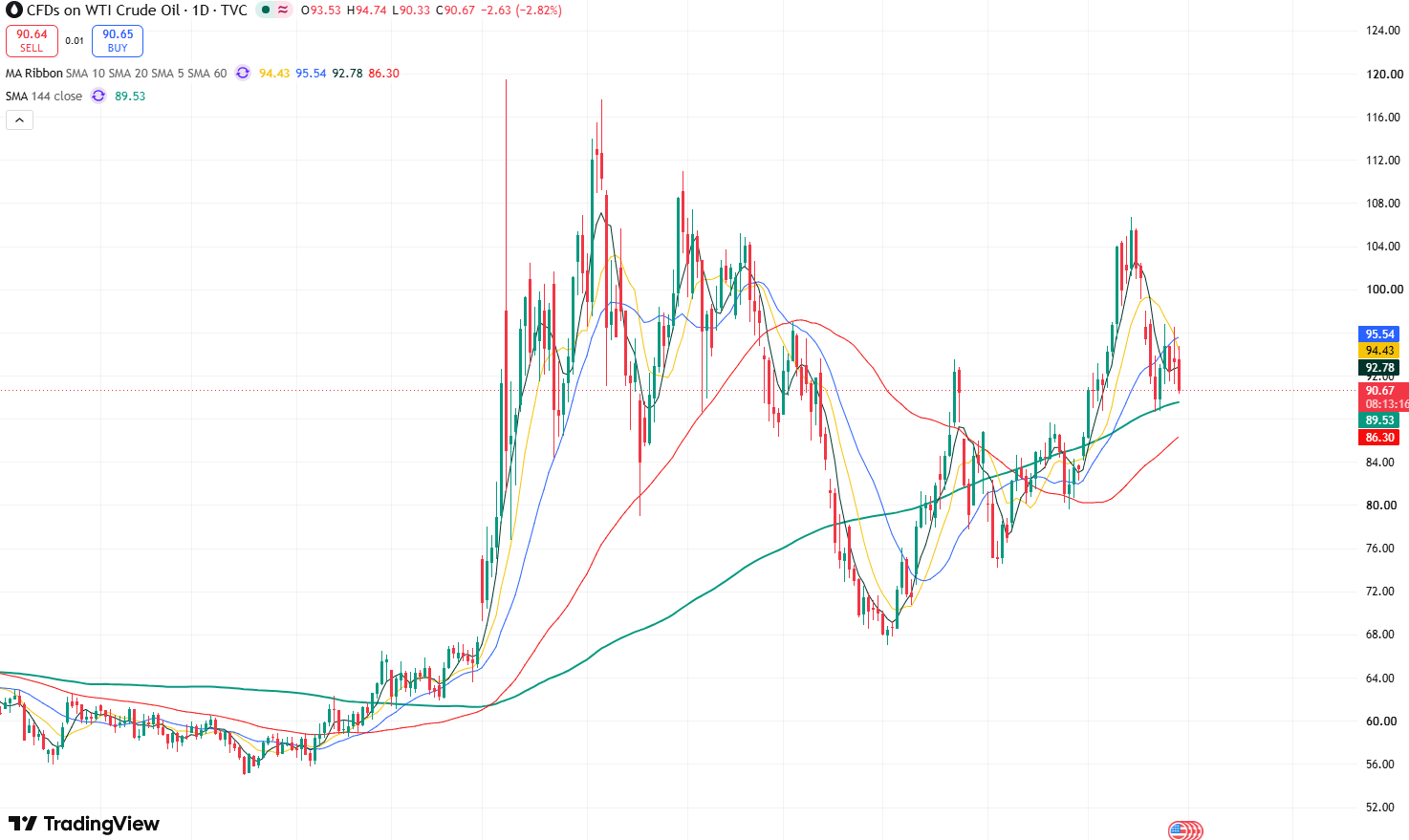
WTI crude oil price daily chart, Source: TradingView
In early Asian trading, oil prices were initially supported by the US-Iran situation. US President Trump denied having offered Iran sanctions relief or the release of frozen funds, while significant differences remained in negotiations between the US and Iran over a ceasefire and the reopening of the Strait of Hormuz. Brent crude rose to a high of $100.28 in early trading, while WTI also climbed to $94.74.
The reversal in oil prices was primarily linked to the resumption of diplomatic contact between the US and Iran. US and Iranian officials held separate talks with mediators on Monday, with subsequent discussions expected to center on a modified version of Iran's previously proposed "seven-day plan." The proposal addresses ceasefire arrangements and the reopening of the Strait of Hormuz. Although significant differences remain between the two sides, the continued operation of diplomatic channels led the market to reassess the likelihood of further escalation in the Middle East conflict and sustained tightening of energy supplies.
Meanwhile, US President Trump on Tuesday denied having offered Iran conditions such as sanctions relief or asset unfreezing, stating that the US made no concessions to Iran. Iranian President Pezeshkian stated that Iran remains willing to negotiate through diplomatic channels but opposes reaching an agreement under pressure. Currently, neither side has announced a formal ceasefire arrangement, and negotiations remain in the indirect contact stage.
In addition to diplomatic news, the recovery of actual crude oil supply in the Middle East has also become an important factor weighing on oil prices. Saudi Arabia has resumed crude oil loading at Yanbu port along the Red Sea coast, and the East-West pipeline, previously closed due to drone attacks, has also resumed operations. Currently, crude loading volume at Yanbu port is around 2 million barrels per day, and pipeline throughput is about 2.65 million barrels per day, which could potentially rise further to 3 million to 4 million barrels per day in the future.
Kpler data shows that crude oil exports from the Middle East rebounded to about 16.33 million barrels per day in September, the highest level since the outbreak of the US-Iran conflict in February this year, recovering to about 80% of pre-conflict levels. Among this, the volume of crude oil transported through the Strait of Hormuz recovered to around 9.72 million barrels per day, noticeably higher than previous lows. Saudi Arabia's crude oil exports in September also increased from about 2.45 million barrels per day in August to around 5.40 million barrels per day.
Find out more
Comments