USD/MXN (USDMXN) is down 0.59% at Oct 12 09:25(ET), now at $18.29841, with a 7-day up of 1.26%.
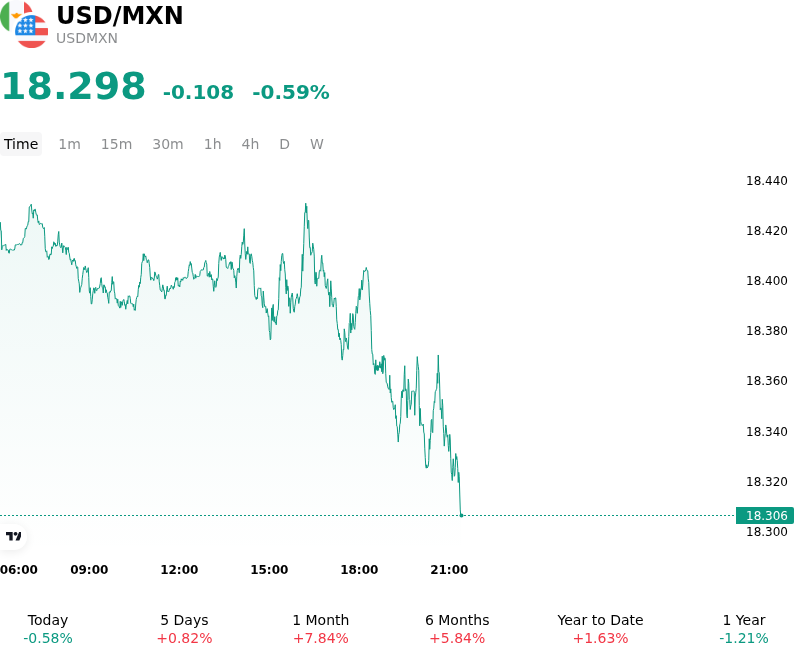
What is driving USD/MXN (USDMXN)’s stock price down today?
The decline in USDMXN reflects a pullback in the US dollar as market participants re-evaluate interest rate differentials and re-engage in carry-trade strategies favoring the Mexican peso. Mexico continues to offer an attractive nominal yield advantage over US Treasuries, providing fundamental support for the peso during periods of stable risk sentiment. While recent Bank of Mexico policy communications highlighted discussions regarding potential rate cuts if inflation dynamics improve, persistent core inflation and elevated domestic bond yields have reinforced market expectations that Banxico will maintain a cautious, measured approach to monetary easing. This policy stance preserves a substantial rate spread over the Federal Reserve, encouraging institutional capital flows back into high-yielding Mexican assets.
On the US side of the pair, a moderation in Treasury yields and a pause in the greenback’s recent rally allowed emerging market currencies to regain footing. Investors reassessed the trajectory of US monetary policy amid mixed macroeconomic signals, dampening momentum behind dollar buying. The broader risk environment stabilized as equity markets found support, prompting market participants to reduce long dollar hedges and seek carry opportunities in higher-yielding Latin American currencies. Furthermore, steady domestic data out of Mexico, including resilient consumer demand and solid industrial output indicators, helped bolster investor confidence in the peso’s macroeconomic backdrop.
From a structural perspective, the movement appears driven by positioning adjustments and profit-taking following recent upward moves in the pair, supported by underlying carry appeal. Looking ahead, institutional investors remain focused on upcoming macroeconomic releases, particularly US inflation data and central bank communications, which will shape short-term yield differentials. For the Mexican peso, the key risks to monitor include any acceleration in Banxico's rate-cutting cycle or renewed volatility in global risk appetite that could temporarily diminish the attractiveness of carry trades. In the absence of major risk-off shocks, the attractive interest rate differential should continue to anchor demand for the Mexican currency relative to the dollar.
Technical Analysis of USD/MXN (USDMXN)
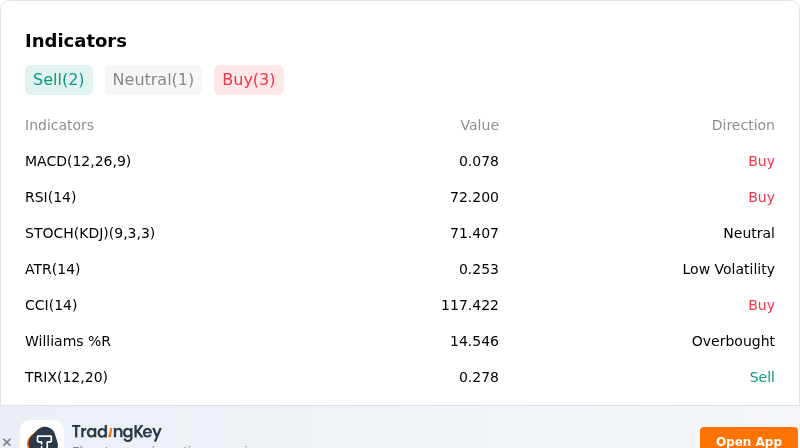
Technically, USD/MXN (USDMXN) shows a MACD (12,26,9) value of 0.078, indicating a buy signal. The RSI at 72.200 suggests buy condition and the Williams %R at 14.546 suggests overbought condition. Please monitor closely.
More details about USD/MXN (USDMXN)
Recent Events and Risks:
- Dovish Banxico Minutes and Rate Spread Compression: The release of Banxico's meeting minutes revealed that a majority of board members remain open to interest rate cuts if inflation allows, diminishing domestic yield support. With the Federal Reserve signaling persistent rate hawkishness, the narrowing US-Mexico yield differential is triggering carry-trade unwinds and driving intraday upside pressure in USD/MXN.
- Mexican Fiscal Slippage and Sovereign Risk Premiums: Market anxieties surrounding Mexico's expanding fiscal deficit and public debt projections rising toward 55% of GDP have heightened sovereign risk premiums on Mexican assets. Uncertainty over structural fiscal consolidation recommendations from the IMF and upcoming USMCA trade review preparations continue to weigh on local currency sentiment.
- Elevated US Treasury Yields and Safe-Haven Dollar Demand: Resilient US economic indicators and persistent core inflation expectations have kept US Treasury yields elevated near 5.2%. This relative yield stability in US fixed income compared to moderating Mexican bond yields has encouraged institutional capital flows into dollar-denominated assets at the expense of Latin American FX.
- Domestic Economic Slack and Global Risk-Off Sentiment: Emerging signs of slowing domestic economic growth and moderating demand in Mexico are limiting Banxico's room to maneuver. Broader global risk-off sentiment, driven by geopolitical friction and energy market volatility, is prompting macro funds to reduce high-beta emerging market exposures in favor of safe-haven liquidity.
Find out more
Comments