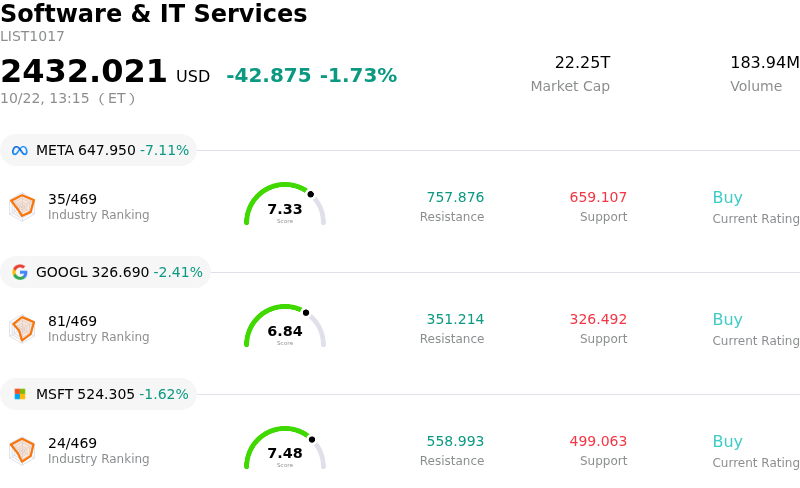
Oracle Corp (ORCL) moved down by 4.02%. The Software & IT Services sector is down by 1.73%. The company underperformed the industry. Top 3 stocks by turnover in the sector: Meta Platforms Inc (META) down 7.11%; Alphabet Inc Class A (GOOGL) down 2.41%; Microsoft Corp (MSFT) down 1.62%.
What is driving Oracle Corp (ORCL)’s stock price down today?
Oracle's share price decline reflects persistent investor anxiety surrounding the massive capital expenditures and elevated leverage required to build out its artificial intelligence cloud infrastructure. Although the company continues to demonstrate robust cloud demand—underpinned by a multi-hundred-billion-dollar backlog in remaining performance obligations—the market is increasingly focused on the near-term financial burden of this expansion. Heavy spending on data centers, graphics processing units, and facilities has resulted in deeply negative free cash flow and a substantial debt burden, causing institutional investors to re-evaluate valuation multiples amid heightened borrowing costs.
The weakness in the equity is closely tied to broader credit market sentiment regarding heavily indebted technology enablers. Bond market volatility and expanding credit spreads across AI infrastructure providers have intensified scrutiny on Oracle's balance sheet structure and funding pipeline. While management previously announced capital-raising initiatives to support capital outlay, credit investors remain cautious about the timeline required to convert contracted backlog into positive operating cash flow. This disparity between long-term revenue promises and immediate cash burn has made the stock particularly sensitive to broader sector retreats and macro yields.
Despite current headwinds, sell-side analysts remain predominantly constructive on Oracle's long-term competitive positioning, citing its rapid cloud infrastructure growth and recent launches in agentic enterprise software. However, near-term trading dynamics suggest that product rollouts and strategic partnerships are insufficient to offset fundamental leverage concerns without tangible evidence of improving free cash flow. For institutional investors, short-term stock performance will likely remain dictated by debt-servicing metrics, interest rate expectations, and upcoming quarterly reporting from major hyperscale peers.
Technical Analysis of Oracle Corp (ORCL)
Technically, Oracle Corp (ORCL) shows a MACD (12,26,9) value of -2.281, indicating a sell signal. The RSI at 37.578 suggests neutral condition and the Williams %R at 98.791 suggests oversold condition. Please monitor closely.
Media Coverage of Oracle Corp (ORCL)
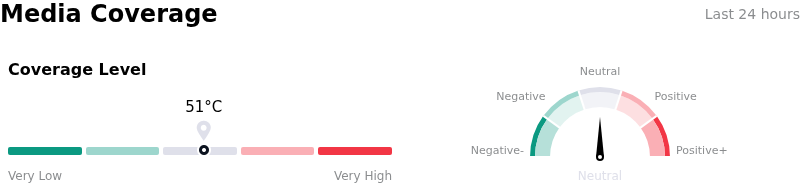
In terms of media coverage, Oracle Corp (ORCL) shows a coverage score of 51, indicating a moderate level of media attention. The overall market sentiment index is currently in neutral zone.
Fundamental Analysis of Oracle Corp (ORCL)
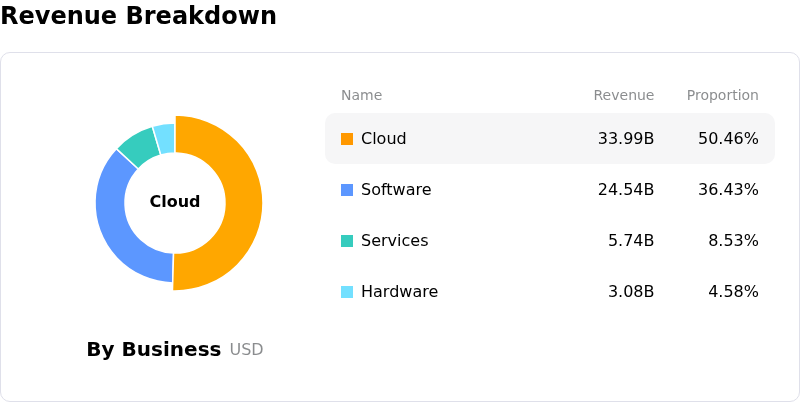
Oracle Corp (ORCL) is in the Software & IT Services industry. Its latest annual revenue is $67.36B, ranking 8 in the industry. The net profit is $16.98B, ranking 6 in the industry. Company Profile
Over the past month, multiple analysts have rated the company as Buy, with an average price target of $242.10, a high of $330.00, and a low of $110.00.
More details about Oracle Corp (ORCL)
Company Specific Risks:
- Accelerating AI Infrastructure Spending and Cash Burn: Oracle's aggressive capital expenditures for AI data-center expansion have pushed quarterly free cash flow into negative territory, sparking severe cash-burn concerns as capital outlays exceed near-term cloud monetization.
- Elevated Debt Burden and Credit Downgrade Risks: The company's total debt load has climbed significantly to fund AI hardware purchases, leaving its credit rating at BBB- (one notch above junk status) and exposing the company to borrowing cost pressure and rating agency scrutiny.
- Data Center Project Delays and Execution Bottlenecks: Infrastructure execution concerns have heightened following a force majeure invocation at its New Mexico data-center site and utility connection delays, threatening scheduled deliveries of contracted AI capacity.
- High Customer Concentration and Counterparty Risk: Cloud contract backlog remains heavily concentrated among a small cluster of AI development clients, exposing Oracle to material balance-sheet risk if highly leveraged counterparties fail to satisfy long-term purchase obligations.
Find out more
Comments