Nintendo (TSE: 7974)
Summary of the Key Information
Company overview
Nintendo (TSE: 7974) develops, manufactures, and sells entertainment products globally. It offers video game platforms, playing cards, handheld and home console hardware systems, and related software. The company was formerly known as Nintendo Playing Card Co., Ltd. and changed its name to Nintendo Co., Ltd. in 1963. Nintendo Co., Ltd. was founded in 1889 and is headquartered in Kyoto, Japan. In FY23, overseas sales accounted for >70% of total sales.
Business segments
Nintendo operates through 3 main segments: 1. Dedicated video game platforms (96.5% of FY23 revenue) 2. IP related income (3.2% of FY23 revenue) 3. Playing cards (0.4% of FY23 revenue).
The dedicated video game platform segment is split into 2 main components: 1. Nintendo Switch hardware (Nintendo Switch, Nintendo Switch OLED, Nintendo Switch Lite) and software such as game titles and the Nintendo Switch Online subscription platform (94.2% of revenue) 2. Other video game platforms hardware and software, such as the Nintendo 3DS and amiibo (2.2% of revenue).
The IP related income relates to revenue generated from mobile phone games, royalties from films produced in collaboration with studios, etc.
As with the wider video game industry, Nintendo’s revenue is inherently cyclical and subject to seasonality (eg. New Year’s sales) and the preferences of consumers.
Investment thesis
Thesis 1: Nintendo’s culture of innovation and strong IPs
Most of its peers in the video game industry which license rights to produce popular games, which poses inherent risks, as seen in the case of Electronic Arts losing its $20 billion FIFA franchise over a licensing dispute. However, Nintendo stands out from the crowd with its extensive collection of titles and franchises for which it owns the Intellectual Property (IP). With flagship titles such as Mario, Animal Crossing, Pokémon and Zelda, the company has an extensive track record of successfully creating household titles, consistently earning accolades with top sales in the video game space annually.
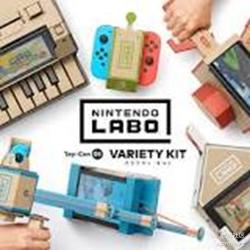
So how does Nintendo do it? A look at Nintendo’s history shows us that the company has always been known to create “quirky” products in the industry. For example, Nintendo surprised the industry back in 2018, with the release of Nintendo Labo, which were interactive cardboard toys.
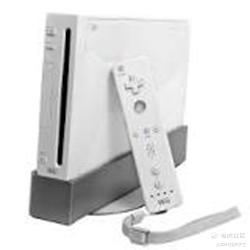
This was not the first time the company has done something so bizarre. Taking a look at the Wii that was launched in 2006, no one would have thought to play video games by swinging a remote control-looking object, and yet the Wii managed to win the hearts of consumers, becoming Nintendo’s flagship product for several years.
Thesis 2: Nintendo is crafting its journey to become a media empire with valuable IPs and loyal customers
Buried under the news of Microsoft’s announcement of its acquisition of Activision Blizzard in 2022, the news of Nintendo’s acquisition of Dynamo Pictures in 2022 went under the shadows. However, this could potentially be the crucial step in the right direction of the video game giant to pave its way into being a multimedia empire, or at the minimum, create more innovative games to retain its loyal customers. Unlike typical production studios, Dynamo Picture focuses on CGI animation work for titles such as Final Fantasy 13-2. Beyond increasing Nintendo’s capabilities in the production space, which has shown to be a potentially profitable venture especially after its success with the Super Mario Bros Movie in 2023 that boosted its console and software sales, Dynamo Picture’s unique approach to production pairs well with Nintendo’s “quirky” approach towards game creations.
Additionally, in the new age of media, Nintendo’s competition goes beyond the traditional players such as Electronic Arts and CapCom and includes the likes of Netflix and Disney Plus. As Netflix’s CEO Reed Hastings has said, his company's biggest competition doesn't come from HBO Max or Disney Plus or any other subscription streaming service as much as it does other consumer pastimes, notably video gaming. Hence, this new venture into the media space helps to not only reach a broader audience to maximise touch points beyond video game platforms into the visual content, theme park, and merchandise space, but also allows Nintendo to stay in the forefront of the minds of the public and long-time consumers’ of Nintendo IPs. Why is this important?
Majority of Nintendos’ flagship IPs such as Zelda, were published in the 1980s and 1990s. The teenagers in the 1990s and 2000s who were playing these titles created unique bonds with these games as they navigated the tribulations of teenagerhood, where studies have shown that humans tend to form the most nostalgic connections to products and media that they have been exposed to during that identity-forming period of their lives. This means that these teenagers who are now millennials and have higher levels of disposable income will be able to afford the wide range of product offerings that Nintendo offers, including the latest Zelda titles on switch, or even Amiibos to enhance their gaming experience. This helps to entrench the lock-in for the consumers and creates a loyal customer base, which is crucial to Nintendo’s success as seen by its rebounds from failed ventures such as the Wii U console. It would also be worth noting how Nintendo has displayed resilience in its innovation pathway, where despite the public display of distaste against its Wii U platform, Nintendo instead chose to focus on taking in consumers’ feedbacks and upgrading it into the now popular Nintendo Switch console.
Financials
Nintendo has a robust balance sheetwithgreatfinancial discipline. Given the cash generative nature of its operations, the company self-finances its growth, including capital investments, without raising external financing. The company also actively pays out both an interim and annual dividend.
Management
Nintendo’s management is highly experienced in the video game industry, with widely respected industry figures such as Shigeru Miyamoto, who has joined the company since 1977 and continues to lead Nintendo in its creative ventures. They are also seasoned with the cyclicality of the industry and have led the company to success through difficult economic periods and failures of Nintendo, such as the Super Mario Bros (1993) movie and the Wii U. They also led the recovery of the US video game industry after the video game crash of 1983, with the launch of the Nintendo Entertainment System in 1985.
President
Shuntaro Furukawa
Joined since 1994, General Manager of Corporate Planning Department in 2015, Global Marketing Department Director in 2016, President since 2018
Fellow
Shigeru Miyamoto
Joined since 1977, General Manager of Entertainment Analysis & Development Division in 2000, Fellow since 2015
General Manager, Entertainment Planning & Development Division
Shinya Takahashi
Joined since 1989, General Manager of Software Planning & Development Division in 2013
General Manager, Marketing Division and Licensing Division
Satoru Shibata
Joined since 1985, President of Nintendo Australia in 1999, President of Nintendo Europe in 2000, General Manager of Marketing and Licensing Division since 2018
General Manager, Platform Technology Development Division
Ko Shiota
Joined since 1992, General Manager of Platform Technology Development Division since 2015
Comments