
3. Industry Overview
US Confectionery market
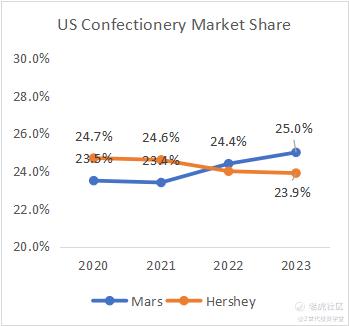
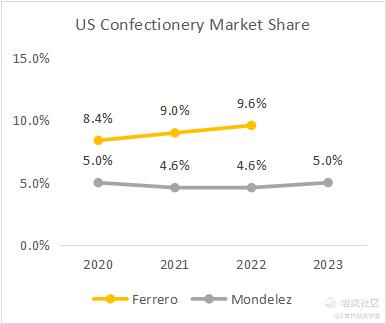
Mars and Hershey’s accounts for half of the total market share. Mars is leading US confectionery market with 25% followed closely by Hershey’s at 23.9%. The remaining players such as Ferrero and Mondelez accounts for 9.7% and 5% respectively. Based on Euromonitor, the top three snacks by brand shares are Reese’s, M&M’s and Hershey’s Chocolate Bar.
US Snacks Market
In 2017, the CEO embarked on a journey to transition Hershey into a snacking powerhouse through their savoury and better-for-you product categories. The business diversified out of confections looking into acquiring brands at least $100 million in revenue which people love but needed to leverage on Hershey’s branding to gain more customers. The company owns three of the six faster growing snack brands in the US and the savoury and better for you segment accounts for 10% of their portfolio.
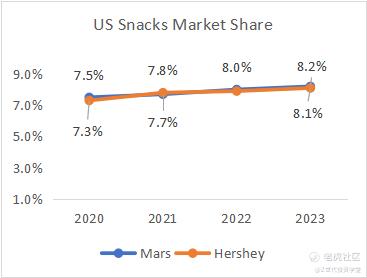
Hershey’s has been growing faster over the past five years and is expected to catch up to Mars' market share. The company has experienced better growth potential than chocolate, with annual sales of savory snacks rising 5-7%, compared to 1-3% for the former.
Global Ingredients Market
(1) Cocoa
The price of cocoa has hit its all-time high in the last 45 years, trading at ~$4,500 a ton on December 31, marking a >60% year-over-year jump, and is expected to remain elevated in 2024. The main driver behind this surge is the El Niño weather pattern and pests, which could potentially dwell on the shortfall. Moreover, the shortfall is further exacerbated by the high prices for pesticides and fertilizers. Analysts are expecting a third consecutive deficit in 2023-2024 as Ivory Coast farmers sent 34% fewer beans this season. Ivory Coast and Ghana, which produce almost 60% of cocoa beans, mostly export to the EU and US for processing. According to the ICCO, this suggests a potential deficit of more than 100,000 tonnes for the 2022-23 season. The lower supply and resilient demand will keep cocoa prices high. Hershey’s is highly sensitive to the prices of cocoa and sugar, as the confectionery segment accounts for 81% of the business
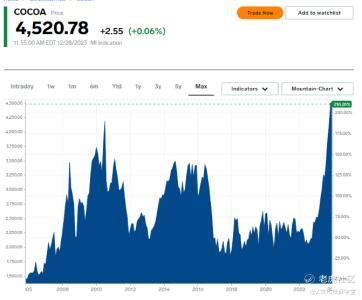
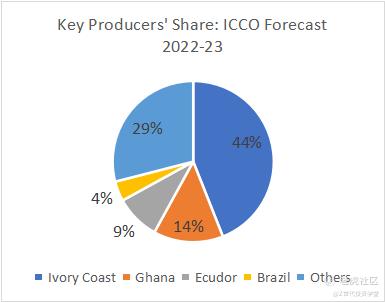
Image from: Markets Insider, Cocoa Commodity
(2) Sugar
Global sugar supply is affected by the extreme weather and volatile oil prices. Raw-sugar futures rose to 27.6 cents a pound in November, a 12-year high. India, the second-largest exporter of sugar, has cut back on exports after dry weather decimated cane crops. Thailand's sugar production has also been affected due to El Niño. The lower rainfall during the sugarcane growth stages contributed to smaller production. With lower production and high demand, sugar prices are expected to stay elevated in 2024.
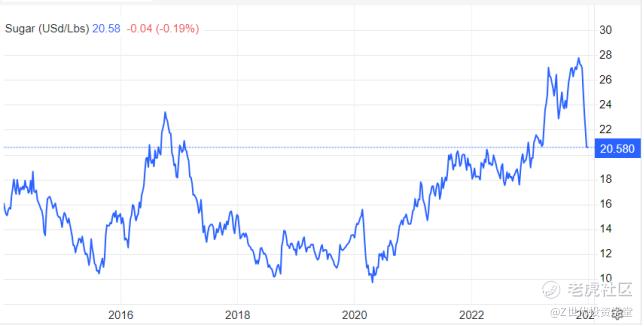
Image from: Trading economics, Raw Sugar
In order to cope with the rising prices of ingredients, Hershey’s implemented a 9.8% increase in organic product prices, while volumes increased by 0.9% in Q3 2023. The company had a candy price hike in 2022 when they were grappling with the rising inflation rate and supply chain issues arising from the war. Consumers were expected to pay about 17% more for a standard Hershey bar.
Industry Trend: Healthier Options – Better-For-You Snacks (BFY)
IRI data reported that 49% of consumers are snacking more than three times a day, with the younger generations fueling the snacking lifestyle. The acceleration in snack consumption was driven by the pandemic as consumers turned to snacks for familiarity and comfort. In addition to frequent snacking, there has been a stronger emphasis on a healthy lifestyle. Recently, weight loss drugs like Ozempic have gained popularity, suggesting that consumers are more conscious about their weight and diet. A study from Innova Market Insights found that "60% of consumers look for healthier snack options, with half choosing healthier options over indulgent ones." Brands are more focused on functional health and no/low sugar products as they continue to realize strong growth. Moreover, companies are integrating BFY benefits into traditional snack categories, such as grain-free chips. The BFY market is expected to expand at a 6.7% CAGR, reaching $54 billion by 2030."
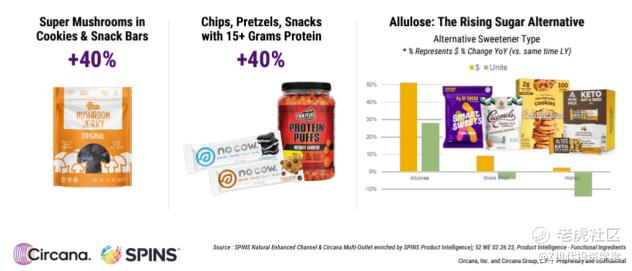
Image from: Circana MULO+C 2022
4. Investment Thesis
(1) Salty Snacks Segment Positioned to Propel Top Line Growth
Hershey’s has long been known for its confections, accounting for 82% of its 2022 total revenues. As cocoa and sugar prices soared, North America's everyday chocolate sales slowed in the recent quarters. On the other hand, Hershey’s Salty Snacks segment is growing rapidly. The segment accounts for 10% of total revenues in 2022, up 5% from 2019. In the recent quarter, Hershey, experiencing strong headwinds with the all-time high commodity prices, announced its long-term plans to focus on the salty snack segment and innovation. The company acquired popular brands such as SkinnyPop, Dot’s, and Pirate's Booty. Under Hershey’s, SkinnyPop grew to become the second-best-selling brand by retail sales in the ready-to-eat popcorn segment. Dot’s took the third position in the pretzels segment, and Pirate’s Booty came in at second in BFY puffs.
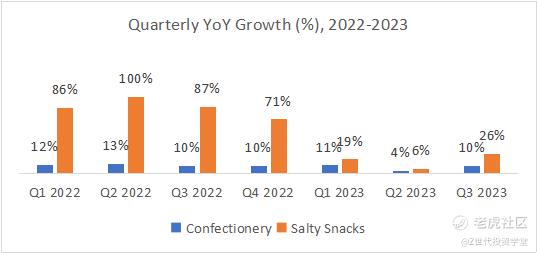
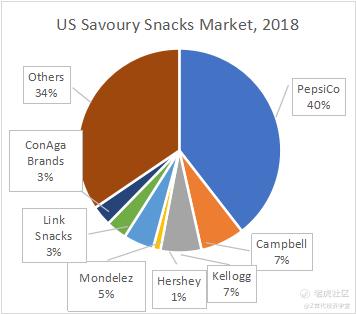
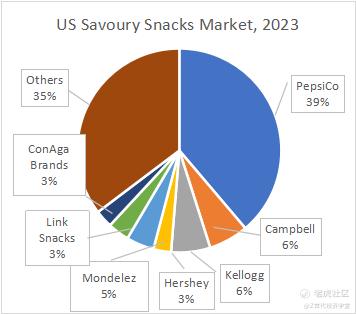
Over the last 5 years, Mondelez, Kellogg, and Campbell have lost market share, causing a shift in the savory snacks market. Hershey’s has the potential to gain higher penetration in the salty snacks segment, having gained 2% in market share. To support future gains, Hershey’s has room to grow its household penetration rate. SkinnyPop is at 15%, Dot's is at 9%, while popcorn and pretzels overall generally range ~50-60% in terms of household penetration as categories. By investing more in the salty business through distribution and awareness, Hershey’s could expect low double-digit growth in the next three years and long-term high single-digit growth.
(2) Margin Expansion as Agriculture Prices Recover
With agricultural products at an all-time high, the gross profit margins have deviated from the average ~45%, standing at 43% in 2022. Under the cost of goods sold, raw materials and packaging contribute the bulk of the costs (60%), followed by manufacturing overhead (25%) and freight & logistics.
Cocoa futures (CJ:NMX) expect prices of cocoa to come down by 14% to $3,930 at the end of December 2024. Moreover, Hershey’s would be moving its salty business to their own platforms, which would grow margins by 300 basis points.
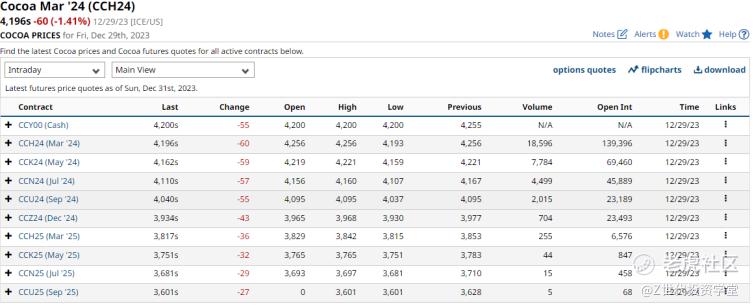
Image from: Barchart, Cocoa Futures
5. Valuation
Hershey’s stock was beaten down to $186.44 (around 52 week lows) after the market had negative sentiments and strong uncertainty of cocoa and sugar prices. However, I see this as a potential market downdraft scenario where I would expect a mean reversion in its stock price fuelled by the decline in the prices of ingredients and diversified portfolio with high growth in its salty snacks segment.
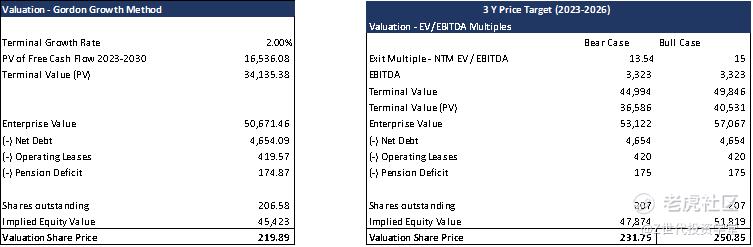
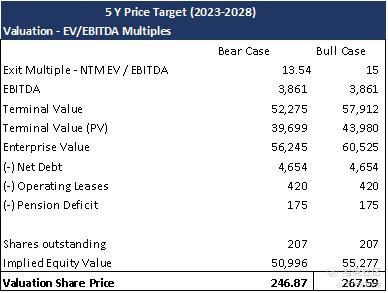
My fair value estimate shows an intrinsic value of $219.89 per share. DCF model uses a 7.1% weighted average cost of capital. Estimating 3-year top line 5% CAGR and EBIT growing at 8.7% CAGR.

6. Risk and Mitigation
Climate change is a huge factor for Hershey’s as the business main ingredient is cocoa. Unpredictable weather such as El Nino is a prime example of how spikes in cocoa prices could affect Hershey’s operations. The business had to increase the price of its products and experience a pull back in the company sales volumes. Hershey’s tries to mitigate the high volatility through purchasing futures contracts. However, it is a double edge sword limiting their ability to benefit from possible price decreases.
7. ESG Assessment
In 2021, Hershey faced a child slavery lawsuit regarding eight children who allegedly claim they were used as slave labour on cocoa plantations in Ivory Coast. Although this case was dismissed, it emphasizes Hershey’s risk of promoting child labour in their materials sourcing process. Hershey’s has created a Child Labour Monitoring and Remediation System (CLMRS) which builds commitment to prevent and eliminate child labours. Supply chain partners and community-based groups engaged would help identify child labor and help remediate when cases are found.
Hershey’s Material Issues
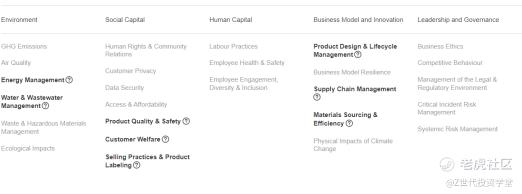
Images from: SASB Industry
To conclude, Hershey’s focus on innovation, direction towards the sweet and salty space, strong branding and smart capital allocation makes it a fundamentally well managed company. I believe the stock is currently mispriced by the market and it’s a sweet opportunity I don’t want to miss.
Sources:
https://www.thehersheycompany.com/en_us/home/newsroom/blog/product-innovation-meets-tech-innovation-with-the-launch-of-reeses-caramel-big-cup.html
https://vendingproservice.com/how-much-does-it-cost-to-make-a-chocolate-bar/
https://www.foodbusinessnews.net/articles/24674-the-key-trends-driving-snack-segment-growth
https://www.barchart.com/futures/quotes/CC*0/futures-prices
https://sasb.org/standards/materiality-finder/find/?company[0]=US4278661081
*Do note that all of this is for information only and should not be taken as investment advice. If you should choose to invest in any of the stocks, you do so at your own risk.
如果你想了解有哪些前沿科技的投资机会,想学习真投资大佬们的投资秘籍,想投资自己的人生,那就快来购买《大赢家》漫画吧!漫画中采访了许多职业投资人和上市企业,通过有趣的故事传达投资理念,我们相信在阅读的过程,你一定会有所收获。https://product.dangdang.com/29564921.html#ddclick_reco_reco_relate

Comments