Chime Financial $Chime Financial, Inc.(CHYM)$ is going public this week on the NYSE. If you're into fintech or just looking for a new investment idea, this one might be worth a look — especially if you're interested in companies helping everyday Americans manage their money better.
What does Chime do?
Chime is the biggest digital banking app in the U.S. — though it's not a bank itself. Instead, it works with two partner banks (The Bancorp Bank and Stride Bank) to offer its services.
Its target users? People earning under $100,000 a year. Chime focuses on making simple, low-cost banking tools for folks who often get ignored by traditional banks.
Its main features include:
Free checking accounts
Getting paid up to 2 days early
No overdraft fees
Easy-to-use debit card and payment tools
It’s not about crypto, high-end investing, or flashy tech — just solid financial services that work better and cost less.
Chime now has 8.6 million active users. On average, each user brings in $251 a year in revenue. That might not sound huge, but Chime’s business is very efficient — its gross margin on transactions is 67%, which is unusually high for payment companies.
Is Chime making money?
Yes — and that’s a big deal. Many fintechs are still losing money, but Chime has turned a profit.
In Q1 2025, Chime reported:
$9.1 million in operating income
$12.9 million in net income
88% gross margin (higher than many software companies!)
Revenue is growing fast too:
Up 32% year-over-year in Q1 2025
Up nearly 31% for all of 2024
Chime used to lose money — including a $200 million loss in 2023 — but now it's trending in the right direction: more users → more revenue → lower marketing costs → stronger profits.
Who are Chime’s competitors?
Chime makes about 80% of its money from swipe fees (when users make purchases with their debit cards). That means it depends heavily on users spending money — and on its two partner banks, which hold all its customer deposits. If either bank cuts ties, that would be a big risk for Chime.
Chime competes not only with big banks like Bank of America and Wells Fargo, but also with other fintech players like:
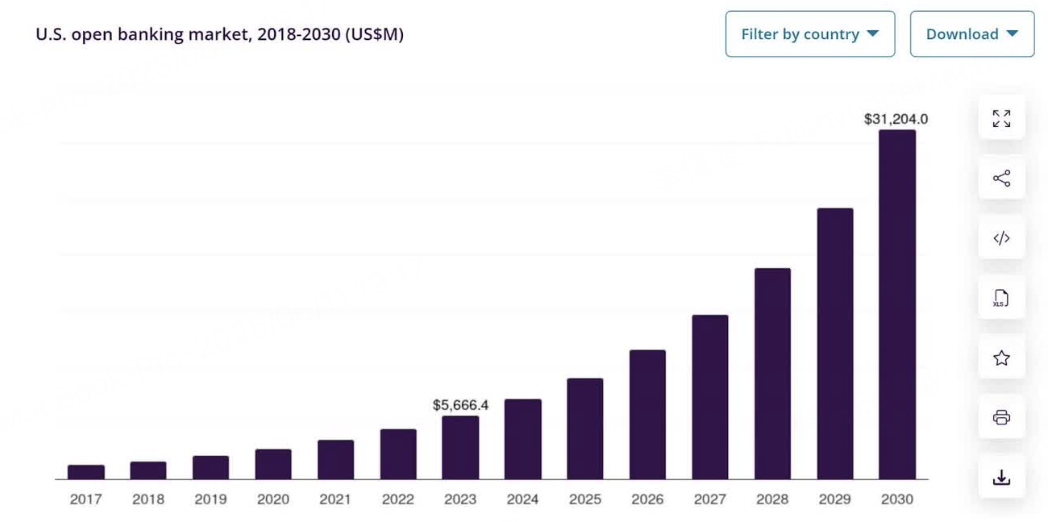
Fintech is a tough space, but the market is growing fast. Analysts expect the U.S. “open banking” market to grow from $7.1 billion in 2024 to over $31 billion by 2030 — that’s nearly 28% annual growth.
What about the IPO price?
Chime is pricing its shares between $24 and $26. In the past, private investors valued the company as high as $25 billion. More recently, it was valued around $3.3 billion.
If Chime trades at around 15 times 2024 revenue, its market cap could land above $10 billion — a solid bounce back.
One thing to note: Chime has a dual-share structure. Regular investors will get one vote per share, but the founders hold shares with 20 votes each. That gives them a lot of control.
Also, there are no announced anchor investors in this IPO — that could mean more price swings after it starts trading.
Bottom line
Chime looks like one of the stronger fintech IPOs we've seen in a while. It’s profitable, growing fast, and has a loyal user base. It solves real problems for everyday people, and does it with a solid business model.
But there are still risks — especially if something goes wrong with its partner banks, or if the IPO price is too high. And like all fintech stocks, it depends on how the market feels about tech and interest rates right now.
Still, if you believe in the long-term growth of digital banking for middle-income America, Chime might be worth adding to your watchlist.
Comments