Investors Are Paying a Premium for $NVIDIA(NVDA)$ and $Oracle(ORCL)$ Not Because They're Making Money, But Because They're Spending It
Listen up, folks—when investors shell out extra for Nvidia and Oracle, it's not about the profits rolling in today. It's about the cash they're burning through like there's no tomorrow. That's the hallmark of a classic cycle: when an industry hits that "strategically irreplaceable" sweet spot, capital rewards the spenders first, not the earners. The AI investment loop is so damn resilient because this "spending makes sense" vibe is holding strong—for now.
Over the past year, the flow of AI capital has flipped on its head, hard.
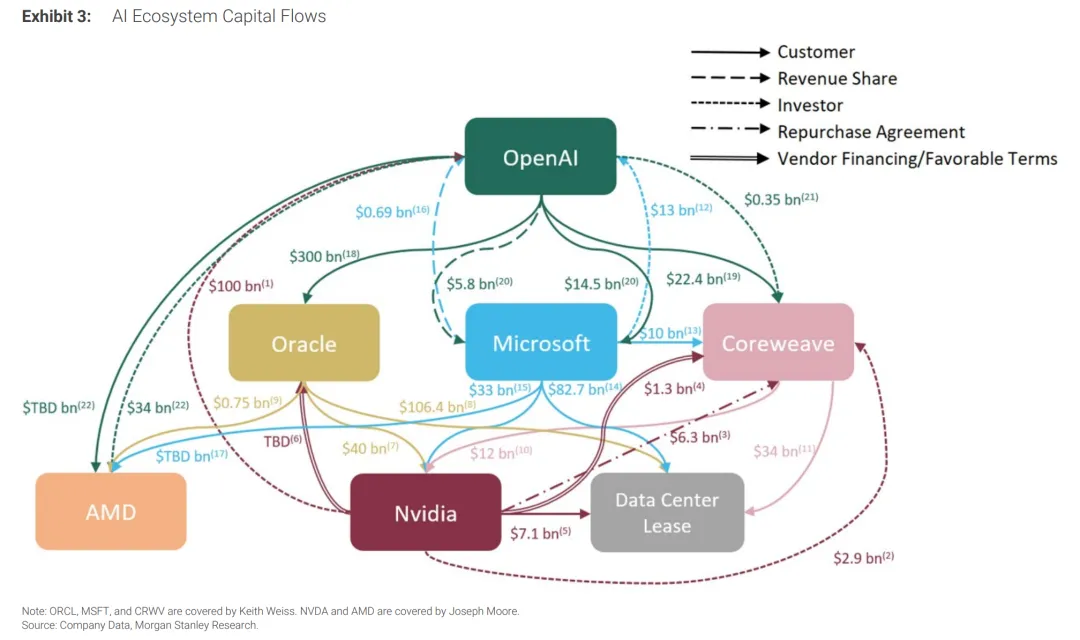
Phase one? Software frenzy—big models, agents, Copilots popping up like weeds, with all eyes on the models and apps.
Phase two: Hardware and cloud take center stage—Nvidia's H100s selling out faster than concert tickets, AMD jumping in the game, and Oracle pulling off a zombie resurrection via AI cloud.
Now we're in phase three: The loop closes in on itself—model demand sparks compute investments, which juice up model performance, which explodes demand even more.
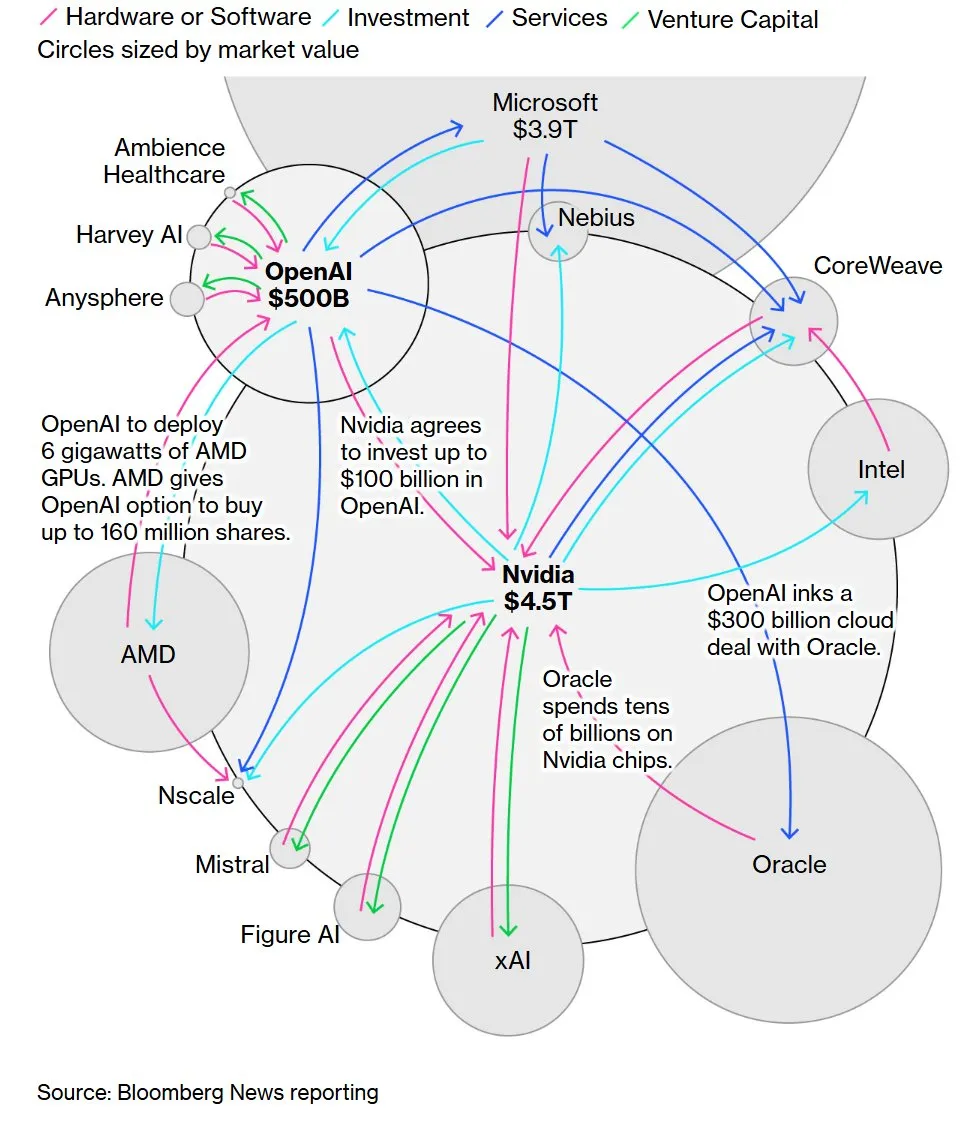
This is straight out of Sam Altman's playbook: the "AI closed-loop economy" in embryo form. But this one's heavier, pricier, and way faster on the gas.
Let's break down the core logic of this loop. Right now, the AI investment cycle is like a self-reinforcing gear train: It kicks off with tech giants dumping massive CapEx into infrastructure—snapping up chips, building data centers, training models. Those bucks turn into products and services that crank up demand. Demand feeds back into revenue and profits, sucking in more cash from primary and secondary markets, and boom—positive feedback loop. Microsoft's Q4 CapEx hit $19 billion, Alphabet (Google's parent) clocked in at $15 billion around the same time, and Amazon's AWS is right there in the mix. This isn't pocket change; it's fortress-building for AI infra to snatch market share in the big-model wars.
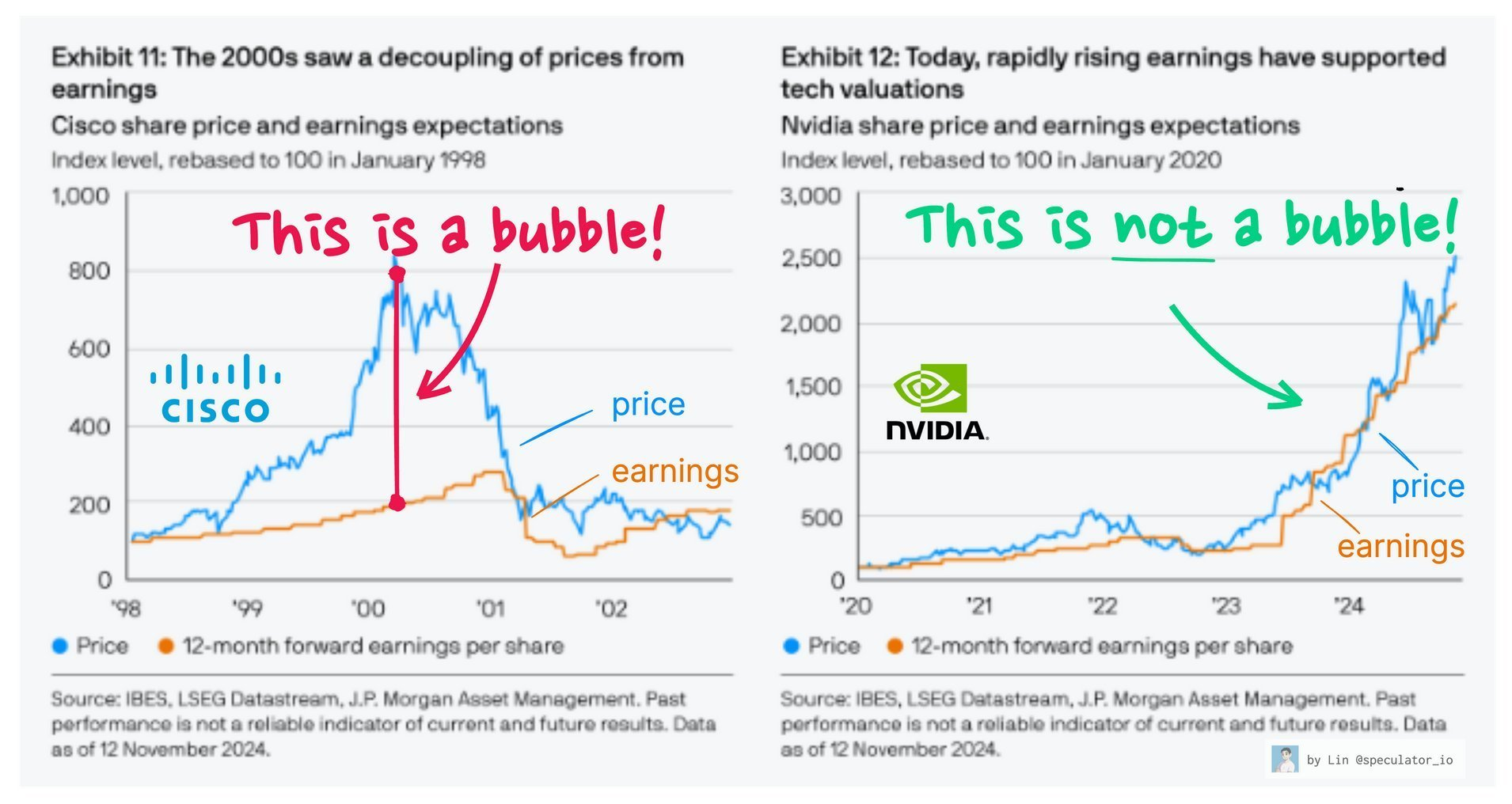
So, what's the payoff they're all chasing? Pour money into AI hardware, and model performance leaps forward—unlocking killer apps from chatbots to self-driving cars to enterprise-grade optimizations. Users bite, businesses bite harder, revenues climb the ladder, stocks moon. Investors spot the returns and pile in, inflating multiples. Dynamic P/E ratios stretch from the old-school 20x to 50x-plus, all justified by that killer line: "AI is the future." The "iron chain link" metaphor—originally "one link breaks, the whole chain crumbles"—has flipped; today, it's "one link shines, the entire chain glows." Same story in China: Alibaba Cloud's $380 billion CapEx plan (2024-2026) sparked a 40% stock rebound because the market's betting it'll forge an unbreakable moat in AI cloud services.
But here's the paradox baked into this loop: It turbocharges innovation while stacking risks like Jenga blocks.
AI infra spending is creeping up on the capital intensity of semiconductors. A single data center? We're talking tens of billions—chips, cooling, power, land, all dragged into this behemoth compute ecosystem.
Suddenly, the scrappy innovation tale morphs into a grind of capital and cash flow constraints. Every model upgrade begs the question: Who's footing the bill?
First pain point: ROI efficiency. CapEx on steroids risks overcapacity, tanking returns—if AI apps roll out slower than hoped, the feedback fizzles, and those hardware bets turn into dusty warehouse relics. Market surveys show that by Q3 2025, AI startups have raked in $500 billion in funding, but exits are scarce, with average ROI scraping just 1.5x—way below dot-com bubble peaks. It's a wake-up: The loop hinges on demand-side closure. If end-users (think SMEs) balk at pricey or meh AI tools, the chain jams up.
Second headache: Regs and geopolitics. US-China trade spats are rattling chip supply chains; the 2024 upgrade to US AI chip bans to China has gummed up procurement for Huawei and Alibaba. As compute gets treated like a strategic asset, nations are spinning up local AI clouds, redrawing the investment map. These wild cards make the AI loop messier, more real—less pure tech fairy tale, more industrial capital clashing with geopolitics.
Third snag: Concentration creep. US AI stocks' CapEx-to-GDP ratio has ballooned from 0.5% in 2020 to 1.2% in 2025—a historical outlier. Nvidia's gross margins rocketed from 65% to 78%, but laggards like AMD and Intel can't keep pace; the top three control 90% of the pie, flirting with monopoly vibes. The loop's multiplier is potent, but it amplifies shakes too. Picture a downturn: Ad budgets shrink, and AI ad tech gets hammered first.
Sure, the AI investment loop reeks of bubble—overheated CapEx, front-loaded valuations, profits playing catch-up. But bubbles aren't the endgame; they're just pit stops in the infrastructure cycle.
Risks abound in AI, no doubt, but the commercial upside is mind-blowing. Even with near-term hiccups, penetration's set to surge from 5% today to 50% down the road—room to grow. Forecasts peg the global AI market north of $2 trillion by 2030, with a 30% CAGR. Fresh reports say AI-related industries could generate $1.1 trillion in revenue by 2028, margins at 67%—rubbing shoulders with today's software and internet titans.
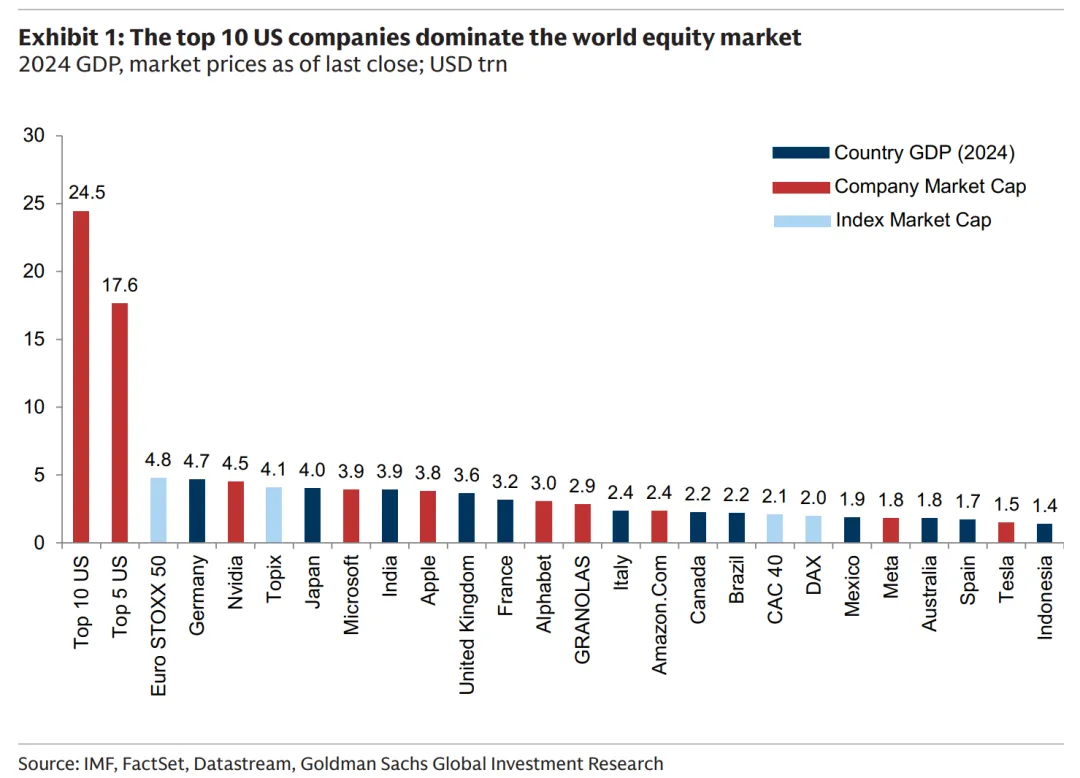
That said, slicing into this pie won't be a cakewalk. Unlocking that growth demands eye-watering upfront spends. Analysts warn of a $1.5 trillion funding gap for global data centers by 2028.
Where's that cash coming from? External firepower—public debt, private credit, equity raises—all queuing up to "infuse" the beast. And that spells a golden era for credit markets.
The AI investment fate? Rinse and repeat: Build—overbuild—clear out—rebuild.
Not every player's wired to ride this loop. Tier-one beasts like Nvidia feast on upstream hardware wins; tier-two hubs like Microsoft and Google crush CapEx-to-output conversions; tier-three apps like OpenAI lean on funding roulette with iffy payoffs. Tencent and ByteDance skew app-driven, skimping on CapEx but playing smart—"borrow strength to strike"—leaning on open-source models to iterate cheap and fast. The loop favors full-stack operators, but minnows can nibble niches like AI in healthcare or fintech.
Zoom out macro-wise: This isn't just tech's party; it's economy-wide rocket fuel. Every $1 in AI CapEx levers 3-5 bucks downstream, echoing infra multipliers. Jobs? AI nukes low-end gigs but births high-end ones—a 10 million global AI talent gap in 2025 alone. Supply chain ripple: TSMC's 3nm orders are bursting at the seams on AI chip hunger. Downsides? Inflation creep—chip hikes bloating cloud costs, enterprise bills up 10-15%. Neutral take: It's a double-edged sword—ignites innovation, widens the gap (30% penetration in rich nations vs. 5% in emerging ones).
At its core, this loop isn't greed—it's conviction. Capital's front-loading cash flows for the next decade's AI muscle, betting big on tomorrow. The wildcard? How long that faith holds. The AI investment cycle isn't bubble burst or valuation peak—it's the long haul of infrastructure, where patience wrestles anxiety in the ring.
Comments