Overall Market Flow and Sentiment Overview
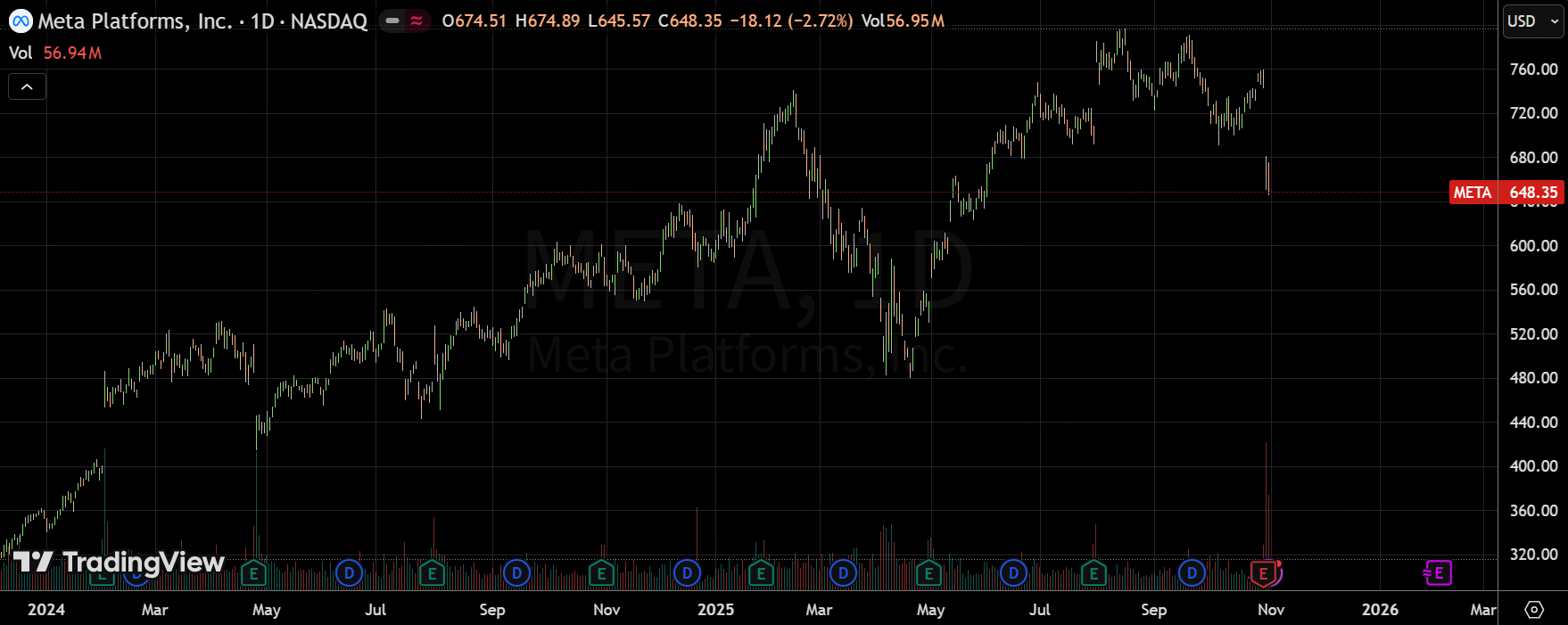
Fund outflows have become the dominant trend. According to GS trading desk statistics, both long-only (LO) and hedge fund (HF) investors were net sellers last week: LO saw net outflows of $3.5 billion, while HF recorded net outflows of $1.6 billion. The communications services sector faced the heaviest selling pressure, primarily driven by $Meta Platforms, Inc.(META)$'s earnings report. Heightened investor concerns over its cash flow situation triggered concentrated selling led by LO funds. Meta's soaring capital expenditures mirror the broader AI arms race, prompting investors to question whether the returns justify such massive investments.
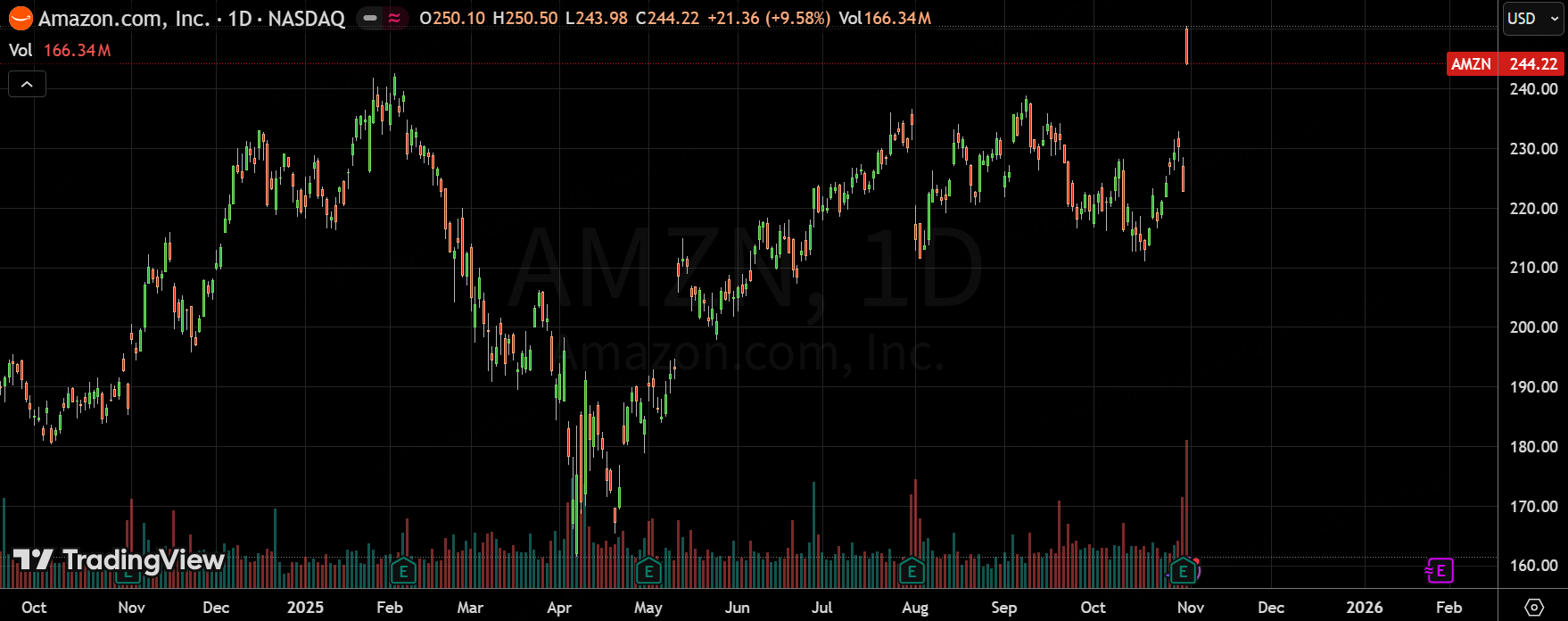
Consumer sentiment took a sharp turn for the worse. As more companies cited slowing growth, investor pessimism intensified. Despite better-than-expected results from $Amazon (AMZN)$ and Apple $Apple (AAPL)$, capital flows remained subdued throughout the day. Consumer stocks suffered heavy losses as market sentiment took a sharp turn for the worse. What were once seen as isolated issues—such as weather impacts, pressure on lower-income groups, or seasonal fluctuations—are now acknowledged by more companies as a broader slowdown. Moreover, this weakness is spreading to the middle class, particularly among younger consumers aged 25-35. For instance: Restaurant chains complain consumers are shifting to grocery shopping, yet grocery retailers report significant misses. Price movements confirm this trend, with both consumer discretionary and staples sectors underperforming the $S&P 500 (.SPX)$ index by 600 basis points this week. Earnings misses were severely punished, while even positive surprises quickly faded—significantly eroding confidence in the sector, especially as inflationary headwinds continue to squeeze profit margins.
Capital expenditure projections continue to balloon. Future 12-month projections have been raised by over $50 billion. This is no small sum; it raises the bar for the AI cycle, demanding higher return on invested capital (ROIC) for 2026 and beyond. Companies like NVIDIA and hyperscale cloud providers are making massive bets, but valuation multiples could compress if monetization lags (think delayed enterprise AI adoption). Historical parallels? The internet infrastructure boom saw similar CAPEX surges, yet only half of projects delivered long-term ROICs above 15%. Today, Mag7's annual AI CAPEX exceeds $200 billion (based on aggregated financials), creating immense pressure to prove these returns. Failure to do so will likely see more cash flow concerns like Meta's overshadow revenue highlights.
Global stock markets have seen net inflows for the second consecutive week, with total trading volume hitting a four-month high. Buying by long positions outpaced selling by short positions at a ratio of 1.2:1. The information technology sector emerged as the most net-bought industry in U.S. stocks, ending three consecutive weeks of net selling. This shift was primarily driven by short covering (short covering versus long buying at a ratio of 3.4:1), whose nominal scale also reached a four-month peak.
$Google (GOOG)$ Cloud and Amazon AWS accelerated growth in Q3, with backlog orders surging quarter-over-quarter—a critical indicator for future demand trends. I've consistently emphasized this: AI isn't just hype—it's reshaping the advertising ecosystem. The scale advantages of big tech companies allow them to capture market share at the expense of fragmented competitors. Recent quarterly data shows Meta's AI-driven advertising ROI has improved by 20-30%. By its own metrics, this could translate into mid-to-high single-digit revenue growth if sustained.
Overall, 70% of S&P 500 companies have reported earnings, with a standout beat rate: 64% versus the historical average of 49%.
Next Week's Outlook
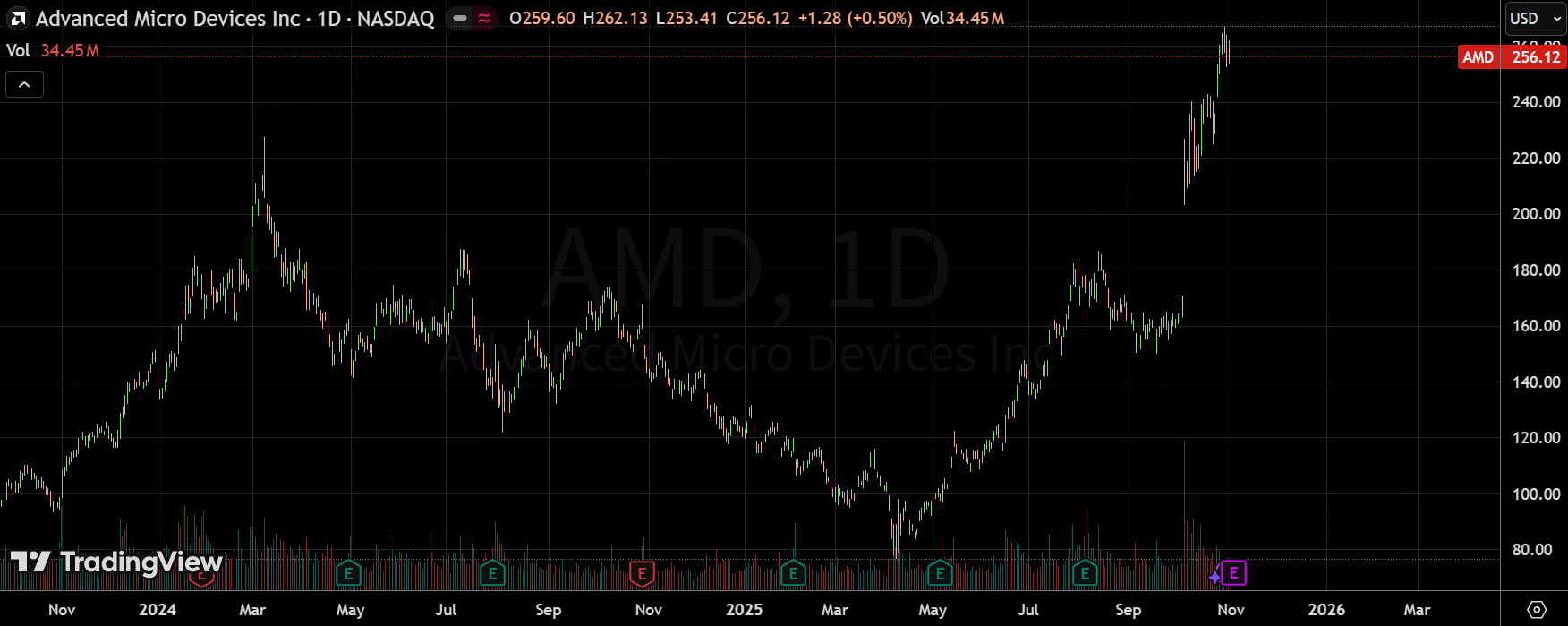
The software sector will be the focus this week. AMD's earnings report may not be the real highlight—many institutions are actually keeping a close eye on the November 11 analyst day. Why? Because the earnings are likely to be "stable." The robust demand for traditional server CPUs has already been validated by peers like INTC and MU. The real variable lies in the long-term narrative. $Advanced Micro Devices(AMD)$
Two data points have completely dispelled my doubts about AMD's CPU business: First, META's Q3 earnings report revealed that 60% of AMD's growth came from META, specifically from initial shipments of AI server racks. — keep in mind AMD is the core CPU supplier for META's Mrerva (Turin) and Santa Barbara (Venice) servers, marking not a one-off order but the start of a long-term replacement cycle. Second, Hynix forecasts server shipments will achieve "high teens growth" (15%-19%) by 2026, directly confirming that the AI-driven wave of traditional server replacements is no empty talk.
AMD's server CPU market share reached 25%-30% this year. What about next year? With CPU shortages now a reality, could AMD's market share surge to 40%-50%? If average selling prices (ASP) rise another 10%+, what does that imply? It means growth could hit 50%+, more than double the market's expected 20% growth. Incremental EPS could exceed $1, accounting for 20% of the projected 2026 market EPS.
Additionally, on the GPU front, both Amazon and TikTok are ramping up orders for the MI4xx series. Overall, AMD's valuation moving toward 30x is reasonable. Historically, AMD has rarely traded below 20x, so any near-term dip presents a buying opportunity.
Events to Watch: Tuesday $Caterpillar (CAT)$ (Surge last week on earnings) Investor Day, Wednesday $Bank of America (BAC)$ Investor Day (Weak investor sentiment after tapering expectations fade), Thursday $Tesla (TSLA)$ Annual Shareholders Meeting (Musk compensation).
Key Macro Focus: Remarks from Fed officials following October's hawkish meeting; interest rate decisions from the Reserve Bank of Australia (RBA, Tuesday) and the Bank of England (BOE, Thursday). $Berkshire Hathaway Class B (BRK.B)$ Berkshire Hathaway's earnings report may also offer some guidance.
Overall, while the proportion of companies exceeding earnings expectations reached a record high, stock price reactions remained muted as investors shifted from a "results-oriented" to a "forward-looking guidance-oriented" approach. AI capital expenditures have become a double-edged sword, serving as both a growth engine and a potential source of future profit pressures. The current market structure exhibits characteristics of "differentiation and caution"
Tech stocks staged a short-term rebound due to short covering, but momentum has weakened.
Signs of weakness in the consumer sector intensify;
The financial sector is constrained by crowded positions and valuation pressures;
The industrial sector shows diverging highlights dominated by AI and aerospace.
Comments