$AAPL$
Consumer electronics this year face a major unified issue: memory is too expensive. From computers down to smartphones, any device with storage is affected. Consumers are highly likely to adopt a wait-and-see approach with their cash.
It seems consumer electronics stocks might struggle this year, at least in the first half.
Of course, the answer to "when to buy the dip" is quite simple: follow the whales. When Duan Yongping says he wants to buy Apple in size, that's probably the time to consider it.
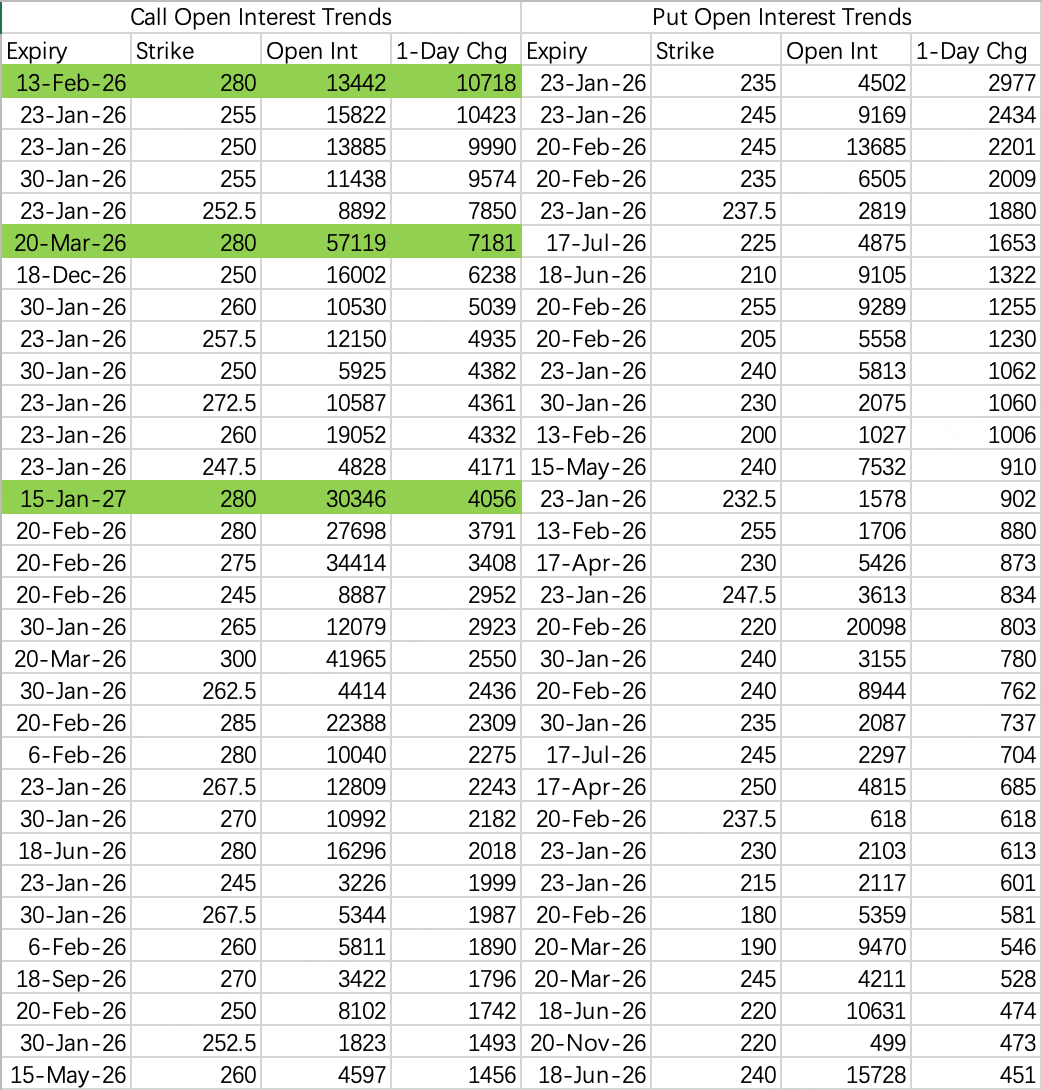
There has been significant selling of the 280 calls expiring in February and March $AAPL 20260213 280.0 CALL$ , indicating the market doesn't expect a major Q1 rebound. Even the January 2027 expiry 280 calls $AAPL 20270115 280.0 CALL$ saw heavy selling, with total volume around $6+ million. This reflects substantial pessimism.
The primary bearish target is around the 200-day moving average, approximately 230-240.
$MSFT$
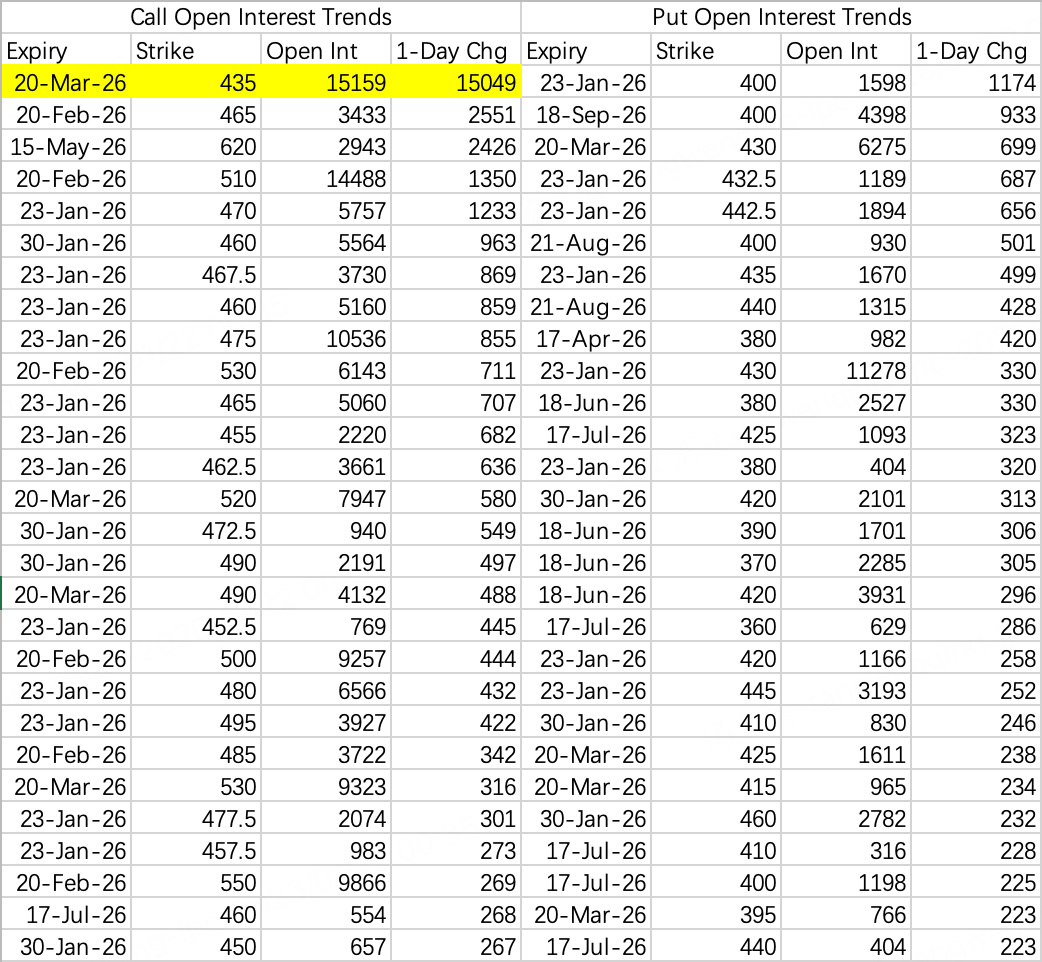
Microsoft is practically covered in 'debuffs': hardware + software + ChatGPT narrative. Long call positioning for Q1 targets the 120-weekly moving average at 435 $MSFT 20260320 435.0 CALL$ , but this isn't new buying; it was rolled down from the 460 strike. Like Apple, Microsoft isn't suitable for dip-buying currently. Put option activity targets a price of 400.
$INTC$
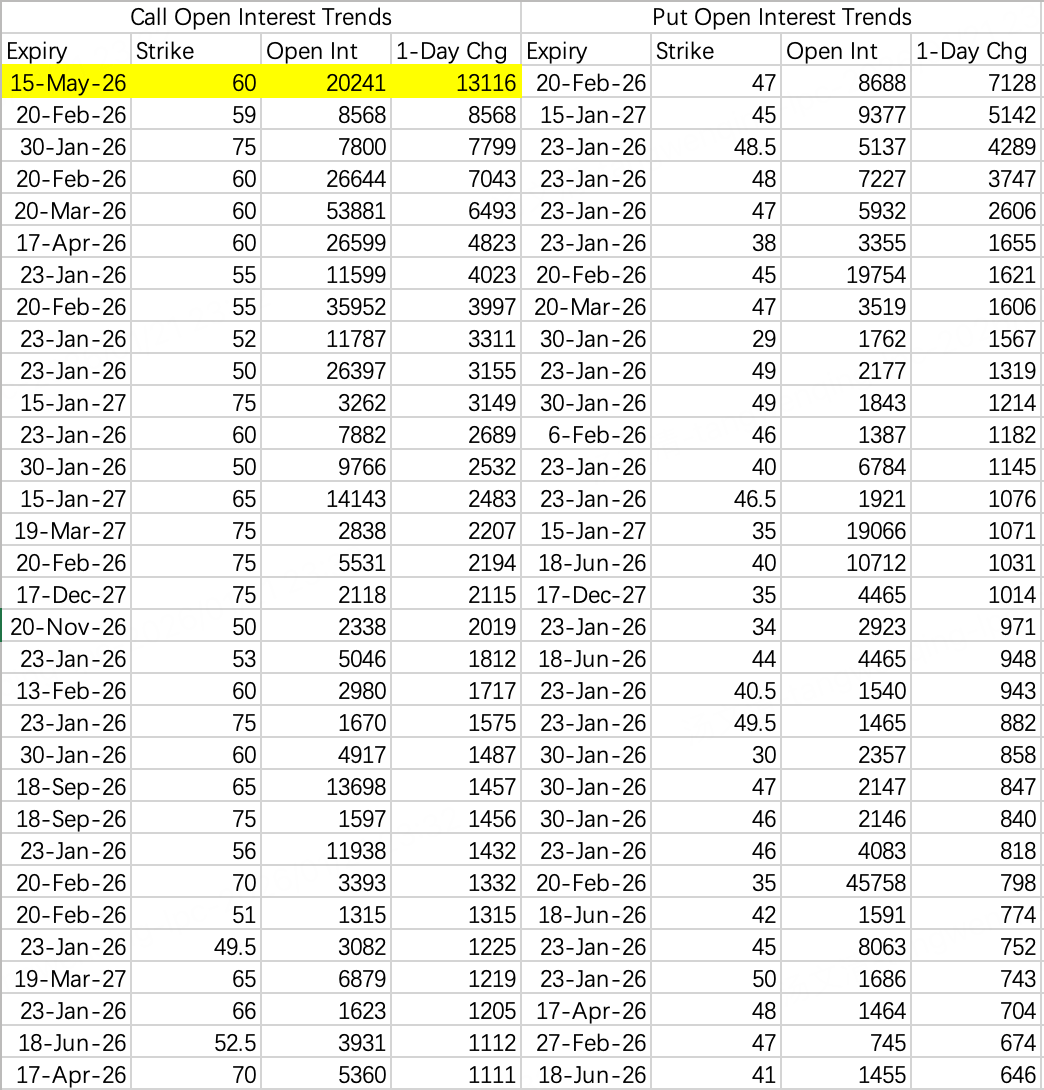
The target is to reach 60 first. However, the >10% surge caused many large bullish positions to take profits. For example, the large bullish order opened on Wednesday $INTC 20260515 60.0 CALL$ was clearly closed intraday today.
$NVDA$
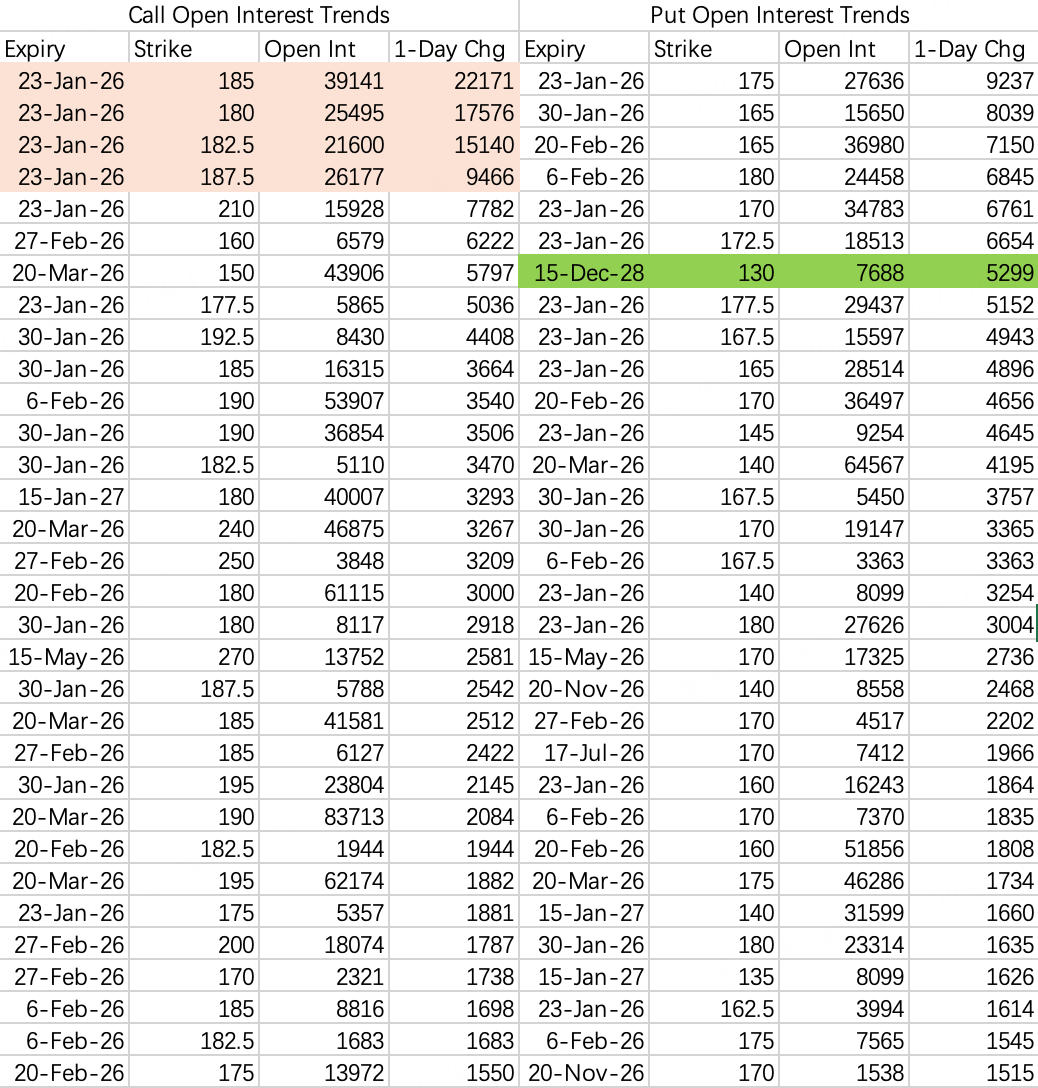
Today's open saw another familiar-looking massive short squeeze and sequential expiring-week call buying. However, the outlook for NVIDIA isn't bullish. Bearish positioning is unified in expecting the stock price to revisit 170.
Currently, Huang's visit to China is seen as a neutral event; the market doesn't expect substantive progress from this trip.
However, NVIDIA's depressed price doesn't necessarily make AVGO a buy-the-dip candidate. Although AVGO is part of the Google ecosystem, both companies face similar challenges.
Currently, only the extremely supply-constrained memory sector remains bullish, and the similarly monopolistic TSMC can maintain its elevated, range-bound trading.
$SPY$
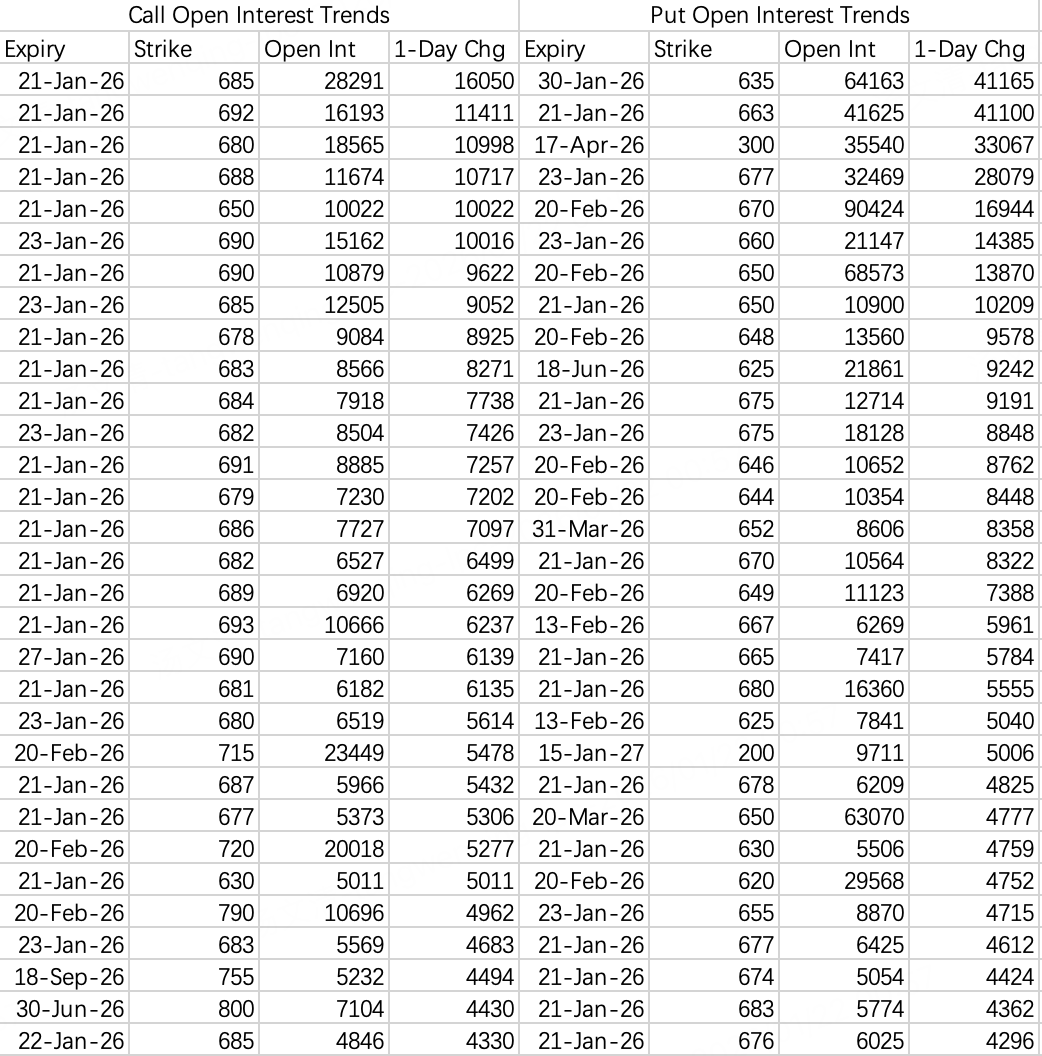
Considering the expectation for NVDA to pull back to 170, the next target for SPY is 670. After that, it depends on the upcoming earnings reports from the mega-cap tech stocks next week.
Comments