Last night on the U.S. stock market, a dark horse emerged in the lithium mining sector—$Lithium Americas Corp.(LAC)$ surged a staggering 87.9% in after-hours trading. One might think they'd discovered alien batteries.
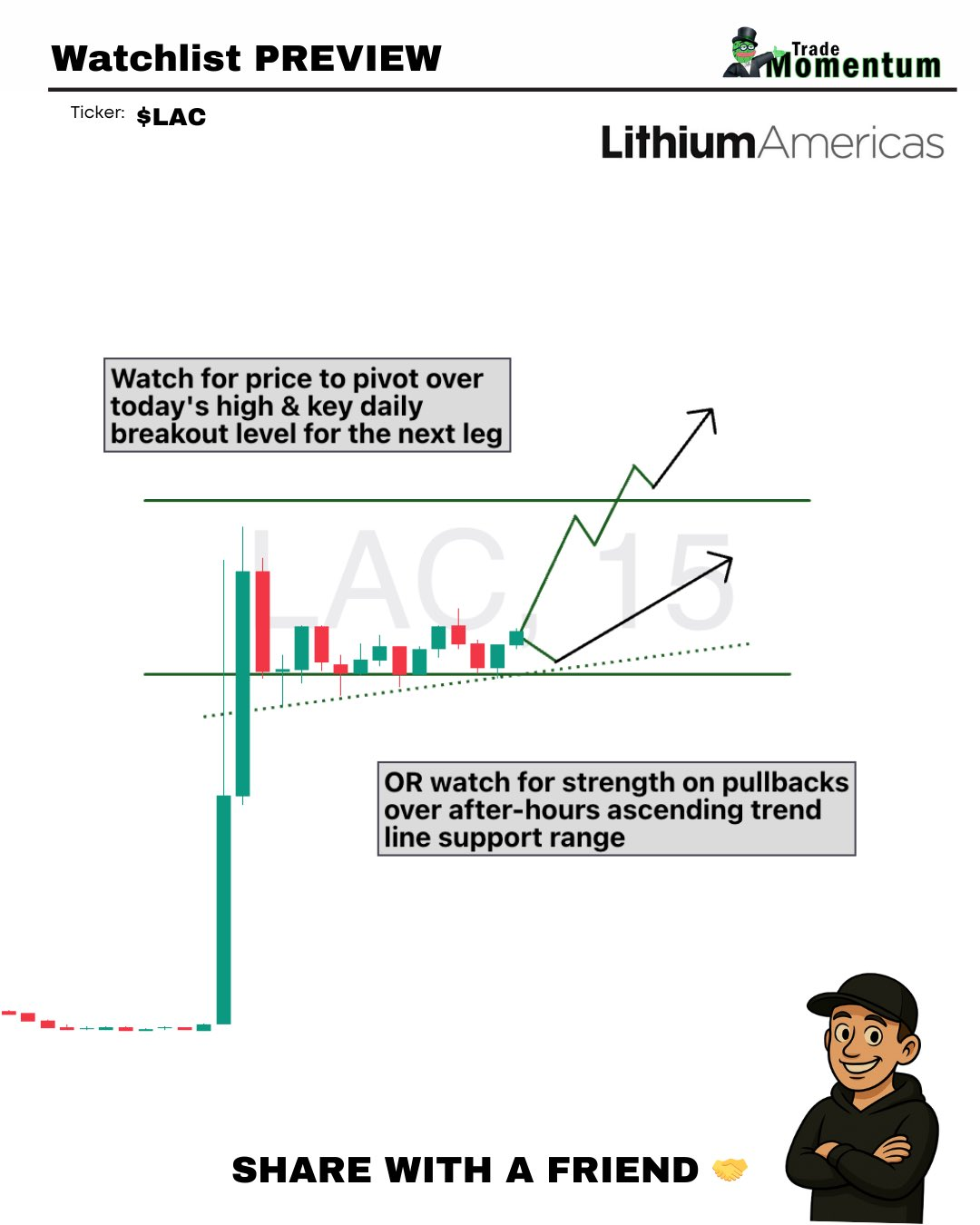
Upon closer inspection, it turns out the Trump administration plans to get directly involved by investing up to 10% equity in LAC while renegotiating the $2.3 billion Department of Energy loan. This move is essentially the "national team diving into mining operations," instantly driving market expectations to the ceiling.
This story is quite dramatic: The $3 billion Thacker Pass lithium project was originally approved during Trump's first term, and the Biden administration just finalized the Department of Energy loan last year. Now Trump's team is back, demanding equity stakes while renegotiating loan terms—and insisting General Motors (GM) sign a long-term supply agreement with guaranteed minimum purchases. This isn't negotiation; it's a "lithium-mining version of supply-side reform."
GM invested $625 million last year to acquire a 38% stake in the Thacker Pass project, intending to use it as a "lithium granary" for its electrification transition and signing a 20-year off-take agreement. But now the White House has made its position clear: low lithium prices are acceptable, but GM must guarantee minimum sales volume.
Just to add, many may not realize how dire lithium prices are right now—carbonate lithium prices have plummeted nearly 70% from last year's peak, leaving many mining companies struggling to maintain cash flow. At this critical juncture, the government stepping in to prop up the market and enlisting industry giants like GM as credit backers effectively provides LAC with a double safeguard.
So why is the market so hyped? The logic isn't complicated:
Government equity participation = enhanced credibility, which will undoubtedly reduce subsequent financing costs;
GM's long-term agreements provide a safety net = significantly reduced cash flow risk;
Lithium prices will eventually rebound cyclically; positioning now equates to bottom-fishing for strategic resources.
Particularly noteworthy is that Thacker Pass represents the largest lithium mining project in the United States, carrying political significance that far outweighs its economic value. With two successive administrations providing support, major automakers securing off-take agreements, and now even seeking equity stakes—this clearly signals an intent to establish a "national reserve platform for the lithium mining sector."
Of course, some grumble: Is it compliant for the government to directly invest in commercial projects? Does it distort the market? But honestly, in the white-hot phase of the new energy industry chain battle, the secure supply of strategic resources has long transcended traditional market logic. China relies on CATL and Tianqi Lithium for a combined punch, while the U.S. now deploys LAC, GM, and government loans as a three-pronged attack—both are essentially top-level designs integrating industry and finance.
Finally, from an investment perspective—lithium mining stocks have always been volatile, but LAC's current performance is different: the government's stake effectively provides a valuation floor, while GM's off-take agreement offers a cash flow floor. Should lithium prices rebound in the future, profit elasticity will become evident. The question now is no longer "survival," but "how much profit can be generated."
Of course, the recent surge has already priced in a significant portion of expectations, so caution is advised when chasing higher prices. However, in the long run, this project—driven by the combined forces of policy, industry, and capital—is likely to become a benchmark case for the United States' push toward lithium battery self-sufficiency.
After all, the competition in the new energy world has long ceased to be merely a contest between companies.
Comments