


Intel is scheduled to report its latest quarterly results on April 23, 2026, after the U.S. market close.
Ahead of the release, the options market reflects a familiar mix of elevated volatility expectations and a cautious, mildly bearish bias. Pricing implies a sharp post-earnings move, while block trades suggest institutions are positioning for a range-bound outcome—capping upside via call selling and establishing downside protection through put buying.
Fundamentals Preview
Consensus expectations point to modest revenue growth but a sharp improvement in profitability:
Revenue: $12.424 billion, up 1% year-on-year
Adjusted EPS: $0.014, up 109% YoY
EBIT: $389 million, up 137% YoY
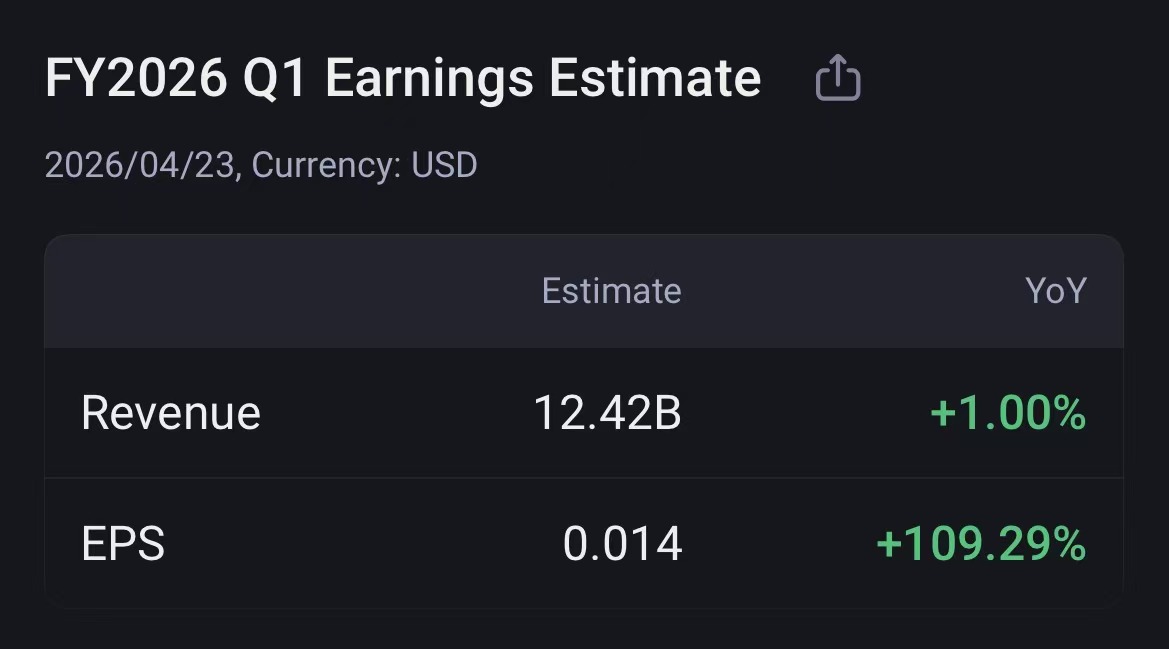
Key areas of focus include momentum in the PC and data center segments, progress in AI-related products, the trajectory of losses in Intel Foundry, and management guidance for the next quarter.
Notable Options Flows
Recent block activity underscores a dominant mix of premium harvesting by sellers and hedging demand from buyers, reinforcing a neutral-to-bearish tone.
Heavy Call Selling Caps Upside
Institutions have aggressively sold June 18 $52.5 calls, with cumulative volume reaching 15,000 contracts and notional turnover of about $23.2 million.
The strategy aims to collect elevated premiums, with a breakeven near $68. It effectively signals expectations that the stock is unlikely to break above that level over the next two months, establishing a clear resistance ceiling.
Put Buying Establishes Downside Protection
Near-term hedging: Investors bought 10,059 May 22 $50 puts (~$630,000), providing protection against downside risk over the next month or expressing outright bearish bets.
Long-dated tail hedge: Another trade involved 1,500 December 2026 $47 deep out-of-the-money puts (~$630,000), widely interpreted as “black swan” insurance against extreme long-term downside risks—highlighting lingering concerns about Intel’s structural outlook.
Calendar Spread Signals Limited Bullish Conviction
A calendar spread emerged involving selling May 29 $80 calls and buying June 18 $80 calls.
The core logic is to harvest rapid time decay from near-term deep out-of-the-money options, again reflecting expectations that sharp upside in the near term is unlikely.
Other Key Options Indicators
Implied Volatility and Expected Move
Based on options expiring April 24 (the first trading day after earnings):
Implied volatility (IV): 142.34%, at historically elevated levels
Expected move: ±8.55% (68% probability range)
Implied price range: $60.59 to $71.93, based on the current price of $66.26
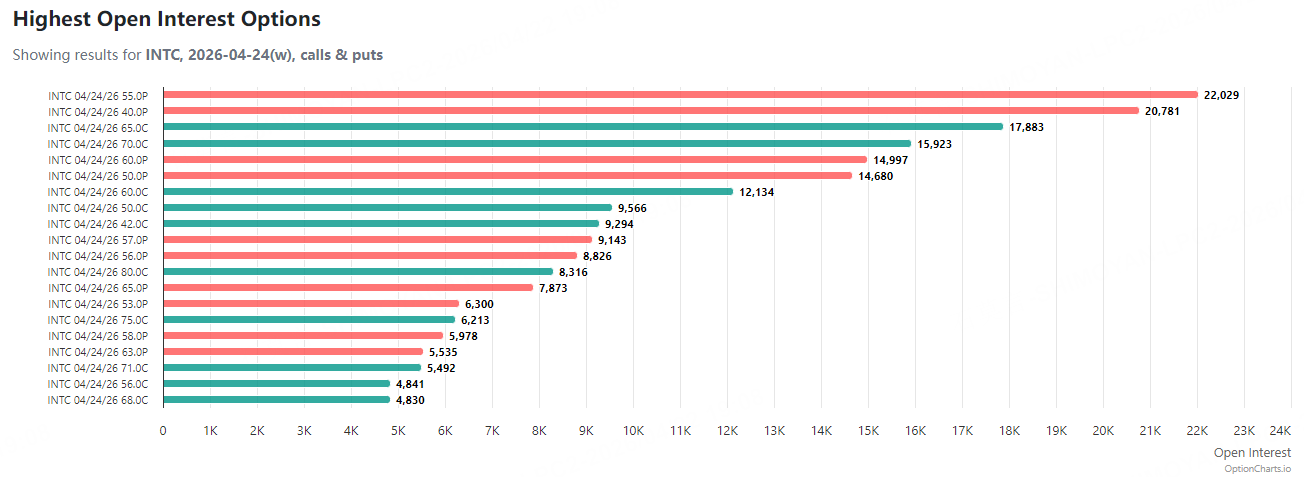
Open Interest Distribution
For the April 24 expiry, notable concentrations include:
$55 puts: 22,029 contracts
$40 puts: 20,781 contracts
$65 calls: 17,883 contracts
Takeaways and Strategy Implications
The options market is painting a consistent picture ahead of Intel’s earnings: high volatility expectations paired with cautious institutional positioning.
Large-scale trades effectively define a short-term range, with upside capped around $68 and downside support focused in the $50–$60 zone. In this environment of elevated implied volatility, premium-selling strategies—particularly call writing—appear attractive.
Strategy angle:
Investors expecting the stock to remain within the implied range may consider a bear call spread—for example, selling calls near the upper bound (~$71.93) while buying higher-strike calls to cap risk. This approach allows traders to monetize high volatility while controlling margin usage and limiting tail risk.
That said, outright premium sellers should remain alert: post-earnings moves can exceed implied ranges, especially given the current level of volatility pricing.
