$Grab Holdings(GRAB)$ 🐶 Options Puppy: My Grab US$3 Cash-Secured Put Was Assigned – My Real Cost Is Only US$2.91!
💰 1️⃣ Why Am I Making This Trade Now?
Today, I want to correct and explain my Grab Holdings (NASDAQ: GRAB) trade because there is an important difference between buying shares directly at US$3 and selling a US$3 cash-secured put before getting assigned.
My original strategy was not simply to buy 100 shares at US$3.
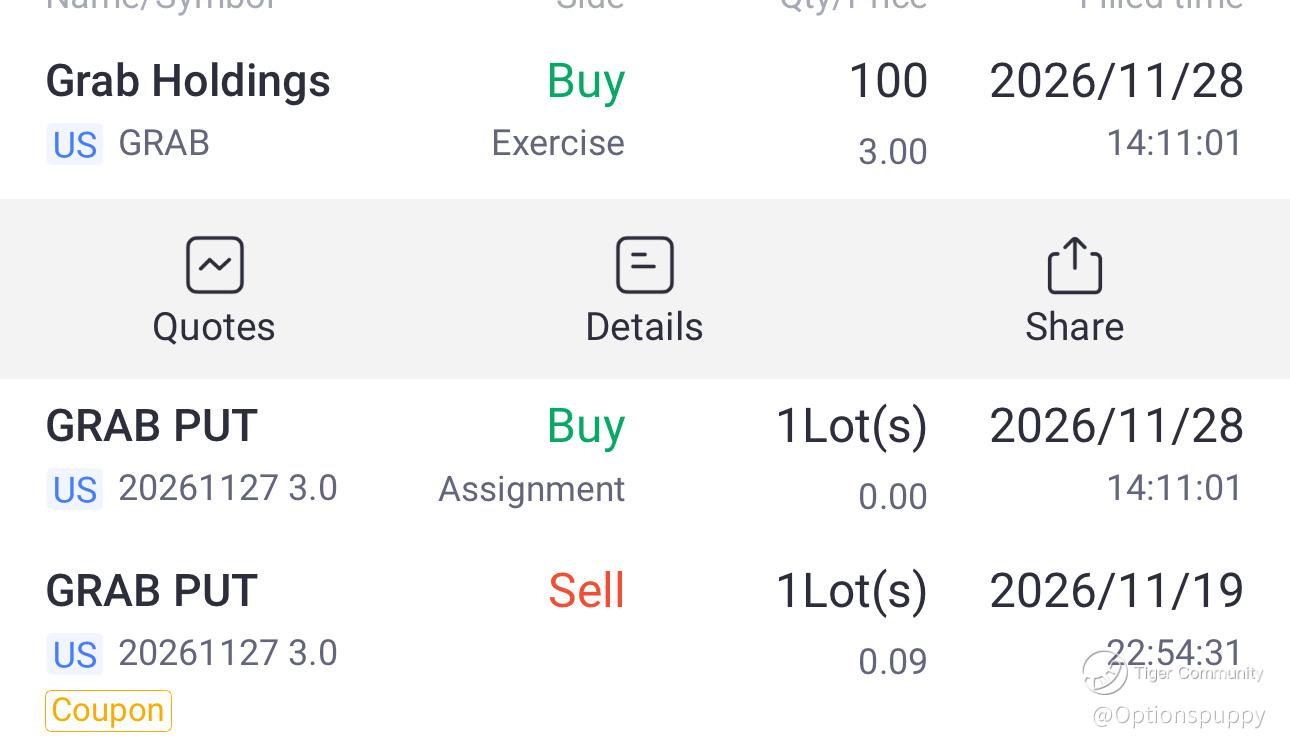
Instead, I sold one Grab US$3 put option expiring on 27 November 2026 and collected US$0.09 per share in premium.
Since one standard US options contract represents 100 shares, my premium collected was:
US$0.09 × 100 = US$9.
Eventually, the option was assigned, and I received 100 Grab shares at the US$3 strike price.
But here is the important part.
My actual effective purchase cost is not US$3.
I received US$9 in option premium, which reduces my effective acquisition cost.
US$3.00 - US$0.09 = US$2.91.
This is why I like using cash-secured puts when I am interested in owning a particular company.
Instead of immediately buying shares at the market price, I am willing to wait and get paid a premium while taking on the obligation to purchase shares at my chosen strike.
📊 2️⃣ Let’s Break Down My Grab Trade
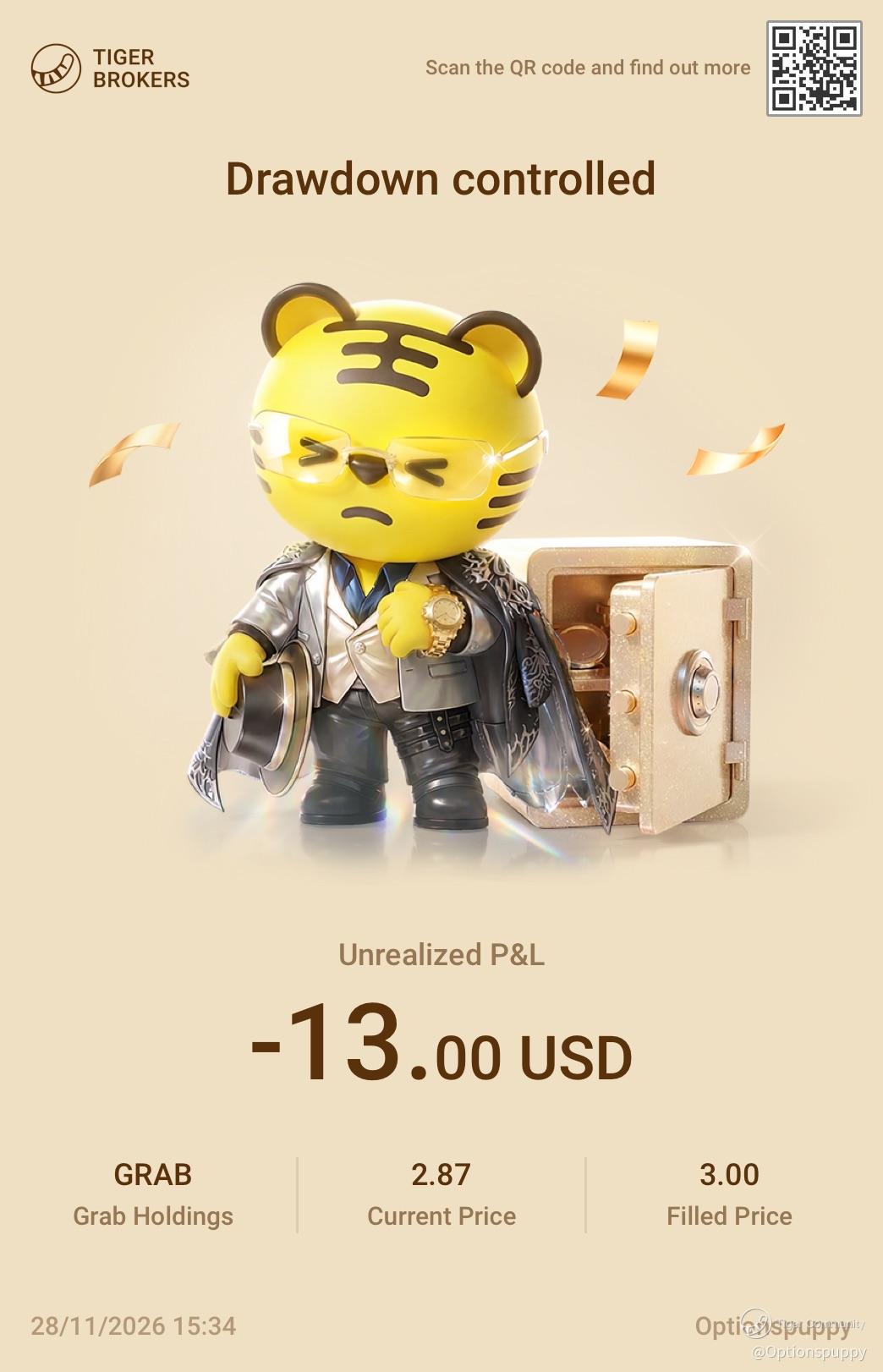
Here are the actual numbers from my trading records:
* Stock: Grab Holdings (GRAB)
* Option strategy: Sell cash-secured put
* Strike price: US$3.00
* Expiration: 27 November 2026
* Contracts sold: 1
* Premium received: US$0.09
* Total premium: US$9
* Shares assigned: 100
* Assignment price: US$3.00
* Effective cost per share: US$2.91
My total cash commitment for assignment was US$300.
However, because I had already collected US$9 in premium, my effective cost became US$291.
This is the difference between the strike price and my net acquisition cost.
For beginners, this is an important concept to understand.
When I sell a cash-secured put, the premium received can reduce the effective purchase cost if I am assigned.
Of course, commissions, regulatory fees and other transaction costs may slightly change the final figure.
🐶 3️⃣ My Current Loss Is Only US$2
Let’s assume Grab is currently trading at US$2.89.
My effective cost is US$2.91.
That means:
* Effective cost: US$2.91
* Current share price: US$2.89
* Difference: US$0.02
* Shares owned: 100
* Unrealised loss: US$2
So my position is currently down approximately US$2, excluding fees.
This is quite different from looking at the shares as though I had purchased them directly at US$3.
If I ignored the option premium, I would calculate a US$11 loss from buying 100 shares at US$3 and seeing them trade at US$2.89.
But that would not reflect my complete strategy.
I already collected US$9 from selling the put.
Therefore, my effective cost is US$2.91, and my unrealised loss is approximately US$2.
This is why I always want to calculate the stock and option transactions together.
🎯 4️⃣ Why I Am Willing to Get Assigned
Some beginners are afraid of getting assigned when selling puts.
But assignment is actually one of the possible outcomes I am prepared for.
When I sell a cash-secured put, I must understand that I may have to purchase 100 shares at the strike price.
I should never sell a put at a strike price where I am unwilling to own the underlying shares.
For Grab, I was comfortable with the US$3 strike because I wanted exposure to its business in Southeast Asia.
Grab operates across several digital economy segments:
1. Ride-hailing and transportation.
2. Food delivery.
3. Financial services.
These businesses provide opportunities for the company to grow its customer base and expand its ecosystem.
However, I also understand that competition, operating expenses and profitability remain important risks.
My decision to accept assignment is based on my willingness to hold the shares, not simply because I collected premium.
🔄 5️⃣ What Happens After Assignment?
Now that I have received 100 Grab shares, my next decision is how to manage the position.
One possible strategy is to consider selling covered calls.
A covered call means I sell one call option against my 100 shares.
I receive premium in exchange for agreeing to sell my shares at the selected strike price if assigned.
For example, if I sell a covered call at US$3.20, I would receive premium while setting a potential selling price above my US$2.91 effective cost.
If Grab rises and my shares are called away at US$3.20, I could potentially make a share-price gain of:
US$3.20 - US$2.91 = US$0.29 per share.
For 100 shares, that would represent US$29 in potential share-price profit, before adding any covered-call premium and deducting costs.
However, there is no guarantee that the stock will reach US$3.20.
If Grab falls further, I still own the shares and will continue to face downside risk.
If I sell a covered call, I must also accept that I may have to sell my shares at the strike price.
📉 6️⃣ Why My Effective Cost Matters
I like calculating my effective cost because it gives me a more realistic reference point when managing my portfolio.
My original strike was US$3.
But my collected premium reduced my cost to US$2.91.
This US$0.09 difference may look small.
However, when I repeat a disciplined options strategy over time, premiums can contribute meaningfully to my overall returns.
The important word is disciplined.
I cannot assume that every put will generate a profit.
A stock can fall much more than the premium I collect.
For example, if Grab drops to US$2.50, my effective cost of US$2.91 would leave me with a US$41 unrealised loss on 100 shares.
The US$9 premium would not protect me against a large decline.
That is why I need to consider the company’s fundamentals, valuation and market conditions before selling puts.
🧭 7️⃣ What Is My Plan From Here?
My next step is to monitor Grab around my US$2.91 effective cost.
I want to observe whether the company can continue improving its business performance and whether investors become more positive about its future prospects.
I will consider several factors:
* Revenue and earnings growth.
* Operating profitability.
* Competition in Southeast Asia.
* Cash flow and financial position.
* Overall market sentiment.
If the stock stabilises and I remain comfortable holding it, I can consider selling covered calls at a strike price that makes sense for my investment objectives.
If the stock declines further, I will reassess the business rather than blindly selling more puts or buying additional shares.
My objective is to manage my position carefully.
🏁 8️⃣ Final Thoughts: Options Puppy Gets Paid to Wait
This Grab trade is a simple example of why I like cash-secured puts.
I wanted to own 100 Grab shares.
Instead of buying them immediately at US$3, I sold a US$3 put and collected US$0.09 premium.
I was subsequently assigned 100 shares at US$3.
After deducting the US$9 premium, my effective cost became US$2.91 per share.
With Grab trading around US$2.89, my unrealised loss is only approximately US$2 on the 100 shares, before transaction costs.
For me, the lesson is not that selling puts guarantees a better purchase price.
The lesson is that I should understand my total position, including the premiums collected, assignment price and current market value.
🐶 Options Puppy philosophy: I don’t just look at the strike price. I look at my effective cost.
Sometimes, getting assigned is not a problem because assignment was part of my original plan.
The real challenge is making sure I have enough capital, choosing sensible strikes and being prepared to hold the shares if the market moves against me.
One trade at a time, one premium at a time!
⸻
Disclaimer: This is my personal trading experience for educational purposes, not financial advice. Cash-secured puts and covered calls involve risks. Premiums provide only limited downside protection, and investors can suffer substantial losses if the underlying stock declines.
@AI_FocusedTrader @Shernice軒嬣 2000 @TigerStars @InverseCramer @NXNNXN 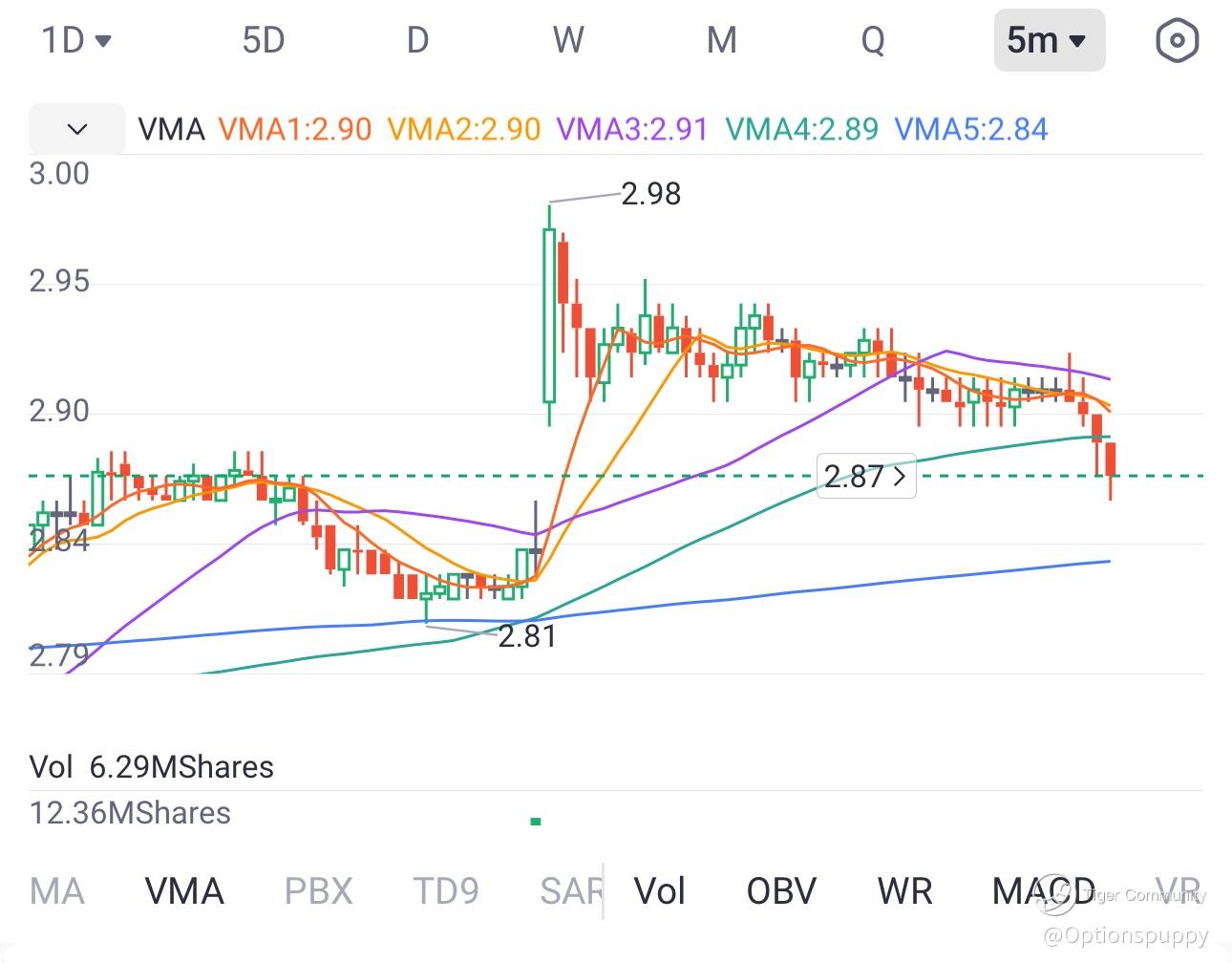
Disclaimer: Investing carries risk. This is not financial advice. The above content should not be regarded as an offer, recommendation, or solicitation on acquiring or disposing of any financial products, any associated discussions, comments, or posts by author or other users should not be considered as such either. It is solely for general information purpose only, which does not consider your own investment objectives, financial situations or needs. TTM assumes no responsibility or warranty for the accuracy and completeness of the information, investors should do their own research and may seek professional advice before investing.


Great article, would you like to share it?