


$NVIDIA(NVDA)$
What’s the significance of three consecutive down days? Last week, volatility was too low, so does that mean this week you could make easy money by casually buying calls? There's no such thing as free money. Three consecutive down days directly pushed the at-the-money implied volatility (IV) to 121.9%—expensive enough to kill you.
This also made those who sold options last week regret it. They regret selling too early—myself included.
Isn’t everyone bullish? Yet both buyers and sellers are feeling the pain. Very tricky.
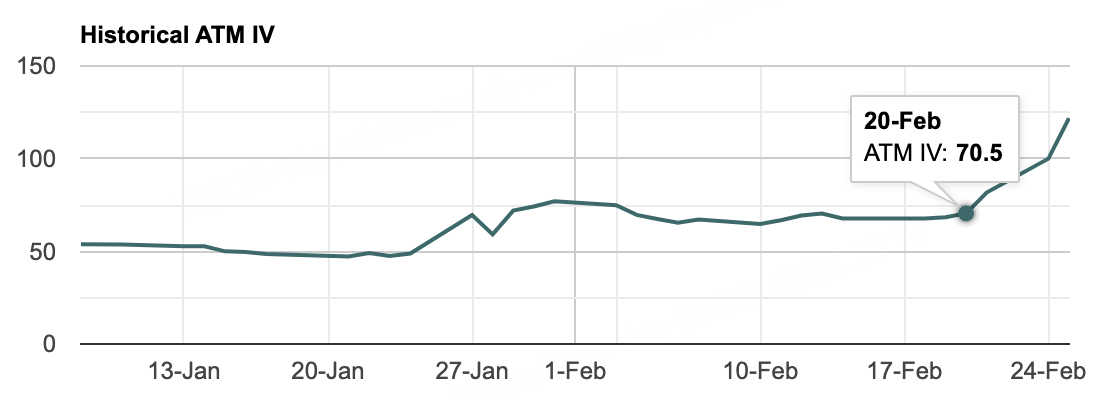
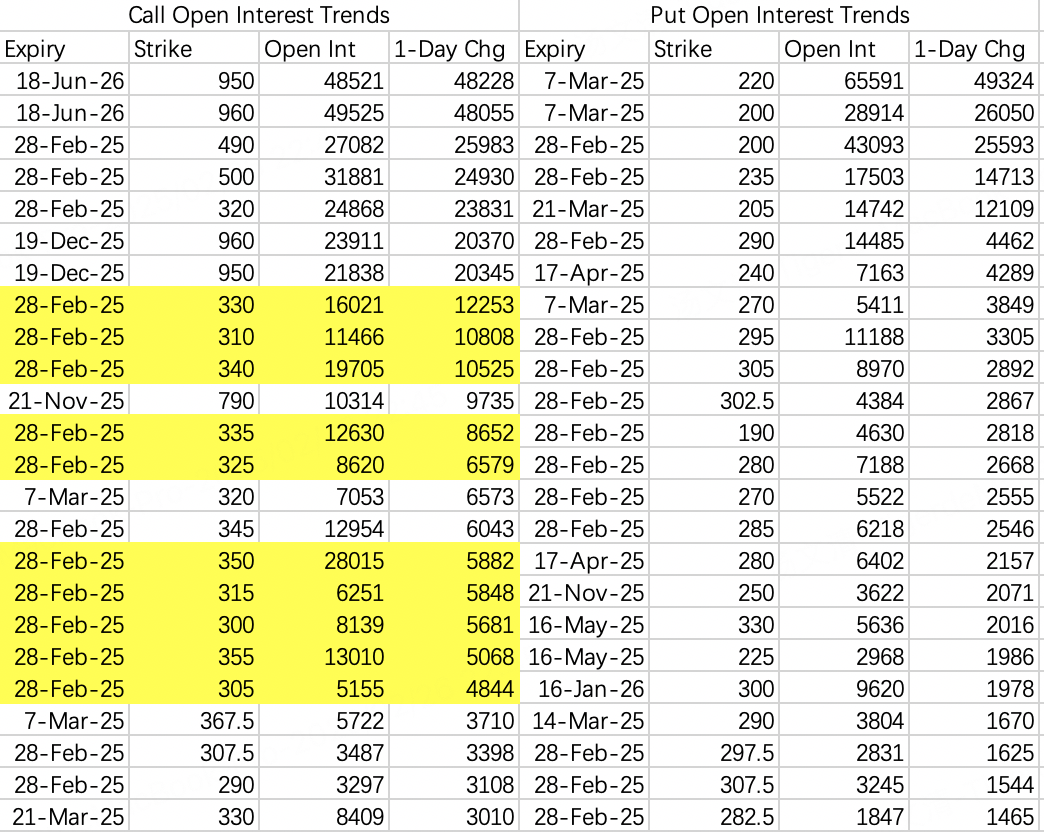
For open interest and new positions, what’s particularly noteworthy is that after Tuesday’s major drop, someone opened 30,000 contracts of next week’s 120 put $NVDA 20250307 120.0 PUT$ , with a total traded value exceeding $12 million. This is a heavy bearish bet.
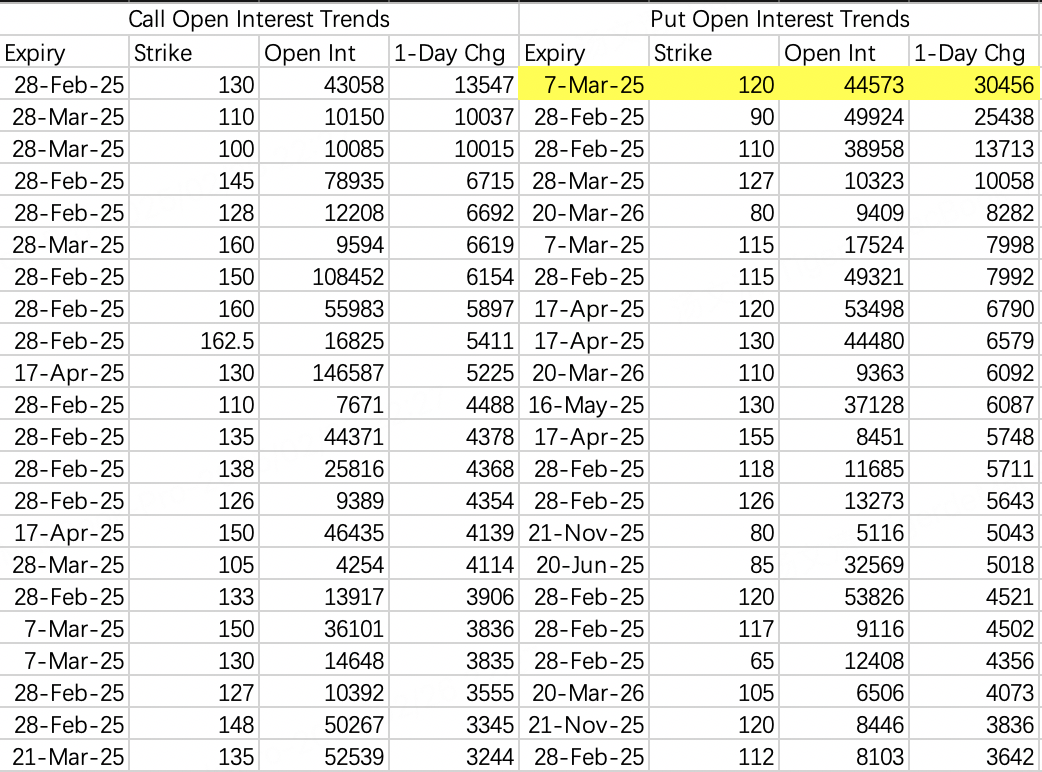
Given the open interest, it could be either retail traders or institutions.
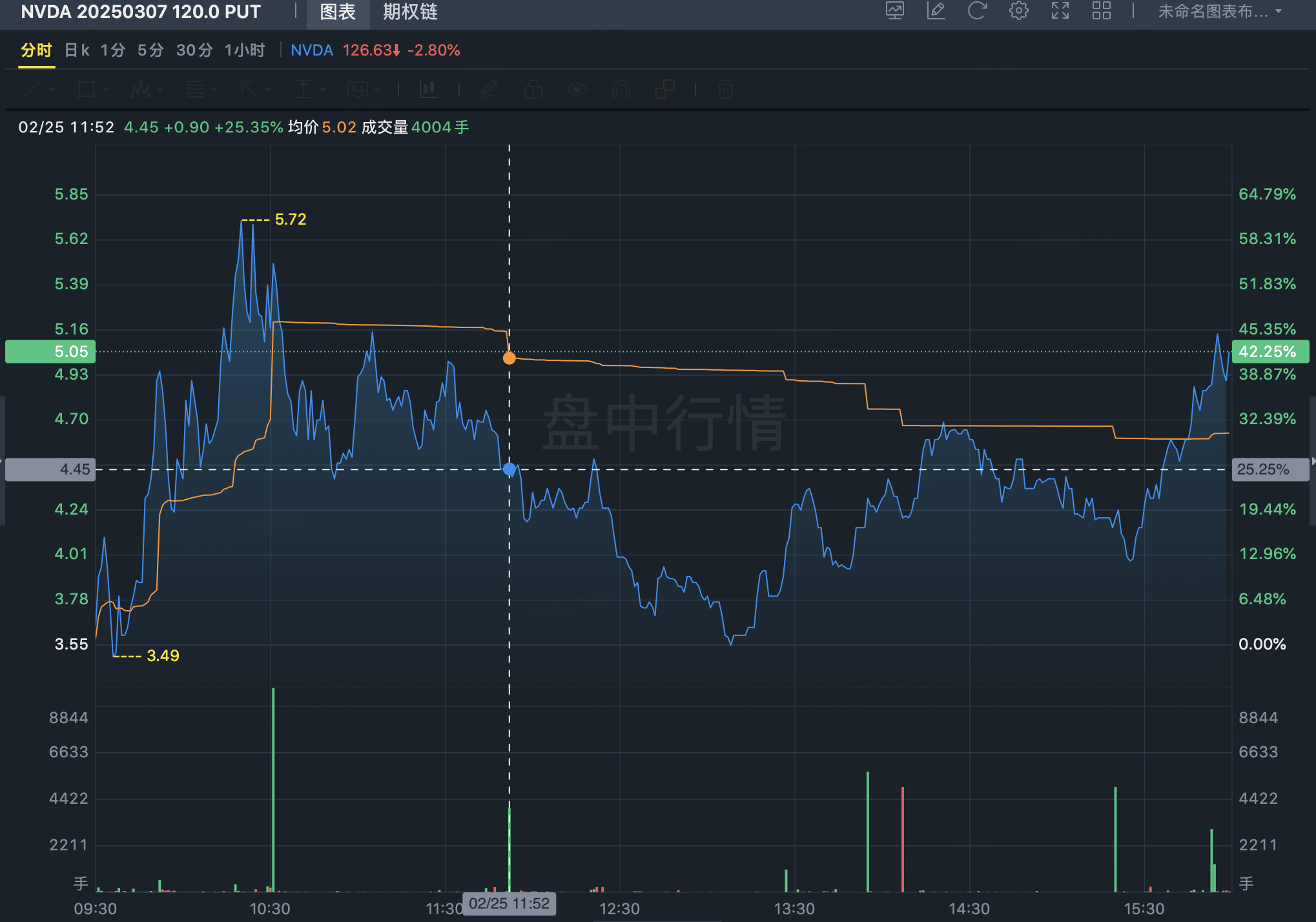
What does this bearish move mean? The probability of it being a contrarian indicator is quite high—tricked into shorting after three consecutive down days.
As everyone knows, large bullish bets at a high price and large bearish bets at a low price both require their credibility to be significantly discounted.
From a trading perspective, there are two possible considerations:
They’re betting on a major drop below $120 on earnings day.
They’re betting the stock won’t drop on earnings day but will decline below $120 afterward.
The second scenario doesn’t make much sense. When they bought, implied volatility was at 97%. If the stock doesn’t drop on earnings day, they’ll lose at least 80%. Why not wait for volatility to drop after earnings before buying? In the first scenario, unless the stock plunges to $115, they’ll still lose money.
So, this is just something to observe.
This week’s expiring open interest is shockingly high. In the case of a massive earnings spike or crash, options opened specifically for the earnings cycle are usually less instructive. However, if the earnings move is mild, the guidance is more reliable. In such cases, the stock is likely to close around $130–140 on Friday.
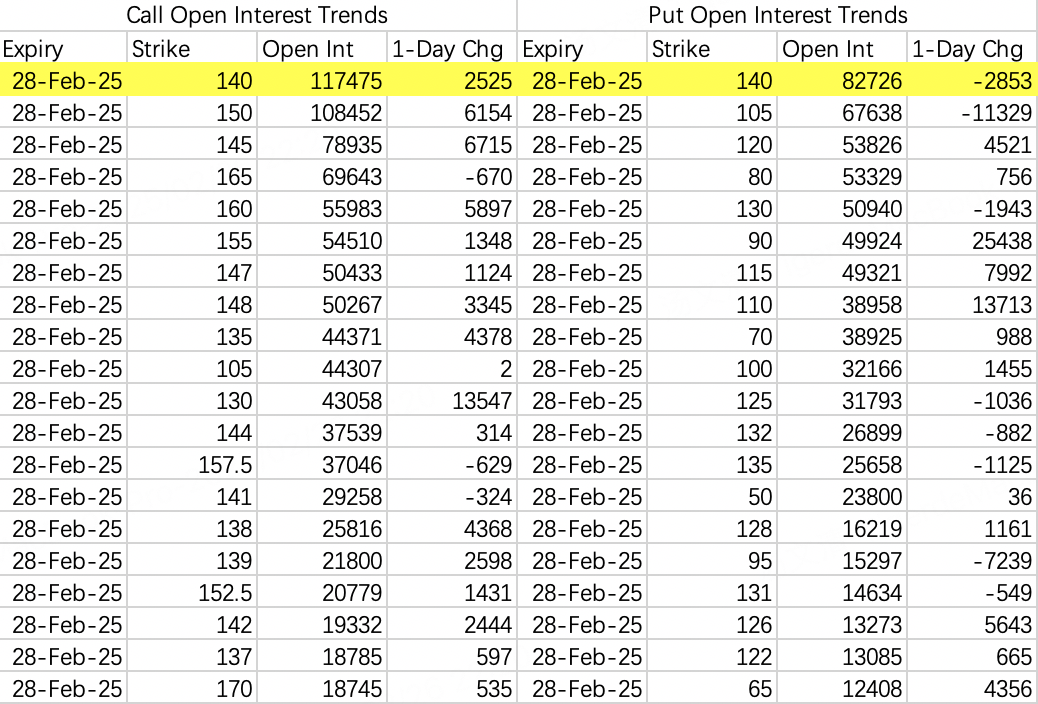
A major earnings spike or crash would mean a move above $155 or below $120. The percentage swings from these past few days don’t mean much—moving from $125 to $140 is a 12% increase but can only be seen as price recovery. If the range isn’t broken, it should be treated calmly.
In short, if tonight’s close is still $130 or below, tomorrow’s earnings outlook is definitely bullish. For those looking to trade earnings, you can apply the universal iron condor strategy:
Sell $120 put, buy $110 put
Sell $150 call, buy $130 call
Oh, by the way, I’ve closed my $150 sell call covered position—just in case, right?
$Tesla Motors(TSLA)$
Tonight’s rebound is quite noticeable, as everyone expects the $300 level to be a bottom-fishing opportunity.
That Morgan Stanley analyst who previously predicted Tesla’s bull market target of $800 also suggested a bear market target of $250. However, we’re not in a bear market right now—the S&P 500 is in high-level consolidation.
$KraneShares CSI China Internet ETF(KWEB)$
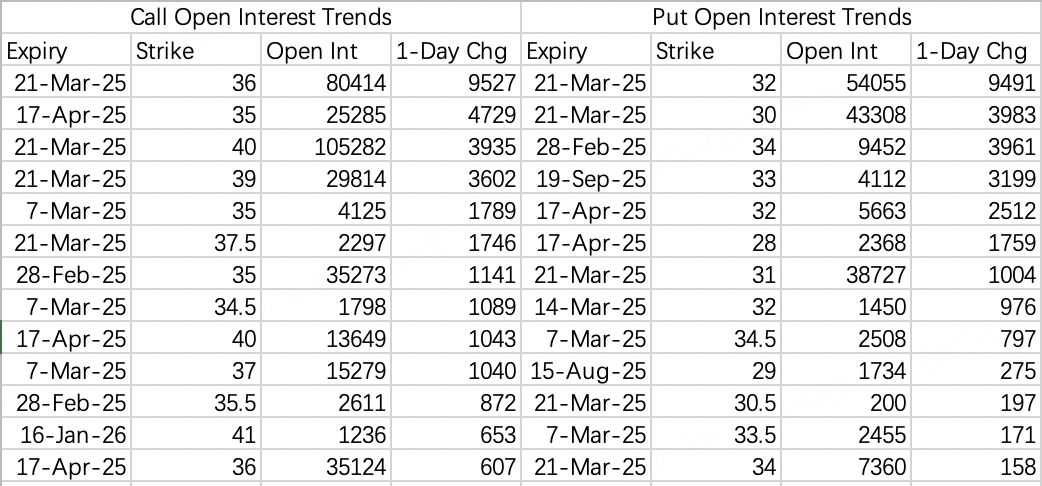
Recently, the stock has been consolidating at a high level, so the new positions are relatively conservative. The strike prices for bullish bets are all below previous highs, which is quite rational.
There’s one thing worth noting: it seems like many people know there will be a drop at the end of March, although it hasn’t become a consensus just yet. This is reflected in the increased open interest for April and May options.
I’m curious about how this will affect the correction. For instance, the broader market doesn’t necessarily need to hit new highs—it could rise a bit and fall a bit, which would still be enough to squeeze retail investors. At such times, individual stocks are more likely to outperform the broader market.
$iShares China Large-Cap ETF(FXI)$
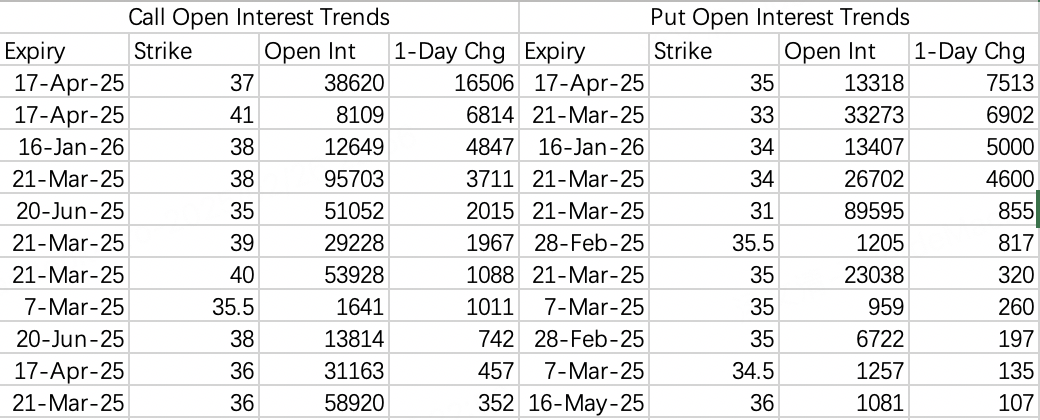
Similar to KWEB options, the strike prices are within a normal range. A high-level consolidation trend cannot be ruled out.
Disclaimer: Investing carries risk. This is not financial advice. The above content should not be regarded as an offer, recommendation, or solicitation on acquiring or disposing of any financial products, any associated discussions, comments, or posts by author or other users should not be considered as such either. It is solely for general information purpose only, which does not consider your own investment objectives, financial situations or needs. TTM assumes no responsibility or warranty for the accuracy and completeness of the information, investors should do their own research and may seek professional advice before investing.
