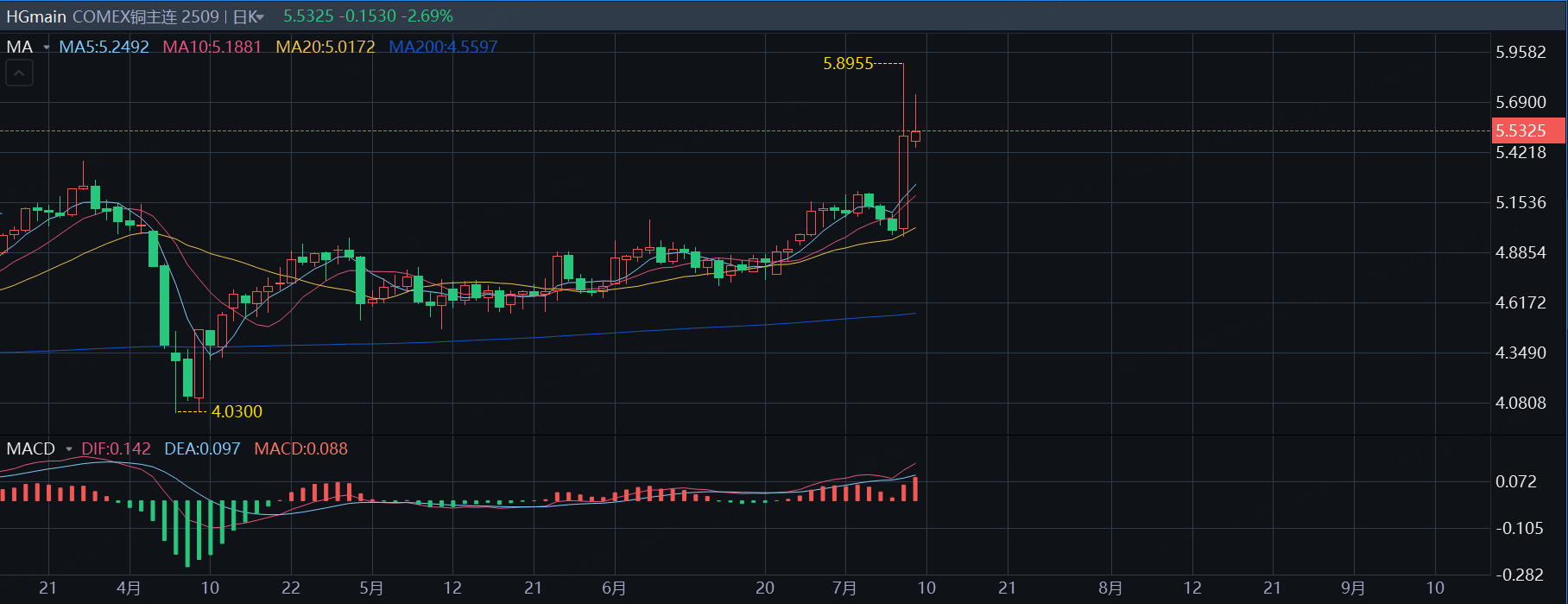
Last night, COMEX copper prices experienced an extraordinary surge, with intraday gains exceeding 10% and a peak increase of 17%, setting a historic record. This dramatic movement caused a stir in the market, prompting widespread discussion about the reasons behind the spike in copper futures prices and the potential duration of this rally.
Core Drivers Behind the Surge
1. Sudden Stimulus from U.S. Tariff Policy
U.S. President Trump unexpectedly announced last night that he is considering imposing an additional 50% tariff on imported copper. This announcement far exceeded prior market expectations and triggered an intense market reaction.
Market participants fear that, if implemented, the tariffs will create a structural shortage in U.S. copper supply. This concern led traders and downstream companies to rush to buy and restock copper in advance, causing a sharp short-term spike in COMEX copper futures prices. The tariff news directly altered global copper flows, positioning the U.S. as a “magnet” for global copper resources and tightening supply in other markets.
2. Short Squeeze and Speculative Capital
Speculative long positions in the COMEX copper futures market have recently surged, resulting in frequent short squeeze events. Many short sellers were forced to cover their positions, creating a vicious cycle of rising prices.
Within a short period, long positions continued to increase while shorts were compelled to cover, producing a “squeeze” effect that drove COMEX copper prices far above those of London Metal Exchange (LME) copper and Shanghai copper. On Wednesday morning, the COMEX July copper contract soared to a record $5.128 per pound ($11,305 per ton). The trading premium of this contract also surpassed that of the COMEX September contract—a situation known as a spot premium, which is a hallmark of a short squeeze.
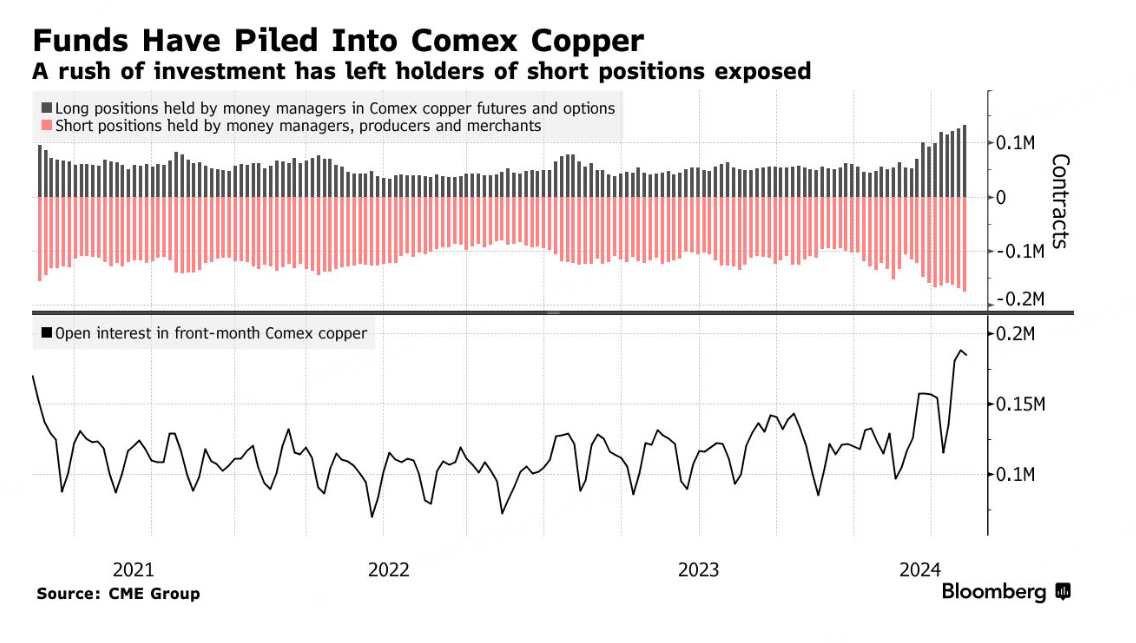
Long-term position data shows that many institutions have established substantial bullish bets on COMEX copper in recent months. By Wednesday, the July contract price had surged 10%, reaching a record high, even as the global benchmark contract on the LME remained largely unchanged.
Last night, the price spread between New York copper and London copper widened to over $1,200 per ton, far above normal levels, highlighting the extreme tightness in the U.S. copper market. Cross-market arbitrage involving long COMEX copper and short London copper positions expanded rapidly in a short time, causing severe price distortions.
3. Weakening U.S. Dollar and Rate Cut Expectations
The U.S. dollar index has recently fallen sharply, dropping below the 97 mark and recording its worst half-year performance since 1973. A weaker dollar enhances the appeal of dollar-denominated commodities, attracting global capital inflows.
U.S. fiscal stimulus policies, such as the “Build Back Better” plan, have increased market optimism regarding manufacturing and infrastructure demand. Expectations of Federal Reserve interest rate cuts within the year have also risen, further stimulating risk appetite and investment in base metals.
4. Tight Spot Supply and Logistics Disruptions
Domestic U.S. copper inventories have been significantly boosted by early restocking, while other global markets are experiencing regional shortages. Logistic bottlenecks at the Panama Canal and Suez Canal have further tightened supply and increased freight costs.
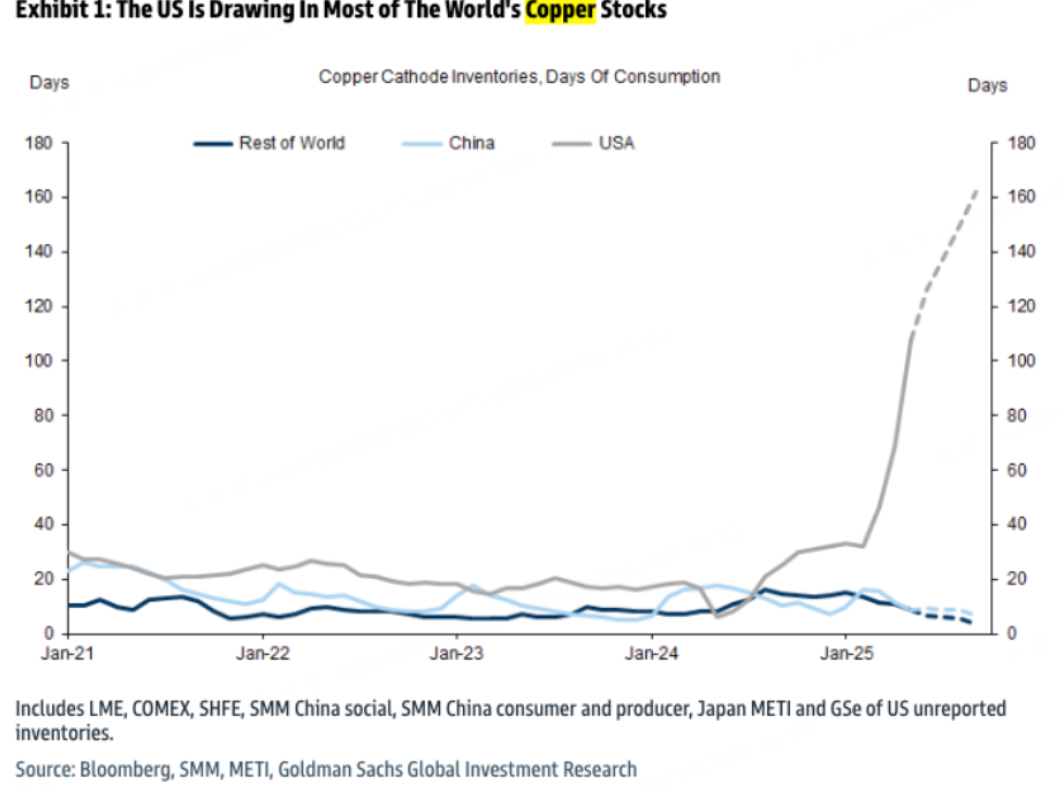
Since the start of the year, U.S. copper imports have surged, attracting global copper flows into the U.S. and raising spot premiums in the American market.
U.S. Copper Inventory and Futures Price Structure
Inventory Data: U.S. copper inventories have risen from 95,000 tons at the beginning of the year to 300,000–400,000 tons, with inventory days increasing from 33 to over 100.
Futures Structure: COMEX copper futures have shown an extreme expansion of spot premiums (backwardation), with the July contract significantly premium to the September contract. This reflects severe short-term supply tightness and short squeeze pressure.
Outlook for U.S. Copper Prices
1. Before Tariff Implementation: High Volatility
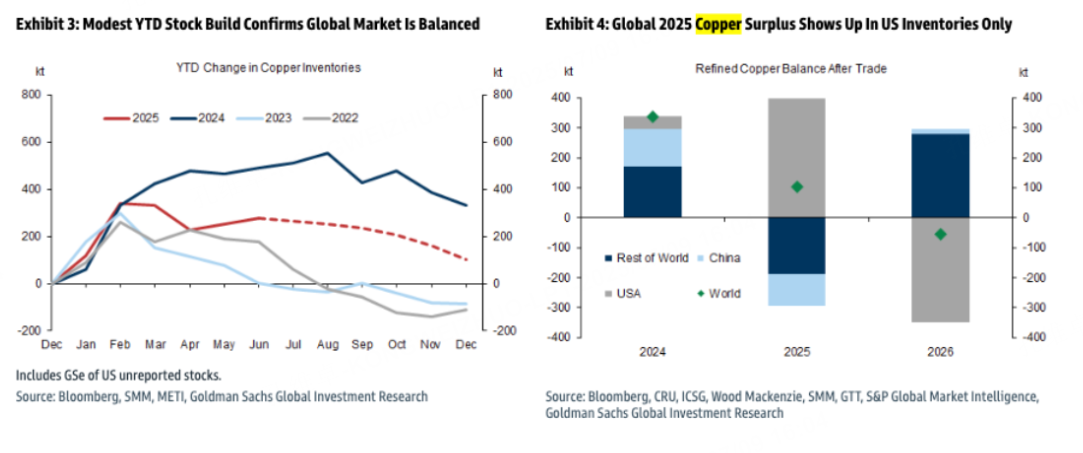
Before the tariff policy is implemented, copper prices will likely remain volatile at high levels, with recurring short squeeze events. The price spread is unlikely to narrow quickly in the short term. With high U.S. inventories, if the tariff is implemented as expected, COMEX copper prices may continue to outperform London and Shanghai copper in the short term.
2. After Tariff Implementation: Risk of Sharp Correction
Once the tariff is officially implemented, the U.S. market may experience a phase of oversupply, releasing inventory pressure. COMEX copper prices could face a correction risk, and the price spread is expected to narrow.
3. Medium to Long Term: Tight Global Supply and Demand
In the long run, growing demand from global electrification and green energy will continue to expand the copper supply gap, pushing the price baseline higher. The reshoring of U.S. manufacturing and increased infrastructure investment will be major drivers of future copper demand.
Divergence in Price Movements: London, Shanghai, and U.S. Copper
The sharp rise in COMEX copper is mainly driven by U.S. tariff expectations and short squeeze dynamics. Cross-market arbitrage involving long COMEX copper and short London and Shanghai copper positions has exacerbated price distortions, representing regional and policy-driven premiums. Global copper resources have temporarily flowed into the U.S., causing COMEX spot and futures prices to far exceed those of London and Shanghai, which more closely reflect global or Chinese local supply and demand.
Conclusion
The recent surge in COMEX copper prices is an extreme event resulting from a combination of factors: sudden policy announcements, capital-driven short squeezes, supply-demand mismatches, and macroeconomic influences. The future trend of COMEX copper will depend heavily on the implementation of U.S. tariff policies and the digestion of inventories. Extreme price spreads are unlikely to be sustained in the long term, and investors should be cautious of sharp volatility and arbitrage risks. While global copper prices remain bullish in the medium to long term, short-term volatility in COMEX copper may increase uncertainty in global markets
$E-mini Nasdaq 100 - main 2509(NQmain)$ $E-mini S&P 500 - main 2509(ESmain)$ $E-mini Dow Jones - main 2509(YMmain)$ $Gold - main 2508(GCmain)$ $WTI Crude Oil - main 2508(CLmain)$
Comments