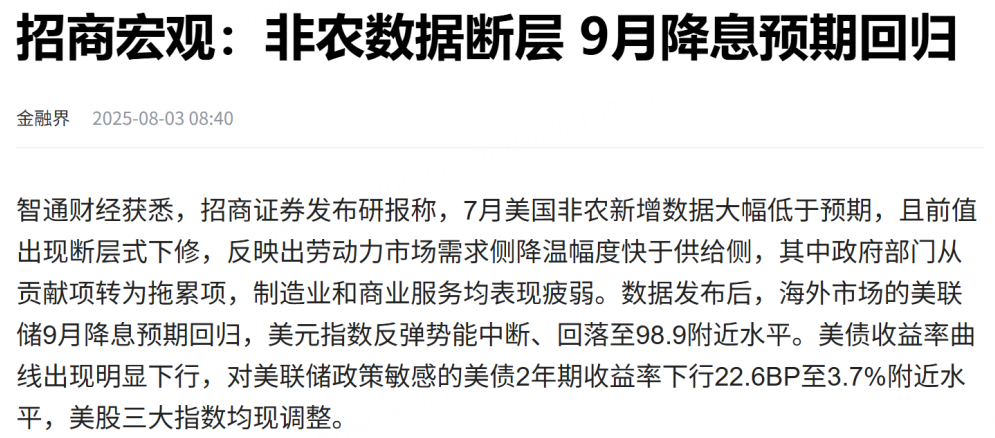
Last week saw two major events: first, the Federal Reserve’s meeting to set the benchmark interest rate, and second, the release of the nonfarm payroll data, both of which were crucial for the market to price in expectations for rate cuts.
The Fed meeting outcome was largely uneventful. Fed Chair Jerome Powell remained firm on not lowering rates, despite two board members voting against the decision—a dissent that the market had already anticipated.
Therefore, Wednesday night’s market fluctuation was limited. As for expectations around this week’s nonfarm data, there were few surprises. Although the current data was below expectations, it was still within a normal range.
What caught most people off guard, however, was the sharp downward revision in the previous nonfarm data. Such revisions are not uncommon, but this particular downward adjustment was significant in magnitude and shattered the prevailing perception of a robust U.S. economy. The ramifications of this revision are likely to linger.
Pay Attention to the August Window for U.S. Stock Indexes
The downward revision in economic data, although it has increased expectations for Fed rate cuts in September and October, also signals emerging problems in the U.S. economy. It remains uncertain whether the driving force behind the stock indexes in the coming period will be the boost from anticipated rate cuts or the downside pressure from deteriorating economic conditions.
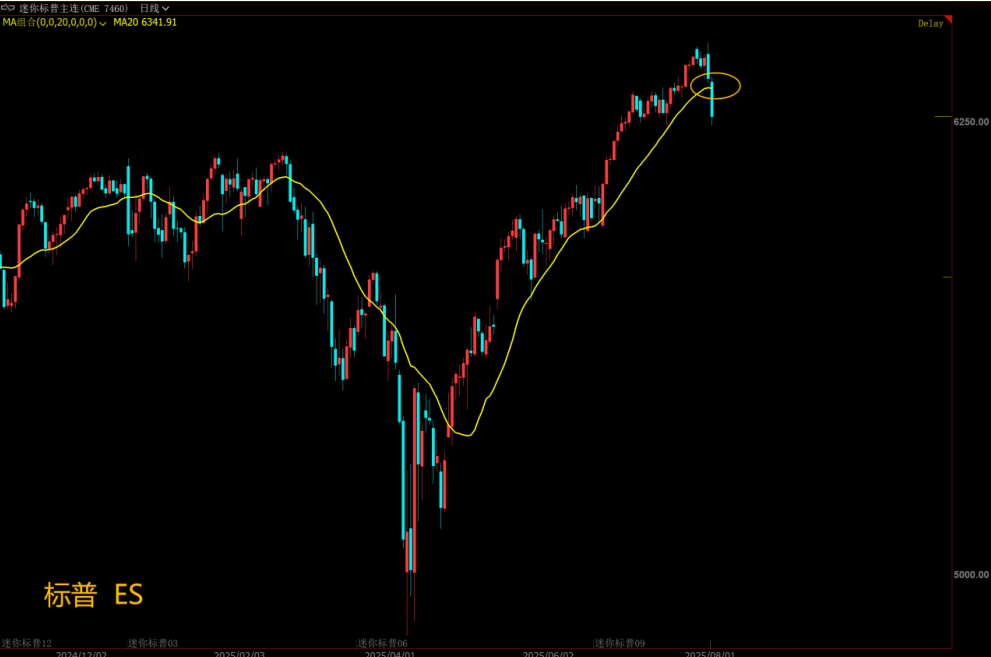
Currently, there is no definitive conclusion, but we all need to prepare. Historically, August is often a turning point for U.S. stock indexes. Indeed, volatility already appeared on August 1. Those with heavy exposure to U.S. stocks should exercise caution.
From a technical perspective, the 20-day moving average (MA) once again demonstrated its significance — a break below it should prompt a move to reduce risk. It is advisable to “let the bullets from the news fly a bit” before re-entering, that is, waiting for the news to fully play out or for a formal Fed rate cut before considering new positions.
Weak Economy Supports Gold as a Safe Haven
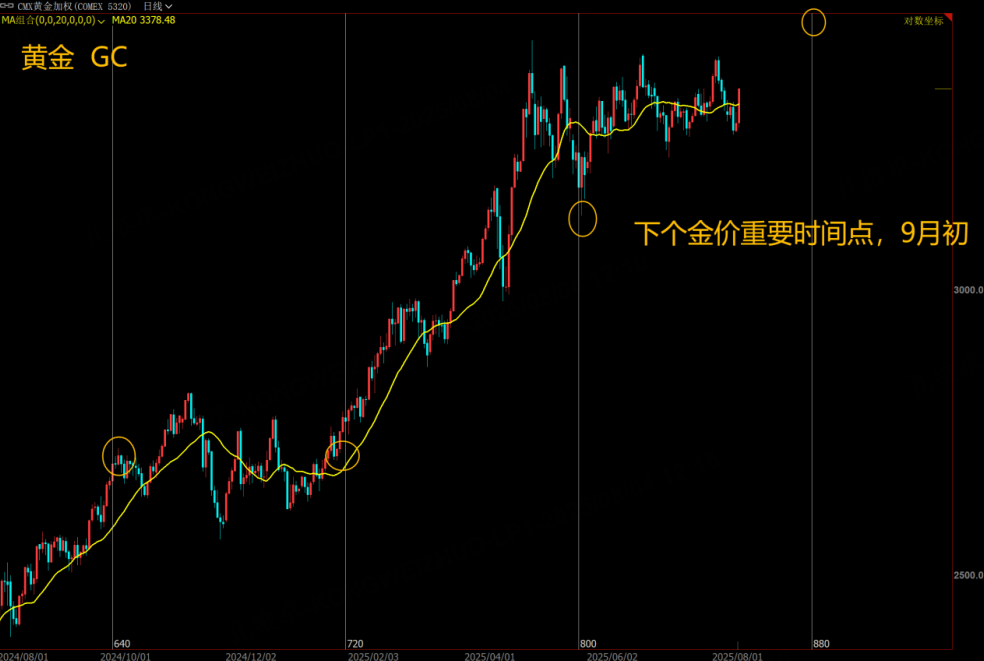
Following the release of the nonfarm data, gold prices experienced a sharp rise, supported by the 20-week moving average. Given gold’s typical behavior, after a period of consolidation, another wave of safe-haven-driven gains could emerge.
Overall, the 20-week MA remains the key trendline to watch for gold’s medium-term upward momentum; as long as it holds, shorting gold is not a strategy to take lightly. The next key timing point for gold is projected to be early September. Thus, gold trading should follow market trends.
For those wary of holding gold futures directly due to fear of volatility, buying call options with a strike price around 3,500 points might be a safer way to manage risk.
Due to weak economic conditions, industrial metals like silver are likely to gradually follow gold’s price trend, provided there are no surprise tariff developments. The gold-silver ratio may widen again, so silver’s price action may not be as intense as during the recent tariff war episode. Silver holders are advised to gradually shift some holdings into gold to balance portfolio volatility.
The recent rebound in the U.S. dollar index still appears to be part of a downtrend following the full pricing in of the Fed’s rate cut expectations. This dynamic has kept precious metals relatively strong and illustrates the importance of gold as a safe haven amid economic instability.
$E-mini Nasdaq 100 - main 2509(NQmain)$ $E-mini S&P 500 - main 2509(ESmain)$ $E-mini Dow Jones - main 2509(YMmain)$ $Gold - main 2512(GCmain)$ $WTI Crude Oil - main 2509(CLmain)$
Comments