Last Friday night, at the highly anticipated Jackson Hole Global Central Banking Symposium, Fed Chair Jerome Powell delivered remarks that diverged from what many in the market had expected. Instead of projecting a strongly “hawkish” stance, Powell softened his tone and stated:
“Since policy is already in restrictive territory, given changes in the outlook and the balance of risks, it may be necessary to adjust our policy stance.”
This was widely interpreted as a clear signal that the Fed is preparing to cut rates in September. According to the CME FedWatch Tool, the probability of a 25-basis-point rate cut next month has risen to 89%. Unless there is a major surprise in the U.S. nonfarm payrolls report at the beginning of September, the path toward renewed rate cuts seems almost certain.

1. U.S. Equity Indices Remain in Uptrend
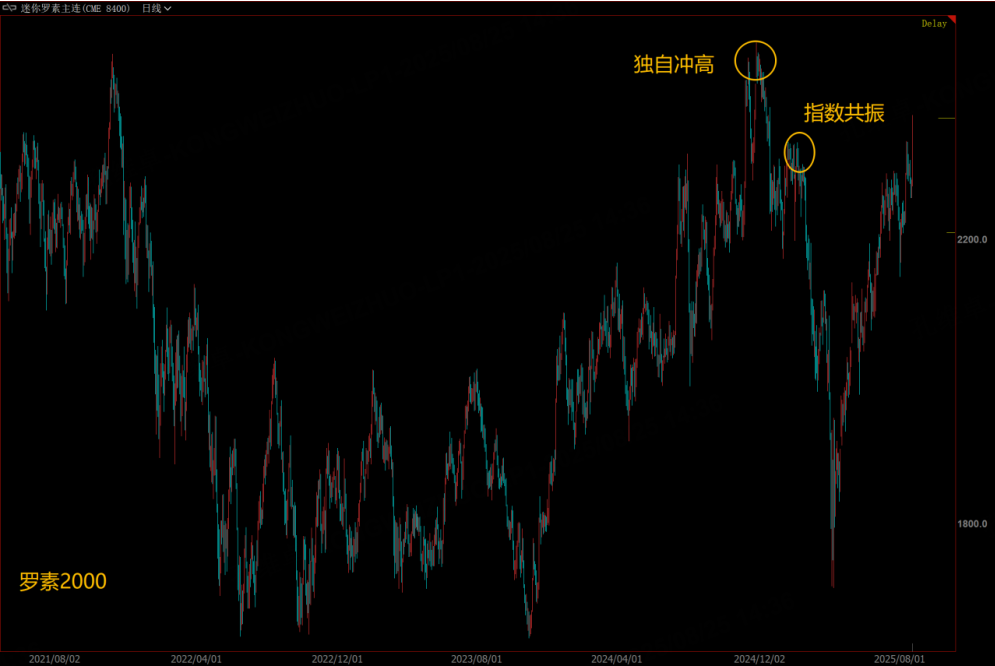
Following Powell’s speech, U.S. equity benchmarks, which had been on the verge of breaking below their 20-day moving averages, were pulled back into an upward trend. The recent rally has been led by the Dow Jones Industrial Average and the Russell 2000, suggesting broader participation across traditional large-cap and small-cap names. The market is currently showing signs of a broad-based advance.
As things stand, there are no major technical risks to flag. Investors can continue to track the 20-day moving average as a short-term risk control line. From the perspective of index divergence, it will be important to monitor whether the Russell 2000 stalls at its previous high before the Dow or the S&P. Historically, when risks emerge, U.S. small-cap stocks are often the first to be abandoned by institutional investors. A reversal in the Russell could therefore serve as an early warning signal.
2. With Rate Cuts Coming, Can Gold Break to New Highs?
Before the September FOMC meeting, markets will still need to absorb the release of the nonfarm payrolls report. If the data comes in much stronger than expected, it could weaken the case for a rate cut. That said, such an outcome seems less likely, though traders should remain alert to how the jobs report might affect gold prices.
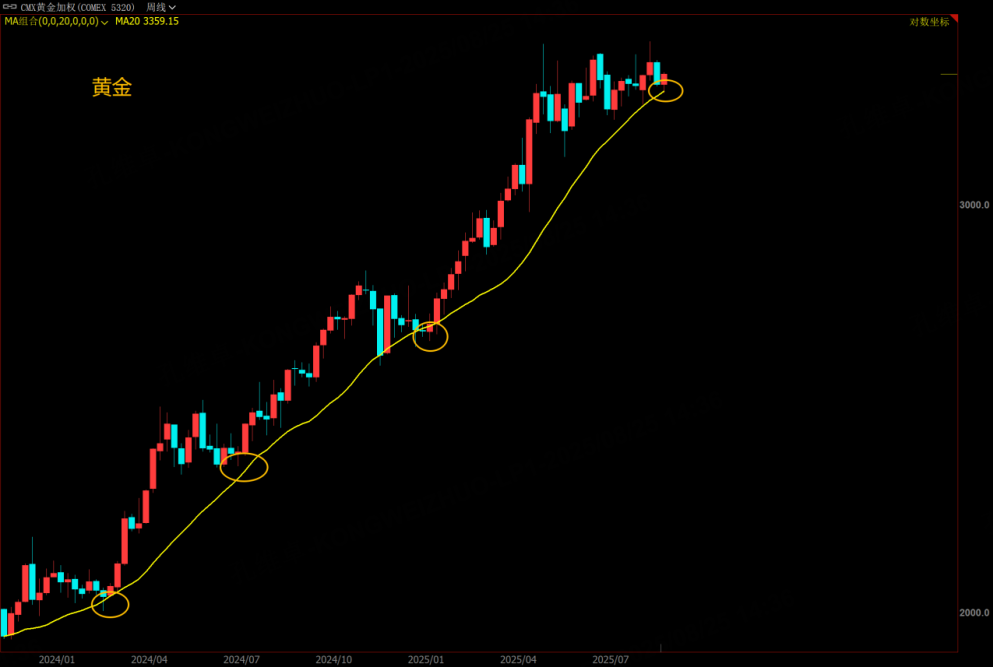
For the past four months, gold has been consolidating at elevated levels. This prolonged sideways trading implies that whichever direction the breakout takes, the move could be sharp and fast. Close monitoring is required.
From a technical perspective, the 20-week moving average continues to provide strong support. As long as gold holds above this level, it is premature to call a trend reversal. However, if prices fall through it, the risk of a larger correction increases. The longer the consolidation lasts, the more significant the potential move — in both depth and duration.
Looking ahead, a key turning point for gold is likely to arrive in the first week of September, coinciding with the release of the payrolls data. If gold drifts lower leading up to that date, early September could present an attractive buying opportunity. On the other hand, if the metal keeps climbing, September may bring a short-term peak followed by a rapid pullback.
Strategy: One way to manage this uncertainty is through short-term options. Traders can position on both sides — buying calls and puts — and then cut losses on the losing side once the breakout direction becomes clear. Around the time of the jobs report, consider taking the opposite side of the market’s immediate move to capture potential short-term swings.
$NQ100指数主连 2509(NQmain)$ $SP500指数主连 2509(ESmain)$ $道琼斯指数主连 2509(YMmain)$ $黄金主连 2512(GCmain)$ $WTI原油主连 2510(CLmain)$
Comments