


Dollar's Fate via Venezuela: Low Rebound Likely?
The biggest holiday topic is America's move against Maduro, with most analyses covering directly affected assets. This piece focuses on the hidden agenda: dollar dominance.
Common views hold that the US (under Trump) seeks Venezuela's rich oil and commodity resources. Compared to the 1980s oil wars' brute force, today's tactics lack "martial virtue" but prove more effective.
Yet, as ancient wisdom states, subduing the enemy without fighting is the ultimate strategy—direct intervention signals a loss of control.
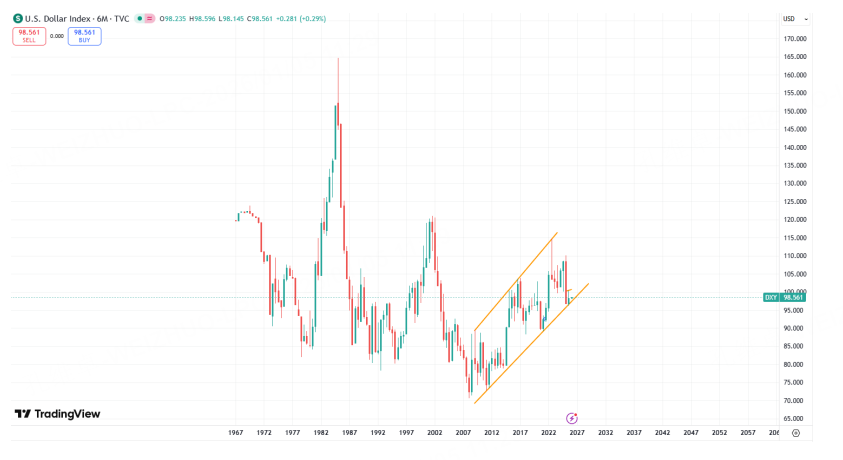
(Dollar index performance over the past 60 years)
Latin America's Dollar Dependence
For decades, South America and even Canada's North America have fallen fully under US influence. Through debt and the dollar—the two financial weapons—Latin countries have played the role of beasts of burden.
Add sanctions and threats, and even resource-rich nations become on-call ATMs. To borrow an imperfect analogy: if the bank card and PIN are in your hands, do you need the ATM at home for peace of mind—unless you spot the landlord secretly trying to dismantle it?
Shifting Global Dynamics
Clearly, times have changed. The first variable was China's commodity demand and supercycle; the latest is various de-dollarization efforts.
Latin populations still trust the dollar's stability, but Washington's rules no longer bind them. The Fed can still print money and adjust rates, but its power to dictate other nations' economic fates via monetary policy has greatly diminished.
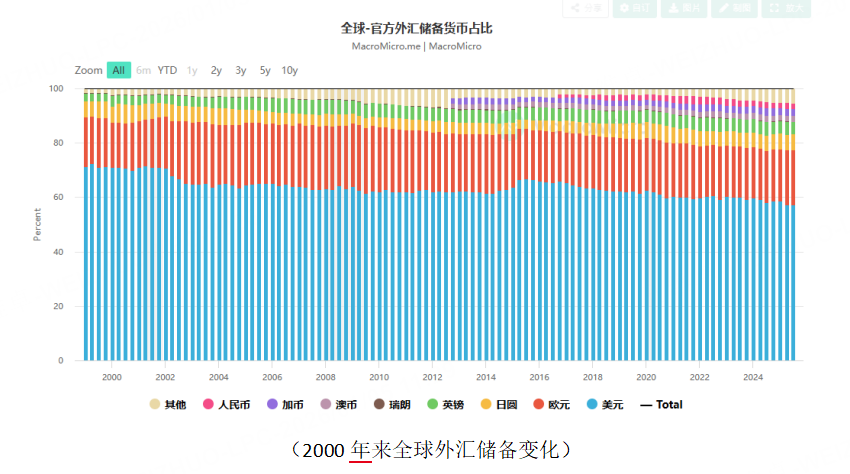
(Global forex reserves changes since 2000)
Venezuela, this event's unlucky example, collects much of its oil revenue in stablecoins. Rumors suggest its covert Bitcoin reserves rival MicroStrategy's (no official data, but compare to El Salvador buying one Bitcoin daily).
Meanwhile, China-UAE currency swaps and China-Brazil local-currency settlements project great-power rivalry onto South America.
Internally, subtle changes unfold: gold's multi-year rise and last year's silver short squeeze reflect inevitable risk hedging. Even the seemingly most loyal gatekeepers may be the system's most fatal internal shorts.
Historical Parallel to Sterling
The closest prior story is the British Empire and pound sterling. As the undisputed top power and world currency then, Britain's passive trade deficits caused chronic manufacturing hollowing-out and national decline—sound familiar?
While the pound harvested the world, it drained Britain's vitality. This may be what they mean by "the movement of the Tao is to return."

(2008 edition of The Three-Body Problem II: Dark Forest)
Trading Opportunities
One focus: will silver hit new highs, and how does it stack against gold? Only if the rebound shows gold strong and silver weak—with silver not at new highs—consider building a major top; otherwise, treat as technical pullback.
Second, short-to-medium-term dollar trades: seek rebound longs near 97.2, stop loss below 96.2 low; targets at 99.2 and 100.2. If weekly close at 98.14 this week, wait for better entry. Long-term, based on fundamentals above, favor selling at highs—but no ideal timing or price yet; wait.
$NQ100指数主连 2603(NQmain)$ $SP500指数主连 2603(ESmain)$ $道琼斯指数主连 2603(YMmain)$ $白银主连 2603(SImain)$ $黄金主连 2602(GCmain)$ $WTI原油主连 2602(CLmain)$
Disclaimer: Investing carries risk. This is not financial advice. The above content should not be regarded as an offer, recommendation, or solicitation on acquiring or disposing of any financial products, any associated discussions, comments, or posts by author or other users should not be considered as such either. It is solely for general information purpose only, which does not consider your own investment objectives, financial situations or needs. TTM assumes no responsibility or warranty for the accuracy and completeness of the information, investors should do their own research and may seek professional advice before investing.
